
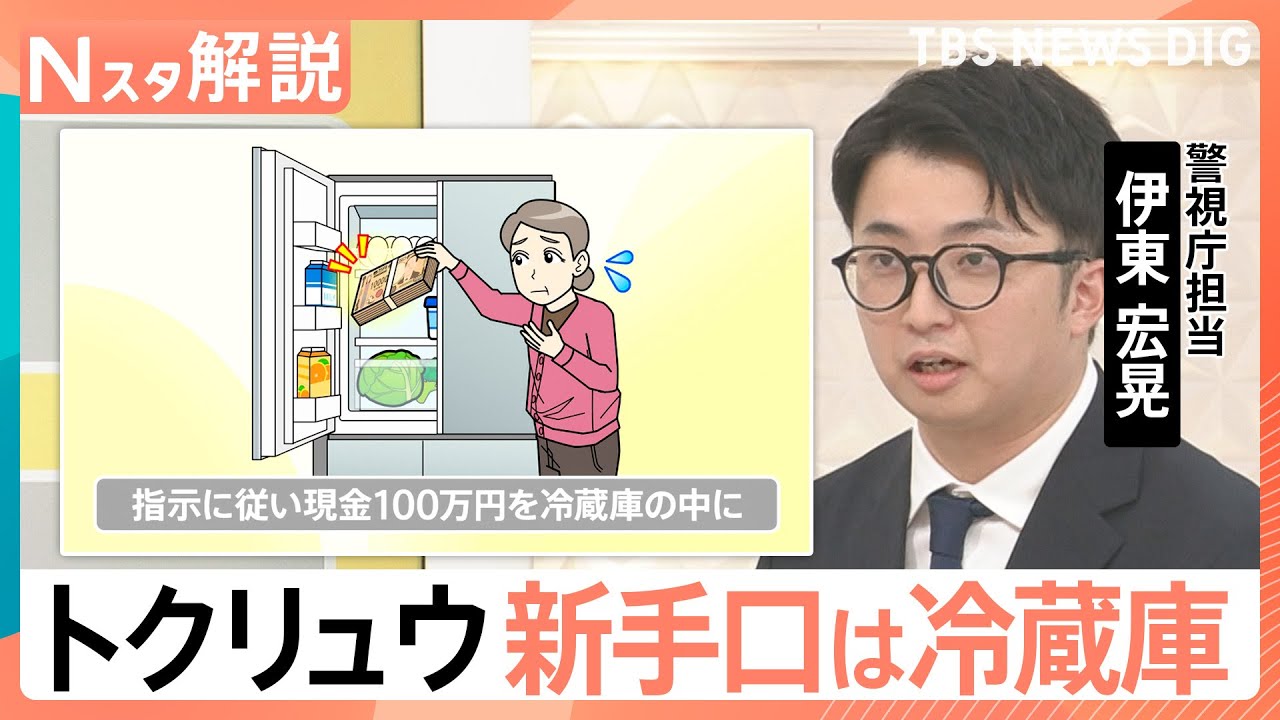
‘Tokuryu’ Criminal Gangs Target Elderly Victims with Refrigerator Trick
TOKYO –
Anonymous and fluid criminal groups known in Japan as “tokuryu” are adopting increasingly elaborate tactics, including a scheme in which elderly victims are persuaded to hide cash inside refrigerators before thieves enter their homes, as authorities struggle to combat networks whose members often have no direct contact with one another.
About 12,000 people were arrested in 2025 for involvement with tokuryu, a term referring to loosely organized criminal groups whose members frequently change while carrying out crimes such as specialized fraud and robbery.
The groups typically divide responsibilities among several layers. Some members devise plans for robberies and other crimes, recruiters find people to carry them out, coordinators provide instructions on times and locations, and perpetrators commit the actual offenses.
Members often communicate only through smartphones, using social media and highly secure messaging applications. In many cases, participants have never met and know little about one another’s identities.
Those recruited as perpetrators are frequently drawn in by illegal job advertisements posted on social media using phrases such as “high income,” “same-day payment” and “legitimate work.”
The structure makes investigations difficult because law enforcement authorities can struggle to identify who is actually directing the crimes. Investigators say some cases are also organized across national borders, further complicating efforts to uncover the networks.
A case in Tokyo’s Machida in August demonstrated how the methods are becoming increasingly sophisticated.
The victim, a woman in her 80s, first received a telephone call from a man claiming to be a postal worker. He asked whether she had attempted to send a suspicious package to Hong Kong and told her that she would soon receive a call from Shizuoka Prefectural Police.
Shortly afterward, a man claiming to be a police officer called and told the woman that her personal information had been misused.
During the conversation, the caller asked how she kept her money. The woman told him that she had 1 million yen in cash at home.
The man then instructed her to gather all the money and place it in her refrigerator, telling her, “Even a burglar will not look inside a refrigerator, so it is safe.”
Believing the caller, the woman placed the 1 million yen in her refrigerator.
The money was not stolen immediately.
Instead, the man posing as a police officer continued calling the woman every day. He sometimes asked whether she had changed where the money was being stored and questioned her about when she planned to leave home.
Authorities say such repeated contact can make victims feel that the caller is looking out for them and gradually strengthen their trust.
Postal workers and police officers would never make such requests, and investigators say fraudsters posing as police often speak calmly, making their claims appear more convincing and increasing the likelihood that victims will follow their instructions.
The woman eventually told the caller when she planned to go out. Five days after the first telephone call, while she was away from home, someone entered the residence and stole the 1 million yen from the refrigerator.
Investigators believe the drawn-out approach may be deliberate. Introducing several supposed officials one after another can confuse a victim, while repeated calls over several days can gradually create a sense of trust before the crime is carried out.
Tokuryu groups have proven difficult to dismantle because arrests often involve people at the lowest levels rather than those directing the operations. Although about 12,000 people were arrested in 2025, those controlling the networks frequently remain beyond investigators’ reach, allowing new perpetrators to be recruited and crimes to continue.
Source: TBS