
Russian GRU spies behind failed Leipzig attack: reports
Germany’s Welt am Sonntag (WaS) newspaper has cited intelligence reports tying the recent failed drone attack at Leipzig/Halle Airport directly to Moscow’s GRU military intelligence agency.
In an article published on Saturday, Welt am Sonntag said that a man with known ties to the GRU was responsible for operational logistics in the attempted attack.
Further, it said those ties were known to German authorities when the man entered the country from Turkey, nevertheless, he was not surveilled after arrival.
Classified security assessments cited by the paper say the Russian national is now in his home country after departing to Serbia on a flight from Berlin-Brandenburg Airport.
A second man, a Belarus citizen, was also cited as an accomplice in the report.
Explosives thought to have entered Germany from Bulgaria and Serbia
German intelligence sources said that the explosives used in the incident were likely smuggled into Germany via truck from Bulgaria and Serbia and then stored in underground depots once they arrived in Leipzig.
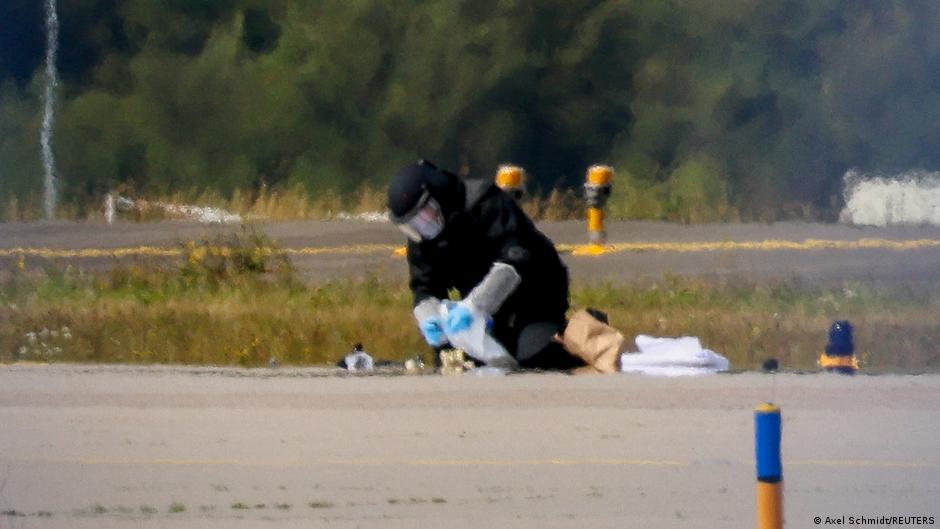
Berlin quickly made clear that forensic evidence found at Leipzig/Halle Airport — including drone configuration, explosives and trigger mechanisms used in other Russian hybrid attacks — pointed to a Russian plot.
In early August, German tabloid BILD reported that authorities had found DNA traces on the drone’s remote control antenna. Those samples were said to have matched DNA found at the scene of a July 20, 2024, arson attack at a Leipzig logistics facility operated by German courier company DHL.
Leipzig attack averted but Russian escalation will continue
The incident at Leipzig/Halle Airport — a hub for military aid destined for Ukraine — occurred on the evening of August 4 and involved an explosives-laden drone that was found near a Ukrainian transport jet.
Authorities were able to disarm the drone and after public speculation that Moscow was behind the incident the German government officially blamed Russia in early September.
Saturday’s article said Berlin made the attribution on the basis of the intelligence reports cited.
In response to its conclusion, Germany announced the closure of the Russian Consulate General in Bonn.
The Kremlin in turn reacted by closing Goethe Institutes — a German cultural exchange outfit — across Russia.
As in numerous similar hybrid attacks prior, Russia has denied any involvement in the incident.
Edited by: Jenipher Camino Gonzalez
If you rely on our team for trusted reporting, please take a moment to select us as your Preferred Source on Google, so you’ll always see our verified news first.