
Could a Scottish, Welsh and Northern Irish independence pact threaten UK unity?
In brief
- The Scottish National Party, Wales’ Plaid Cymru and the pro-Irish unity Sinn Féin want to break away from the UK.
- UK Prime Minister Andy Burnham has previously rejected Northern Ireland or Scotland holding referendums on the matter.
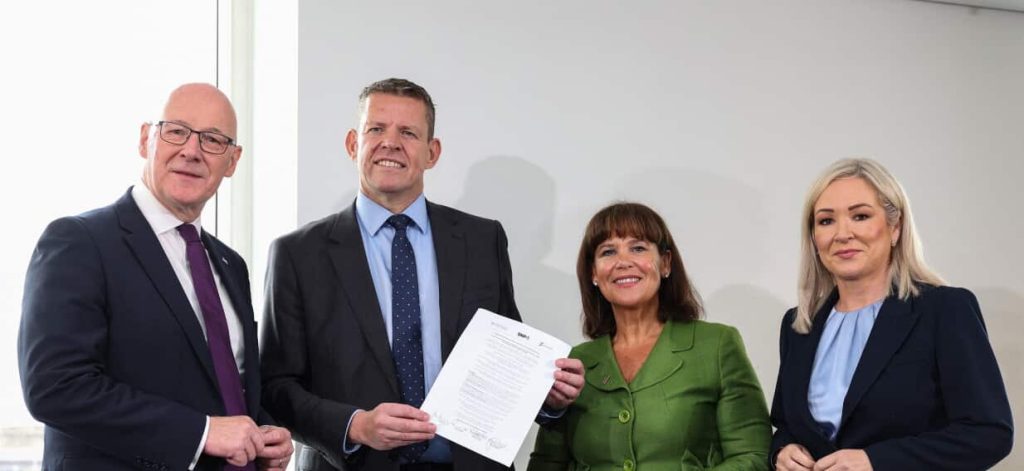
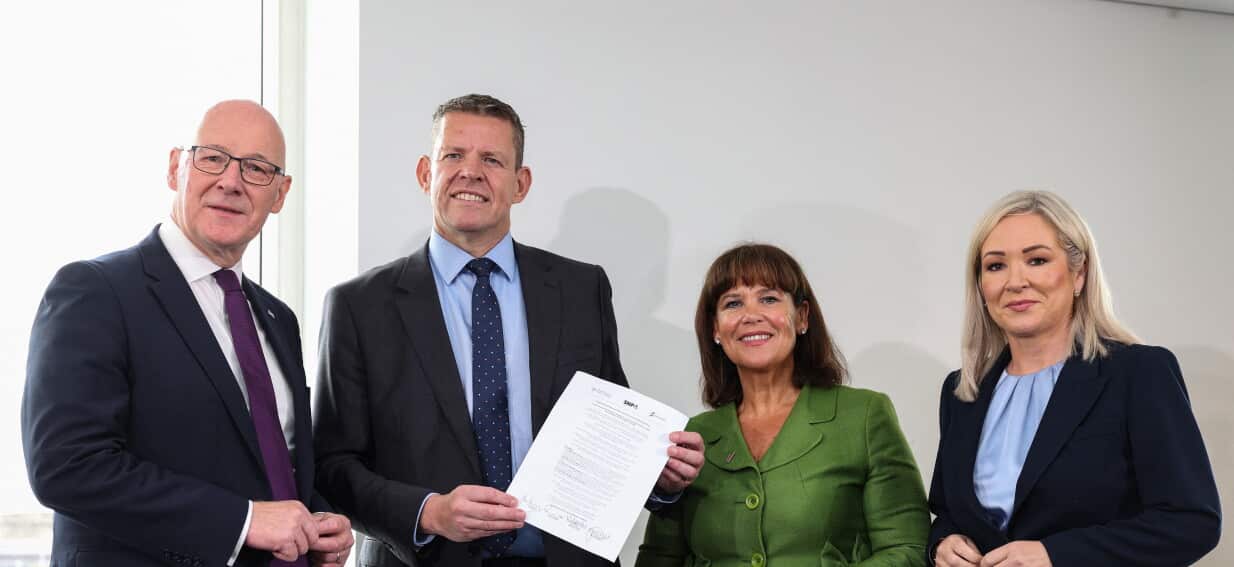
Leaders of the main Scottish, Northern Irish and Welsh nationalist parties declared at a meeting overnight that they have the right to choose whether to stay in the United Kingdom, with all three seeing their future as nations within the European Union.
The Scottish National Party (SNP), Plaid Cymru in Wales, and the pro-Irish-unity Sinn Féin want to break away from the UK, although under different timelines and conditions.
The rare meeting in the Welsh capital came just days after United States President Donald Trump waded in on the issue, saying he would back a united Ireland.
His comments showed “the unity debate is very much alive”, Northern Ireland’s Michelle O’Neill said alongside fellow party leaders as they announced a memorandum of understanding.
“Our nations have the right to self-determination. No Westminster government (the UK government) has the right to block democracy or undermine the principle that our people will decide their own future,” the agreement said.
Your trusted source for staying up-to-date with the world around you. Get free daily news updates and analysis, straight to your inbox.
SNP leader John Swinney, Rhun ap Iorwerth, leader of Plaid Cymru in Wales, and Mary Lou McDonald and O’Neill, leader and deputy leader of Sinn Féin, met in their roles as party leaders, rather than as top officials in their respective governments.
O’Neill is Northern Ireland’s first minister while Iorwerth and Swinney lead their respective nationalist parties in Scotland and Wales.
Where do Scotland, Wales and Northern Ireland stand on the independence issue?
The agreement said that, for the first time, each nation had a first minister “committed to independence from the UK”, adding: “The future of our nations belongs in the European Union.”
The independence parties are the biggest in both the Scottish and Welsh parliaments for the first time since devolution measures began in 1999. Sinn Féin has been the biggest party in Northern Ireland’s assembly since 2022.
The SNP wants a second independence referendum after an earlier ballot in 2014 saw Scotland narrowly vote to remain in Britain. Successive UK governments have ruled out an immediate rerun.
Sinn Féin, the former political wing of the paramilitary Irish Republican Army (IRA), wants a vote on the UK territory of Northern Ireland being reunified with Ireland.
Plaid Cymru seeks Welsh independence in the longer term, but Iorwerth has ruled out pressing for a referendum immediately.
Could an independence move succeed?
Laura McAllister, a politics professor at Cardiff University, said the deliberately broad term “self-determination” was used due to these differing timelines and goals.
“Plaid Cymru was elected with heavy emphasis on avoiding the issue of independence this term,” she told Agence France-Presse (AFP).
Shortly after taking power, UK Prime Minister Andy Burnham said a referendum on Irish unity was “off the table”.
The 1998 Good Friday peace agreement that largely ended three decades of conflict in Northern Ireland provides for a referendum if Westminster’s Northern Ireland minister believes a majority is likely to favour joining the Republic of Ireland.
Sinn Féin leader McDonald said the prime minister had no authority to deny any provisions of the agreement, and Burnham backtracked in parliament last week.
On Monday, a spokesperson insisted that Burnham believed “strongly in the Union”, the constitutional tie that makes Northern Ireland part of the UK.
On Scotland, Burnham told lawmakers there could be another vote if there was a “clear consensus” but later reportedly said a referendum remained “off limits”.
“It is unlikely that this (meeting) will change the UK Government’s refusal to allow a referendum in Scotland or, at present, Northern Ireland,” said Michael Keating, an emeritus politics professor at the University of Aberdeen.
But the meeting was “significant politically”, he told AFP, because the other parties long avoided association with Sinn Féin due to its link to the IRA.
Alex Kane, a former communications chief for Ireland’s Ulster Unionist Party, pointed to the absence of Northern Ireland’s deputy first minister, Emma Little-Pengelly, of the pro-UK Democratic Unionist Party.
Her post is of equal weight to O’Neill’s under Belfast’s power-sharing government and “neither can claim to represent the government of Northern Ireland if the other hasn’t agreed to it,” he told AFP.
Little-Pengelly slammed O’Neill, claiming her position was “weaponised” at “a summit of separatists”.
The meeting sparked mixed reactions in Belfast.
“Ireland would be better off if it was one country and we were back in the EU,” retiree Ray Dennison, 61, told AFP.
But Jim Boyle, a 64-year-old environmental worker, said the meeting filled him with “trepidation”.
“Many years ago I may have wished for the break-up of the United Kingdom, now … I just don’t want anything that’s unpredictable.”
For the latest from SBS News, download our app and subscribe to our newsletter.