US Treasury’s Bessent, China’s He to launch talks on AI, trade, critical minerals
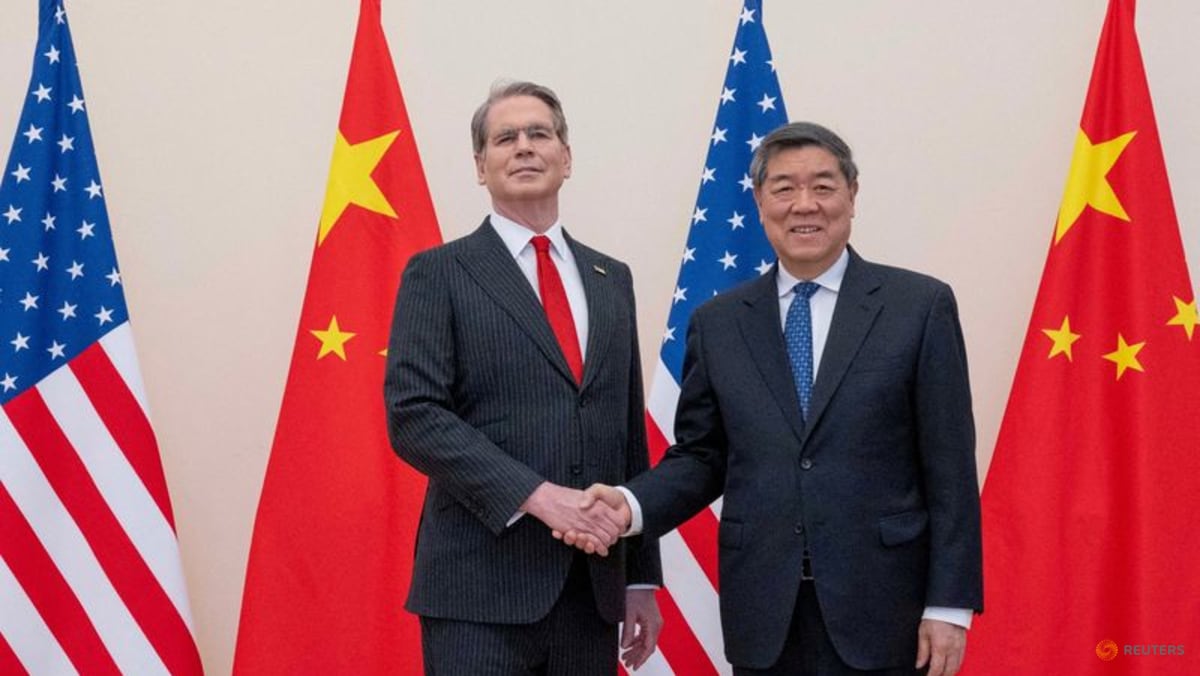
NEW YORK: US Treasury Secretary Scott Bessent and Chinese Vice Premier He Lifeng are set to meet on Sunday (Sep 20) to try to tee up potential agreements on artificial intelligence, tariffs and critical minerals for a high-stakes Washington summit this week between US President Donald Trump and Chinese President Xi Jinping.
The meetings at JP Morgan Chase’s headquarters in Manhattan, which also will include US Trade Representative Jamieson Greer, are due to start at about 10.30am local time (10.30pm Singapore time) and are expected to run all day.
Key topics will be the status of a US-China trade truce that is set to expire on Nov 10, flows of Chinese rare-earth magnets and critical minerals that US officials say are insufficient and potential guard rails for artificial intelligence after reports of key security breaches involving AI models.
The most likely outcome, analysts say, would be for Washington and Beijing to agree on small steps to show they are continuing to avoid escalating tensions in a delicate trade relationship that has major consequences for the global economy.
“I think there will be some show of deliverables because of the fact that it’s a presidential summit coming, but I don’t feel like we’re on the verge of some sort of breakthrough,” said Anna Ashton, a long-time China trade analyst and founder of Ashton Intelligence.
“I think status quo is probably both sides’ general best expectation.”
Many of the issues that He, Bessent and Greer will have to work through for Trump and Xi are holdovers from the two leaders’ meeting in Beijing in May, including an effort on both sides to cut tariffs on non-strategic goods and Chinese pledges to increase purchases of US agricultural goods by US$17 billion a year and to purchase more than 200 Boeing aircraft.
The Bessent-He-Greer meeting follows a pattern set over the past 16 months, in which the three officials met in European and Asian cities to tee up potential agreements for Trump and Xi.
These efforts included the November 2025 truce reached in Busan, South Korea, which capped US tariffs imposed during Trump’s second term in office at about 20 per cent on Chinese goods after tit-for-tat escalation had brought them to triple-digit levels on both sides.
The US Supreme Court later struck down the Trump tariffs that were invoked under a national emergencies law, including duties related to fentanyl trafficking.
Trump’s administration has been rebuilding them under new authorities, including restoring a 12.5 per cent tariff on Chinese goods over forced labour allegations. It is finalizing a separate tariff investigation aimed at curbing excess industrial capacity that it says is rampant in China.
Under that truce, China promised to restore the flow of critical minerals to US and global users. However, a senior US official told reporters on Friday that China’s performance on that front “has not been up to par” and would be a topic for discussion ahead of the Trump-Xi summit.