Colorado state budget woes deepen, as Medicaid costs soar
The best-case scenario forecast that Colorado budget writers received in June turned out to be too good to be true.
Three months later, the budget picture has crumbled again, economists told the Joint Budget Committee at the state’s quarterly revenue forecasts Friday. Analysts now expect the state to face a $1.6 billion deficit next fiscal year, setting the stage for another round of grueling spending cuts for the state legislature and Colorado’s next governor.
The driving force behind the state’s budget problems is the unrelenting rise in healthcare costs, which have steadily outpaced the Polis administration’s expectations in recent years.
“Medicaid alone is causing the vast majority of this issue,” said Mark Ferrandino, director of the governor’s Office of State Planning and Budgeting.
On Thursday, the state’s new Commission on Medicaid learned that the state overspent its healthcare budget by $213 million last fiscal year, which ended June 30. To make matters worse, the state Department of Health Care Policy and Financing expects costs to keep increasing, busting the current budget by another $443 million, and adding another $918 million in costs to the 2027-28 budget next year.
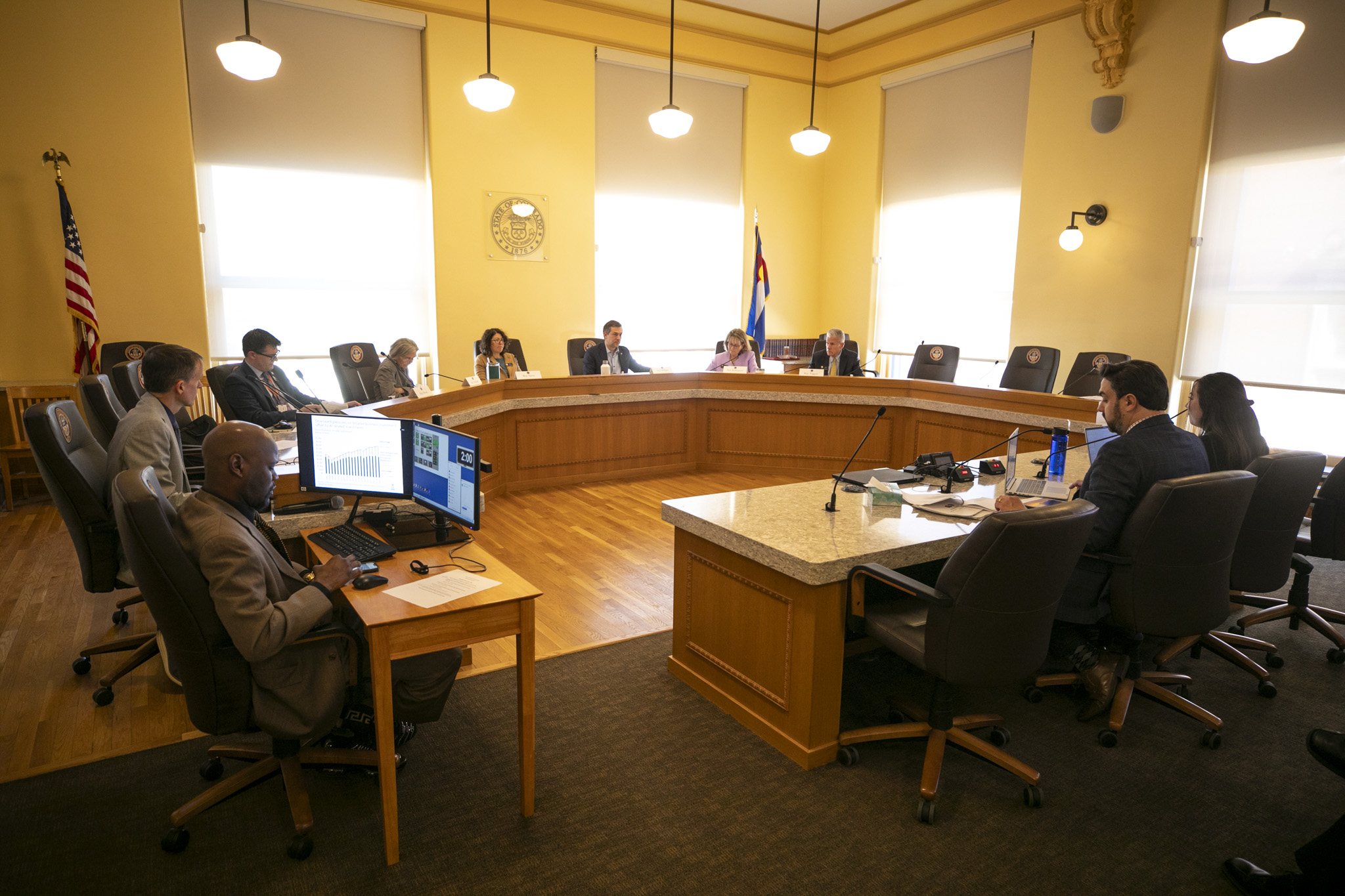
On Friday, the Joint Budget Committee was briefed on the latest revenue projections, which actually improved slightly from the June forecast. But the growth in Medicaid spending is projected to far outpace the gains in tax collections, resulting in a much larger deficit.
Medicaid, the federal health insurance program for low-income families, has actually seen its enrollment drop 31% since 2023, Ferrandino told the JBC. But the remaining patients are using its services way more. Costs are up 92% over that same time period, driven by rising use of long-term care services for the elderly and behavioral healthcare.
Ferrandino characterized the trend as an existential risk to state services. From 2023 to 2028, Medicaid spending grew by 13.6% a year, almost twice the annual rate of the state’s budget as a whole. It has also consistently grown faster than the state spending cap under the Taxpayer’s Bill of Rights, which limits tax revenue to the combined rate of inflation and population growth.
“If we just continue to allow this to happen at this rate, we will be reducing (spending on) all of the other departments by the end of the next decade,” Ferrandino said.
Even as Coloradans use more Medicaid services, new federal restrictions enacted by the Trump administration and Congressional Republicans will make it harder for the state to pay for them.
Starting in the 2027-28 budget year, the state is expected to lose $105 million from a new federal cap on state-level hospital provider fees, which Colorado uses to help fund Medicaid. Those losses will grow in the future, as deeper restrictions are phased in.
The dire financial news comes ahead of a November election that will feature several ballot measures that could either help or hurt the state’s budget picture. Legislative Democrats and their allies are backing two proposals that would raise billions in new tax dollars to pay for education, healthcare and other services, while conservative groups are pushing a measure that would block any future income tax increases.
Forecasters expect the state economy to continue to grow at a slow pace, much as it’s done in recent years.
Elizabeth Ramey, an economist for Colorado Legislative Council Staff, described it as a “low hire, low fire environment” that is leaving younger workers and lower income families behind.
Higher income earners have been driving consumer spending recently, while credit card delinquencies have risen to levels similar to the Great Recession. Delinquencies are rising on auto loans, student debt and now even mortgages. That suggests high inflation and economic unease may be starting to affect higher income households, as well, Ramey said.
The governor’s economists put the risk of a recession at 40%, citing the war in Iran, high gas prices, the U.S. trade dispute with China and a potential artificial intelligence bubble as major risks to the economy.
“We see ourselves in a very precarious position going forward,” said Annika Shropshire, an analyst with the governor’s office.