Japan Stocks Rebound 1,340 Points on Monday After Last Week’s Market Rout
TOKYO –
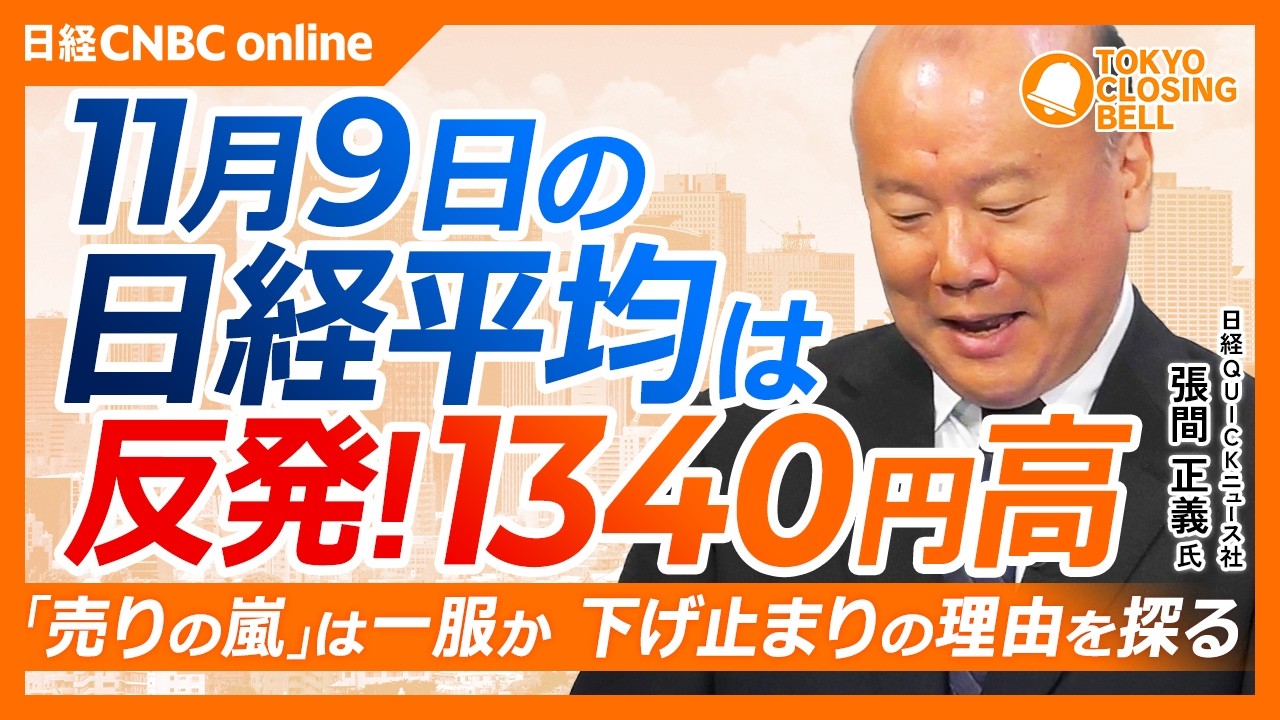
Japan’s Nikkei 225 Stock Average closed at 58,775.50 on Monday, November 9, 2026, at 3:30 p.m. Tokyo time, rising 1,340.73 points, or 2.33%, from Friday’s close, as investors returned to equities following last week’s sharp selloff, with widespread gains across banking, automotive, retail and semiconductor-related shares helping the benchmark record its first advance in six trading sessions.
The broader Topix index rose 110.17 points, or 2.97%, to 3,818.16, reflecting a strong recovery across the Tokyo Stock Exchange. Of the companies listed on the exchange’s Prime Market, 1,412 advanced, 120 declined and 13 were unchanged, with more than 90% of stocks finishing higher. Thirty-one of the exchange’s 33 industry sectors recorded gains, while only food and shipping stocks declined.
Monday’s recovery followed a particularly turbulent week for Japanese equities, during which concerns about artificial intelligence valuations, rising interest rates and uncertainty surrounding the global technology industry triggered heavy selling. The Nikkei had fallen more than 3,600 points on Friday, November 6, leaving investors looking for opportunities to buy shares that had suffered substantial losses.
The benchmark opened Monday at 57,960.70, up 525.93 points, before extending its gains as investors bought back shares in technology companies and other major stocks. By the morning close, the Nikkei had climbed nearly 2,000 points to 59,411.34, although the rally lost some momentum during afternoon trading as investors took profits.
Semiconductor-related shares benefited from a recovery in US technology stocks late last week, particularly a rebound in companies involved in artificial intelligence infrastructure and chip manufacturing. The Philadelphia Semiconductor Index had risen 4.21% on Friday, helping restore some confidence in Japanese semiconductor equipment manufacturers.
Fast Retailing, the operator of Uniqlo, made the largest positive contribution to the Nikkei, adding approximately 231 points to the index. Tokyo Electron contributed another 116 points, followed by semiconductor testing equipment maker Advantest, which added approximately 78 points. Recruit Holdings and Konami Group also contributed to the benchmark’s advance.
However, SoftBank Group remained under pressure despite the broader recovery, reflecting continuing uncertainty about the outlook for artificial intelligence investment and the financial performance of companies involved in building large-scale data centers. Investors remained concerned that political developments in the United States could lead to tighter regulation of artificial intelligence infrastructure, potentially affecting future growth expectations.
Banking shares were among the strongest performers as Japanese government bond yields rose, raising expectations of improved lending margins for financial institutions. Automakers, nonferrous metal producers and retailers also attracted buyers, suggesting that the rebound extended well beyond the technology sector.
Despite Monday’s gains, the Nikkei remained considerably below its November 2 closing level of 63,081.86, illustrating the scale of the recent market correction. The recovery therefore represented a partial reversal of the previous week’s losses rather than a complete restoration of investor confidence.
The yen remained relatively stable during Monday’s Tokyo trading session, trading at approximately 158.23 against the US dollar in the afternoon, compared with around 158.48 at the previous New York close. The Japanese currency briefly strengthened during the morning, although movements remained limited as investors balanced expectations for interest rate increases in Japan and the United States.
The Ministry of Finance released detailed figures on its intervention in foreign exchange markets during the summer, revealing that Japanese authorities spent a record 7.98 trillion yen buying the currency on July 30, followed by another 5.55 trillion yen on July 31 and 1.87 trillion yen on August 3. The combined intervention of approximately 15.4 trillion yen highlighted the government’s determination to prevent excessive currency depreciation after the yen approached 164 against the dollar earlier in the year.
The disclosure was particularly significant because the July 30 operation exceeded the previous record daily intervention of 6.28 trillion yen. The figures also confirmed that authorities had intervened on three separate days, rather than two as many currency traders had previously assumed. The unusually large operations have reinforced expectations that Japanese authorities could act again if the yen experiences another rapid decline.
Japanese government bond prices fell as yields increased, with the benchmark 10-year bond yield rising approximately three basis points to 2.665%. Higher yields reflected expectations that monetary policy could remain under pressure as inflation and currency movements complicate the Bank of Japan’s efforts to balance economic growth with price stability.
Fresh economic data released Monday provided a mixed picture of the domestic economy. The Cabinet Office reported that Japan’s coincident index of business conditions rose 0.7 points to 119.5 in September, its first improvement in two months. The government maintained its assessment that the economy was showing signs of improvement, supported partly by stronger industrial production.
However, the leading index, which measures indicators intended to anticipate future economic activity, fell 1.6 points to 116.4, its first decline in 17 months. The contrasting figures suggested that while current economic conditions remained relatively resilient, the outlook was becoming less certain as businesses confronted higher financing costs, volatile financial markets and changes in global demand.
Corporate developments also attracted significant attention after Mitsui Chemicals announced plans to acquire semiconductor materials manufacturer JSR in a transaction valued at approximately 1.84 trillion yen, including debt. The acquisition, involving financial participation from the government-owned Development Bank of Japan, represents the largest merger and acquisition transaction in Japan’s chemical industry.
JSR is a major global supplier of photoresists, specialized chemical materials used in semiconductor manufacturing. The acquisition is intended to strengthen Mitsui Chemicals’ presence in advanced semiconductor materials and expand its role in the global chip supply chain, an industry that Japan considers strategically important for its economic competitiveness.
The Development Bank of Japan will contribute 200 billion yen to the transaction, while Mitsui Chemicals plans to arrange approximately 1.64 trillion yen in bridge financing. The company is also considering issuing up to 150 billion yen in new shares as part of a broader financing strategy. Completion is targeted for the second half of fiscal 2027.
Mitsui Chemicals expects the acquisition to eventually generate an additional 40 billion yen in annual profit through business expansion and operational efficiencies. However, investors reacted negatively to the scale of the financial commitment, sending the company’s shares down approximately 8.5% on Monday as concerns grew over the additional debt burden and potential shareholder dilution.
The transaction follows the acquisition of JSR by the government-backed Japan Investment Corporation in 2024, demonstrating Japan’s continuing efforts to consolidate strategically important industries and strengthen domestic companies competing in international semiconductor markets.
International developments remained an important influence on Japanese financial markets. Asian equities rebounded Monday after a volatile week, with technology shares recovering in several major markets. Investors also monitored developments in the Middle East, where prospects for further peace negotiations helped ease immediate concerns about energy supplies and geopolitical tensions.
Oil prices retreated toward $98 a barrel as concerns about further US military action against Iran diminished. Nevertheless, energy prices remained a significant risk for Japan, which depends heavily on imported crude oil and liquefied natural gas. Sustained high energy costs could increase expenses for manufacturers, transportation companies and households, particularly if the yen weakens further.
In the United States, stronger-than-expected employment figures increased expectations that the Federal Reserve could raise interest rates in December. The resulting movement in US bond yields supported the dollar, complicating the outlook for Japan’s currency and domestic monetary policy.
Attention is now turning to upcoming US inflation data, together with financial results from major international technology companies including CoreWeave, Applied Materials and Cisco. Their earnings and investment plans are expected to provide further indications of whether rapid spending on artificial intelligence infrastructure can be sustained, an issue that has become increasingly important for Japanese semiconductor manufacturers and technology investors.
For the remainder of the week, Japanese investors will be assessing whether Monday’s rebound marks the beginning of a more sustained recovery or merely a temporary correction following the previous week’s sharp declines. Corporate earnings, bond yields, currency movements and the outlook for global artificial intelligence investment are likely to remain the principal drivers of trading.
Although Monday’s rally demonstrated that investors were prepared to return to Japanese shares following substantial losses, the continuing weakness of selected technology stocks and concerns over global interest rates suggested that market volatility could persist.