Inside France’s new TGV-M trains

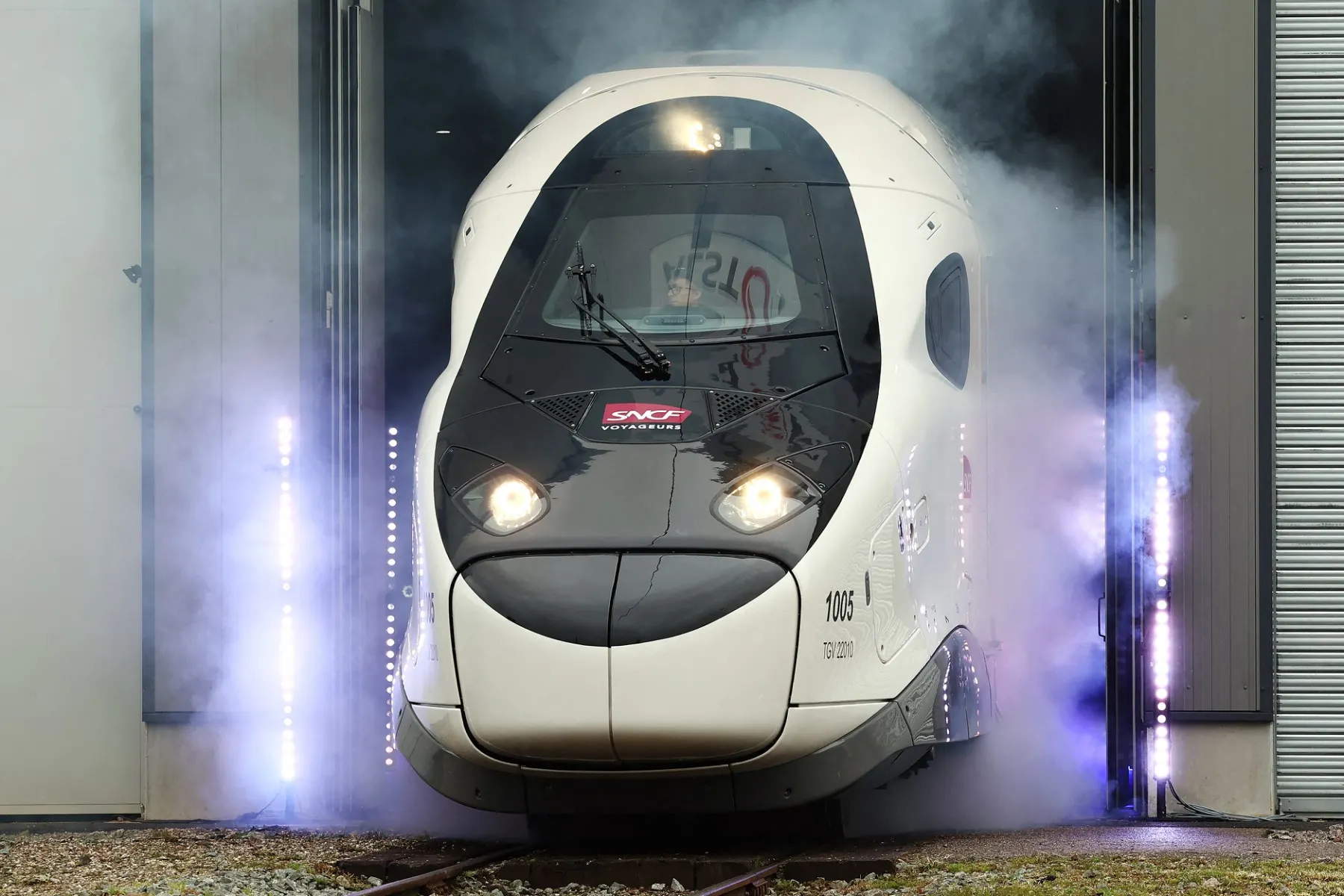
The first six of SNCF’s fleet of shiny new TGV M trains entered service on Friday, promising passengers a more comfortable experience, including better accessibility for wheelchair users.
The first of these new generation double-decker trains were initially scheduled to be in service for the Paris Olympic Games in 2024, but were first postponed to 2025, then to January 2026.
Further issues delayed them further, first to the summer and finally to the autumn of 2026 after a series of pre-runs to test the system on full scale.
But on Friday they were finally launched, initially running on the Paris-Marseille route.
Manufacturer Alstom is to supply 15 new trains a year until the already overdue €4.6 billion contract to supply 160 new-generation trains is fulfilled.
The two-level train holds 740 seats per carriage, 20 percent more than existing TGVs. Better aerodynamics, meanwhile, mean a 20 percent drop in energy consumption, while carbon dioxide emissions are cut by nearly a third (32 percent), according to SNCF.
🚆 Ce vendredi, depuis la gare de Lyon à Paris, est inauguré le TGV M, nouveau train à grande vitesse de la SNCF, que le groupe et Alstom qualifient de «révolutionnaire». Une rame peut contenir 9 voitures et compter 740 places. Alors, ça donne quoi ? ➡️ https://l.leparisien.fr/N0cg
— Le Parisien (@leparisien.fr) November 6, 2026 at 7:26 AM
And, each train will have its own battery allowing trains to continue their journey to the nearest station and maintain lighting and air-conditioning even if there is a problem with overhead electricity supply – meaning travellers are less likely to be stranded in the middle of nowhere with broken AC, as was the case a number of times during the summer heatwaves.
On board, passengers will find more comfortable “hammock style” seats with extra legroom, adjustable headrests, while larger windows are intended to let in more light. Each seat will also have a plug socket and a USB socket, while the fold-down table contains a little holder for a phone or mini tablet.
There is also more luggage space, better facilities for people with reduced mobility, and upgraded wi-fi services – still dependent on mobile operator coverage – as well as a brand-new, two-storey restaurant car renamed Le Bistro.
This features a self-service shopping area with payment on a terminal on the lower level, and on the upper floor a space to eat or heat food with 28 seats. The restaurant service will offer snacks – including the ever-popular croque-monsieur – and traditional French meals.
In First Class, the seats are five centimetres wider than in previous generations of TGVs, with full armrests and adjustable headrests.
There is also expanded space for bike storage.
Given that these new trains are more modern and comfortable – and 160 of them will cost €4.6billion – will travelling on them cost more?
SNCF says not. The same ticket pricing system will be used on TGV M trains as for older TGV trains in service, it says, glossing over the fact that these trains have been in the planning for a decade, so ticket prices have been covering part of the cost for some time.
For the first days of operation, whether your ticket gives you access to a journey on one of these high-tech, luxury trains is a matter of fortune. Six out of the 20-plus daily services between Paris and Marseille will be TGV M trains.
From Monday, November 16th, TGV M train schedules will be publicised on SNCF’s X account up to a week in advance. And, from January 2027, with the number of services increasing as more trains enter service, anyone booking their tickets on SNCF Connect will be able to see when TGV M trains are scheduled to run.
If, however, you’re really keen to try one out, international train guru Jon Worth has some tips.