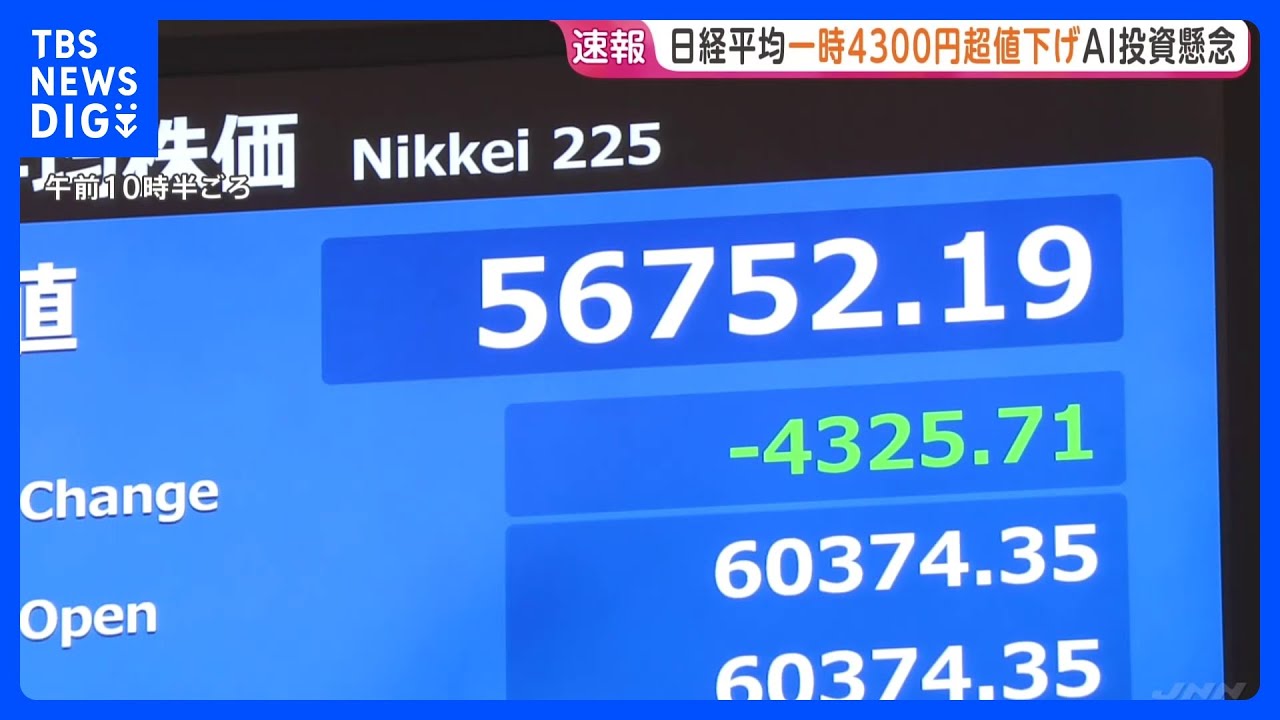
Nikkei Plunges Over 4,300 Points Friday Morning
TOKYO –
Tokyo stocks suffered a sharp sell-off on November 6 as growing concerns over a slowdown in artificial intelligence investment sent the Nikkei 225 plunging more than 4,300 points at one stage, pushing the benchmark below the psychologically important 60,000 level following a sweeping Democratic victory in the U.S. midterm elections.
The decline raised fresh questions about whether the AI investment boom that has driven stock markets higher in recent months is beginning to lose momentum, with investors rushing to sell shares in a wave of selling that accelerated throughout the morning session.
The Tokyo stock market opened sharply lower, with the Nikkei falling below 60,000 almost immediately after trading began. Losses continued to deepen as selling spread across virtually all sectors, briefly pushing the index down by more than 4,300 points.
By the end of morning trading, the Nikkei stood at 57,858, down 3,219 points from the previous close.
The sell-off followed a decisive victory by the Democratic Party in the U.S. midterm elections, which fueled concerns that Washington could introduce tighter regulations governing artificial intelligence and data centers.
Investors fear that tougher oversight could slow the pace of AI-related capital investment, potentially undermining earnings at semiconductor manufacturers and other technology companies that have benefited from the rapid expansion of AI infrastructure.
The election result has added to existing uncertainty over whether the enormous sums being invested in AI development and data centers can continue to generate sufficient returns to justify elevated share valuations.
Brokerages were inundated with inquiries as the market plunged, with staff attempting to reassure nervous investors while warning that further declines could follow.
One brokerage representative advised clients to “wait for the storm to pass,” while another warned that some semiconductor-related stocks could fall to their daily trading limits as selling pressure intensified.
Concerns about the sustainability of AI investment had already been building before the U.S. elections, but the Democratic victory appears to have triggered a sudden reassessment of the sector’s outlook.
The resulting wave of selling has contributed to simultaneous sharp declines in Japanese and U.S. equities, highlighting the extent to which both markets have become dependent on expectations of continued AI-related growth.
Market participants warned that the scale of the correction remains difficult to predict, particularly as investors reassess the earnings prospects of semiconductor manufacturers, data center operators and other businesses closely tied to AI expansion.
One market observer said it was impossible to determine how far stocks might fall, adding that trading conditions were likely to remain highly volatile for the foreseeable future.
The sharp decline has placed renewed attention on whether the AI boom can sustain the valuations that have propelled technology shares to record levels, with investors increasingly concerned that regulatory changes and slower investment growth could mark a turning point for the market.
Source: TBS