How exercise and friendships help prevent frailty
With one hand on the wall, Joseph Wong inched his way around his four-room Housing Board flat.
For two weeks in June 2025, a badly sprained ankle turned his daily routine into an ordeal.
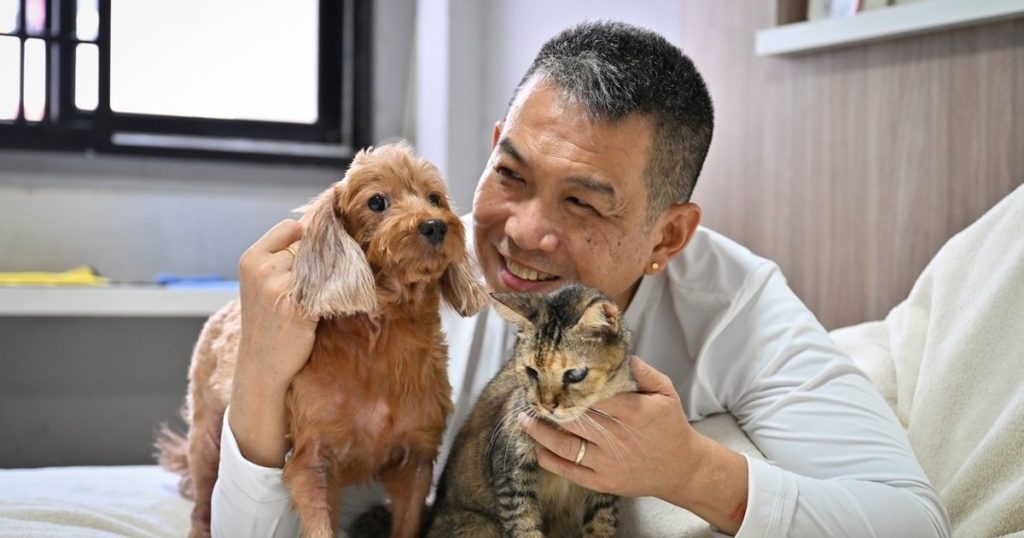
The 61-year-old retiree, who is single, lives with four cats, a dog and two birds. Twice a day, he cleans the flat, feeds his pets, then cleans up after them again.
The process usually takes an hour. With his injured ankle, it took two. “The moment I finished, I (was so tired that I) had to lie down and rest,” he says.
When he was younger, Wong recalls, a sprain like this would only hurt for a day or two. This time, it took more than two weeks to heal.
The slow recovery unsettled Wong. He took it as a sign of ageing.
But there may be more to it, says Professor Wang Yibin, director of the Cardiovascular and Metabolic Disorders Signature Research Programme at Duke-NUS Medical School.
A body that takes longer to bounce back from a fall, an injury or an infection is showing signs of frailty, Wang says, or could be in the state of “pre-frailty”.
He explains that frailty is a condition in which the body becomes less able to cope with and recover from illness, injury or stress.
Wong, like many people, mistakes these signs for the inevitable toll of growing old.
Twice a day, Joseph Wong spends an hour each time feeding and cleaning up after his pets.
PHOTO: CAROLINE CHIA
In a survey of more than 800 respondents in Singapore, comprising people aged 50 and above and caregivers, 73 per cent said frailty is a natural, unavoidable part of ageing.
The survey was commissioned by SPH Media and the Agency for Integrated Care (AIC). Respondents were drawn from the Kantar Profiles Audience Network, with interviews conducted between August and September 2026. Kantar is an independent market research company.
Most also think that frailty starts at around 60, with 72 per cent of respondents pegging it to that age.
“In reality, many of our body functions start to deteriorate as early as 30,” explains Wang.
Muscle matters
Most people picture frailty as being unsteady on their feet. But it can show up in different ways, says Professor Wang Yibin, director of the Cardiovascular and Metabolic Disorders Signature Research Programme at Duke-NUS Medical School.
There are three main aspects of frailty, says Wang:
-
Physical, when muscle mass and strength decline, and movement becomes harder;
-
Functional, when individuals fall ill more often and take longer to recover; and
-
Cognitive and psychological, which affects memory, thinking, mood and how well we cope with stress.
He leads MAGNET (Mechanistic Investigation and Clinical Innovation for Sarcopenia Diagnosis and Therapy) – a $10 million nationwide research initiative focused on age- and disease- related muscle loss, or sarcopenia.
Launched in 2025, MAGNET is supported by the National Research Foundation of Singapore.
So what can people do to prevent frailty? One way is by building muscle mass and strength through proper training.
Wang explains that as the body’s largest organ by weight, muscle is also central to many other organ functions, including metabolic health.
Muscles store energy and the body’s building materials, such as amino acids, and release them when needed. They also send hormone signals to other organs, which helps keep the body’s systems in balance, Wang says.
When sarcopenia sets in, seniors become more likely to develop conditions such as obesity, diabetes and heart disease. The decline of their immune systems and brain health could also become faster, he adds.
Fruitful days
Staying active is one of the best defences against frailty, and Trindy Ho, 63, has built it into her week.
Every Tuesday at 9am, she heads to Pasir Panjang Wholesale Centre for what she calls her weekly “workout”.
There, she joins a group of fellow volunteers.
Usually there are 10 to 15 on duty in each session. In their red aprons, the volunteers walk briskly through the 152,488 sq m centre – about the size of 21 football fields – with their two-metre long trolleys.
Ho picks up an 18kg carton of bananas effortlessly and stacks it on her trolley.
They are part of the food rescue team at non-profit and volunteer-run organisation Fridge Restock Community SG (FRC), which saves unsold produce and redistributes it to those in need.
Trindy Ho, 63, says her weekly food rescue missions on Tuesday mornings are “workouts” for her.
PHOTO: CAROLINE CHIA
Stall after stall, the volunteers ask distributors for fruit and vegetables they are about to throw away.
Ho has volunteered with FRC for almost three years.
Each food rescue session lasts about four hours; by the end of it, “I would have clocked almost 8,000 steps,” Ho says.
FRC is just one of several causes that Ho, who has two adult children in their 30s, gives her time to.
About three decades ago, Ho left her corporate job after her first child was born and became a real estate agent.
The flexible hours freed her up to volunteer – which, she says, is her way of “giving back to society” and a “meaningful way to stay active”.
For about 15 years, Ho drove a van for Care Community Services Society, collecting donation cans on an ad-hoc basis. In March this year, she started volunteering at social service agency Lions Befrienders, where she visits seniors who live alone to check on their health and wellbeing.
When she is not volunteering, Ho helps look after her nine-month-old grandson at her daughter’s home.
Getting up and down from the floor with him, and carrying all 10kg of him, “helps to strengthen my arms too”, she says.
Ho and her husband, 63, have been attending weekly ballroom dance classes together for 19 years. She also attends weekly open-air Zumba sessions near her home, which she books through Health Promotion Board’s Healthy 365 mobile app.
Launched in 2015, Healthy 365 started as a step-tracking app. Features have expanded to include meal logging, fitness tracking and booking of free community exercise classes and events.
“Once you sit and do nothing, your muscles are going to waste away,” Ho believes.
Strength in numbers
Ho is not alone in that view. Lack of physical activity was the top perceived cause of frailty, cited by 55 per cent of survey respondents.
Singapore is now a super-aged society according to the United Nations’ definition, with more than one in five citizens aged 65 and above.
“Helping seniors remain healthy, independent and active for as long as possible (has become) increasingly important,” says Soh Swee Ping, chief of Active Ageing Division, AIC.
The good news is that frailty is not inevitable, she adds. Evidence shows it can be delayed through regular physical activity, good nutrition and staying socially connected.
But few link frailty to a lack of social interactions. In the same survey, only 23 per cent of respondents associated frailty with loneliness or social isolation, and just 11 per cent saw isolation as a cause.
For pre-school teacher Purba Pal, 58, staying active is as much about friendship as fitness.
Twice a week after work, she and a few friends head out together.
On some evenings, they would join a community dance session at a shopping centre, booked through the Healthy 365 app. On others, they stroll along a park connector, chatting as they go.
“After work, sometimes we feel very tired and don’t want to go to the gym,” says Pal. “But if we go together, we can motivate each other.”
Every night after dinner, she also walks her shetland sheepdog for 20 to 30 minutes.
Keeping herself active enables Purba Pal, 58, to do what she enjoys, such as hiking overseas. In June 2026, she went on a more than two-hour hike in Zermatt, Switzerland.
PHOTO: COURTESY OF PURBAL PAL
Pal sees it as part of a holistic approach to ageing. “It’s not only for health,” she says, “If you feel happy and engaged, you’ll be less stressed.”
She also pays attention to her diet, making sure to get enough protein from eggs, tofu, lentils and paneer, an Indian cottage cheese.
That mindset makes a difference, says AIC’s Soh. “When people understand that frailty is not something they simply have to accept, they are more likely to take proactive steps to manage their health and seek support early.”
Wong, who does strength training at the gym three to four times a week, agrees.
His reason for staying strong is close to home; every Saturday, he meets his sisters for brunch. “I want to continue to (take care of) my pets, and to go out with my family.”
Wong also volunteers weekly at non-profit organisation We Care Community Services. “It makes me feel that I’m still giving back to society, and that I’m still useful,” Wong says.
-
In Perspective is a research-led content programme by SPH Media that combines insight-driven storytelling with expert perspectives on key issues shaping society.
In partnership with the Agency for Integrated Care