MPs raise questions on $20m fine, delay in strengthening haze law, in six-hour debate
SINGAPORE – Investigations remain open into the four companies issued legal notices under Singapore’s Transboundary Haze Pollution Act in 2015, although time has lapsed because of procedural issues, said Minister for Sustainability and the Environment Grace Fu on Nov 4.
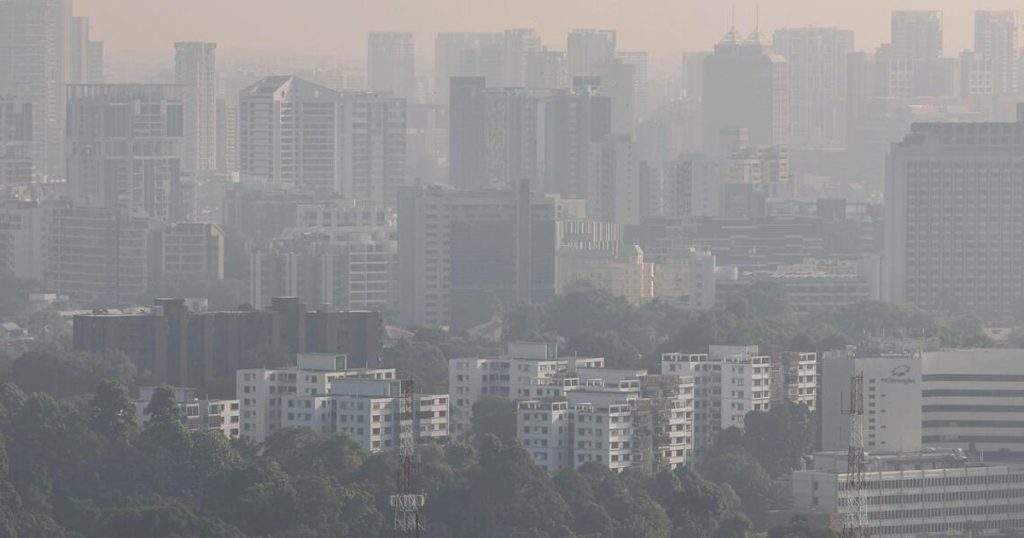
But three of the four firms have also been implicated in the 2026 haze episode, and their past actions will be considered as the authorities continue their probe into the current case, she added.
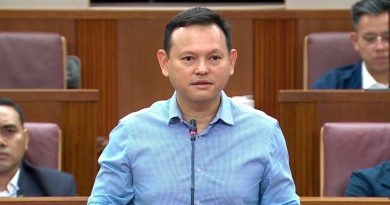
Fu gave this update in Parliament on the open cases under Singapore’s haze law, during a debate on a Bill to amend the legislation.
With the changes, which were passed after a six-hour debate, the authorities here will have more tools to investigate and act against firms linked to fires in the region.
All 24 MPs who spoke up supported the amendments, although they sought clarity from the minister on a range of issues.
Many MPs, including Poh Li-San (Sembawang West) and Non-Constituency MP Eileen Chong of the Workers’ Party, asked why it took 11 years to strengthen the law.
Poh also asked about the timeline of investigations and enforcements this time, since the amendments will not apply retroactively with the ongoing four cases.
Fu said says the amendments are intended for the Government to take quick action, either through legal or economic levers. “So I hope that we have a much faster resolution of the cases,” she said.
Lee Hui Ying (Nee Soon GRC) and Jessica Tan (East Coast GRC) were among the MPs who wanted to know how the authorities determined whether fires abroad would pose a risk of haze to the Republic.
Before the amendments kick in, the Act can be triggered if the haze causes the Pollutant Standards Index – a measure of air quality in Singapore – to stay in the unhealthy range in any part of the country for 24 hours or more.
But with the changes, the scope of the law will be expanded to include the risk of haze. This means entities can be held responsible as long as they cause or contribute to overseas fires that can potentially result in Singapore experiencing haze, even if the smoke plumes have not drifted here.
In response, Fu said that proving risk will be done through judgment based on scientific and meteorological data.
If the air quality is stable and in the healthy range, and weather conditions do not indicate any risk of haze pollution in Singapore, the National Environment Agency will not have any interest or reason to act, even if there are fires, she said.
However, if there is a “reasonable likelihood” of air quality worsening because of unfavorable weather conditions and significant forest fires, “NEA will have the basis to exercise a wider range of options without having to prove that the fire in a specific location has indeed caused haze pollution in Singapore,” she added.
“Our aim is to allow agencies to move and react in a timely manner… The government will still have to satisfy the court that all elements of the offence are (met),” said Fu.
Under the changes to the law, the maximum fine for those found guilty of causing or contributing to fires was also raised from $2m to $20m. But some MPs questioned if this was still too low to serve as a deterrent.
David Hoe (Jurong East-Bukit Batok GRC) pointed out that for a corporation making $500 million in profits, $20 million is just 4% of the company’s revenue.
He asked if turnover-based or profit-linked fines was considered, with the maximum fine set as a percentage of an errant company’s annual profit.
Fu said the maximum penalties were considered carefully to ensure that they are fair and practical, while providing a suitable deterrent.
“Turnover-based fines were considered, but we decided to go with an absolute figure, given the potential difficulties in obtaining information on turnover for every entity (we) want to go after,” she said.
“On the maximum fine defined in the legislation, penalties are ultimately decided by the courts based on the circumstances in each case. We do not expect that the maximum fine will always be imposed.”
A civil penalty framework with a maximum fine of $10 million was also added to the law, so that there is another route to take errant entities to task.
Fu explained that both the civil and criminal routes of action require different levels of proof.
“If we’re able to prove beyond reasonable doubt, we’ll definitely go for the criminal prosecution route, and therefore the $20 million maximum fine (will) apply, but having an option of civil liability basically gives NEA and the prosecutor an alternative route if we do not have that level of proof,” she added.
Fu was responding to Hany Soh (Marsiling-Yew Tee GRC), who had asked why the civil penalty did not match the criminal penalty of $20 million.
MPs also asked if Singapore could do more to address the root cause of this year’s haze, which is the burning of peatlands in Indonesia that had been drained for plantation land. Slash-and-burn agriculture practices light up the dried habitats in infernos that are hard to put out.
Poh said: “If we want our solutions to prevail long-term, enforcement should be accompanied by measures that encourage sustainable land and water management, fire prevention, and ecosystem restoration.”
Aljunied GRC MP Gerald Giam added: “The law must treat deliberate canal excavation that turns wetlands into tinderboxes with the same urgency as the fires that inevitably follow.”
Giam sought clarification on whether the legislative intent of the revised law is to treat peatland drainage as conduct that causes or contributes to fire risk.
He suggested that the plantations linked to Singapore-based corporates should be required to maintain water table levels and submit audited fire prevention plans directly to NEA. Water table levels refers to the extent below the surface of the ground at which you start to find water.
Non-Constituency MP Andre Low from the Workers’ Party acknowledged that carbon credits can help to finance peatland restoration in the longer term.
He also noted that Singapore’s developing carbon-credit cooperation with Indonesia is an opportunity to examine how these arrangements could work in practice.
In response, Fu said the law could includes peatland restoration as one of the directives to prevent land or forest fires.
She clarified that the Transboundary Haze Pollution Act is not restricted to only fires on peatlands, and there are other causes of haze and fires that the law caters to.
“So I do not want to constrain ourselves or focus our attention too narrowly on whether we should have water table requirements or not, because these are details that we can work with later on, with the specific cases (and) remedial actions,” she said.
The amendments will give the Government more tools and paths, Fu says, but Singapore should be clear-eyed about what legislation can achieve.
She said: “There may be some companies that we can go after, but there are many more landowners or occupiers, including many small landowners that … we are not able to.
“We won’t be able to investigate all of them, we should also expect to continue to face challenges with securing and verifying evidence. There is no guarantee of a successful prosecution.”