Why have there been several deadly rail crashes in Spain this year?
Spain has recorded four deadly train crashes in 2026, including two major ones on high-speed lines which account for almost all of the 117 deaths. Can any conclusions be drawn as to what’s going wrong with the country’s rail network?
The first fatal train collision of the year was the Adamuz crash on January 18th, near the city of Córdoba. In this incident, two high-speed trains collided after one derailed, causing 46 deaths and around 300 injuries.
The second happened just two days later in Gelida in Catalonia, when a commuter train crashed into a wall that had collapsed due to adverse weather. The train driver was killed while 37 people were injured.
On February 12th, a passenger train travelling between Madrid and Badajoz crashed directly into a car at a level crossing near Talavera de la Reina, killing the driver of the vehicle. Investigators concluded the man hadn’t paid attention to the signalling at the level crossing.
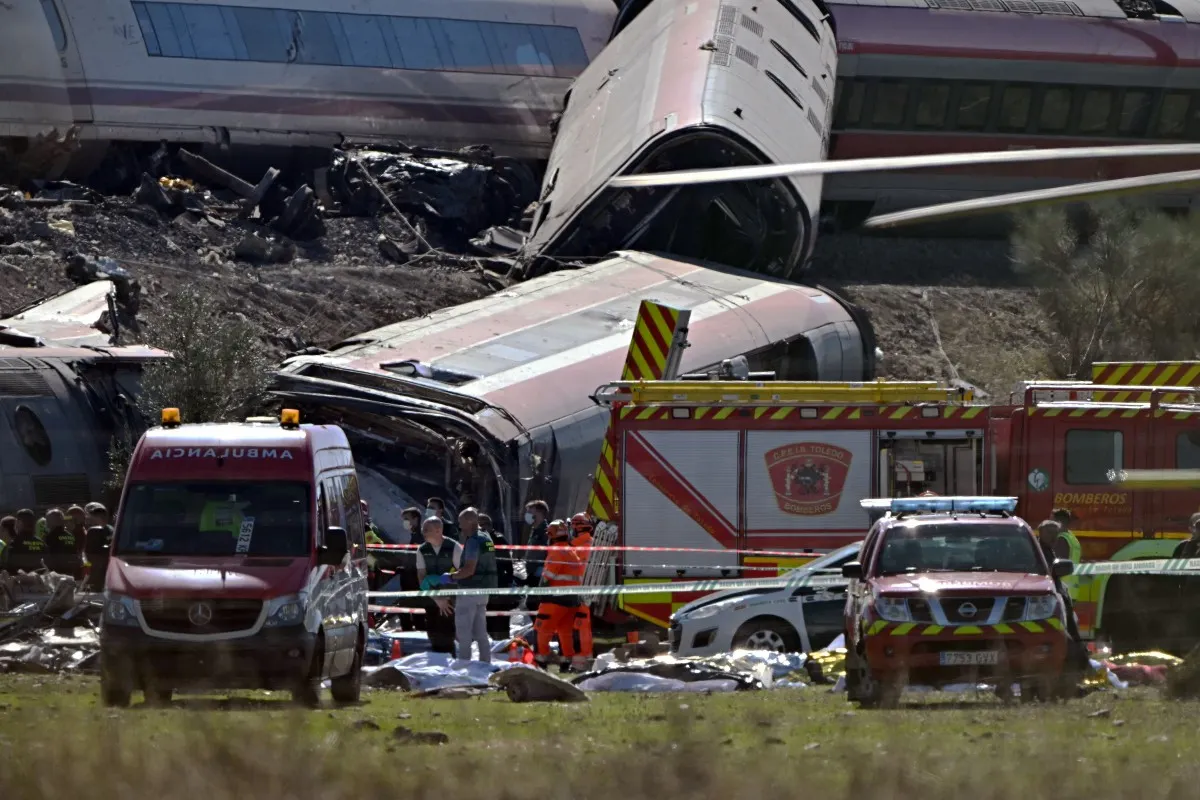
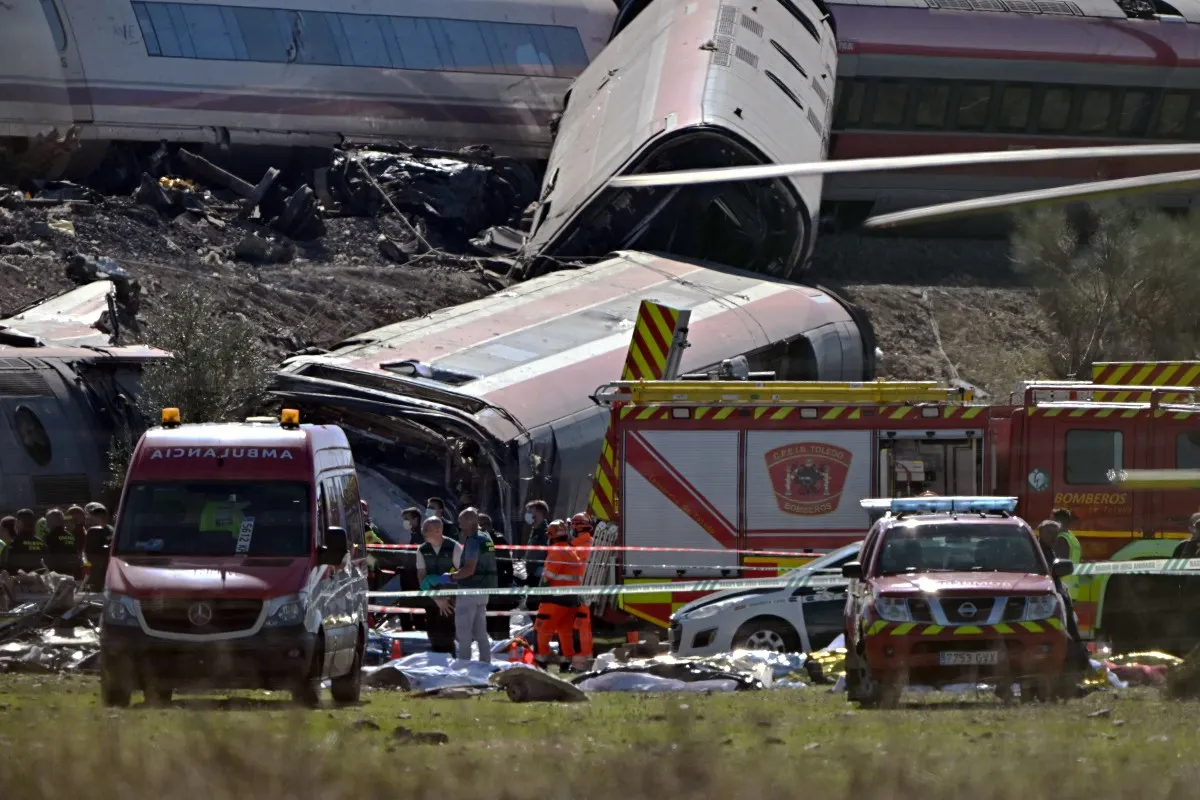
And the fourth and latest crash has been the worst so far this year, the devastating collision in Urda in Toledo on Wednesday October 28th, which has killed at least 69 and injured hundreds. Emergency services are still working on recovering victims so this number of casualties could rise.
READ ALSO – Q&A: What we know so far about the deadly train crash in central Spain
In the last 10 years since 2016, there have been a total of seven train crashes in Spain in which one or more people died, but four of them have happened this year.
Is it down to sheer chance or is something else at play, is the question on many Spaniards’ minds currently.
In truth, the fatal rail accidents that occurred this year in Spain all happened for different reasons, but that’s not to say that there aren’t some common factors which could be contributing.
Deterioration of the rail lines
Spanish train drivers have long been warning about the deterioration of the high-speed rail infrastructure. They have also complained that preventive maintenance has not kept pace with rail traffic.
Before the Adamuz and Urda tragedies, train drivers’ union Semaf warned back of “increased vibrations and rolling instability on the Madrid-Seville-Málaga-Barcelona-Valencia rail corridors” and as a result proposed reducing the maximum speed limit or reinforcing maintenance efforts.
Spain has the largest high-speed rail network in Europe and the second-largest in the world after China, so keeping up with maintenance is a big task.
Deterioration of the lines was most likely the cause for the Adamuz disaster, although investigations are still underway nine months on. The main working hypothesis, shared by investigators and the Civil Guard, states that the accident was down to a broken track, which led to the derailment of the Iryo train and its subsequent collision with an Alvia train back in January.
Semaf actually called a 24-hour strike for Thursday October 29th in protest against the non-compliance of safety measures agreed with national rail operator Renfe and Spain’s Ministry of Transport earlier this year.
As if by design, the Toledo train collision that’s killed at least 69 people happened one day before the stoppage, lending further credibility to Semaf’s concerns.
READ ALSO: What to know about Spain’s upcoming train strikes this autumn
Skewed investment on a huge network
A report published by the European Commission reveals that in Spain only 16 percent of funding for the rail network is allocated to maintaining existing tracks, while the vast majority (84 percent) is dedicated to new infrastructure.
According to the Ineco report, Efficiency of the Spanish Sector in the Development of the High-Speed Rail Network, which was published in 2023, Spain’s maintenance spend per kilometre of track trails behind systems in Germany, France, and Switzerland, leaving ageing signalling systems, switches and civil infrastructure more vulnerable.
Spain has the largest high-speed rail network in Europe and the second-largest in the world after China, spanning approximately 3,973 km.
Weather events and climate change
Increasingly worsening weather events this year such as flash flooding and storms have also caused even greater deterioration on certain parts of the network. This was the case in the Gelida crash in Catalonia, in which part of a wall fell onto the track after heavy rains in the northeastern region.
Commuter trains and high-speed rail operators across Catalonia were suspended for several days due to the floods at the beginning of October, including the rainiest day in history in Barcelona on October 3rd 2026.
READ ALSO – Q&A: What we know so far about the deadly train crash in central Spain
The European Union Agency for Railways reports that the economic cost of climate-related damage to Europe’s railway infrastructure has surged by 160 percent over the past decade, exceeding €40 billion in 2024 alone.
Spain is identified as one of the most vulnerable countries in Europe, particularly susceptible to flooding and extreme heat affecting the tracks.
The European body is urging rapid technical adaptation to Spain’s network, such as designing trains to withstand temperatures up to 55C and implementing measures to prevent rail deformation during heatwaves.
More rail traffic on the lines
The increase in train accidents coincides with the liberalisation of Spain’s train operators. Whereas before Spain only had state-run Renfe trains, in the last five years new private companies Ouigo and Iryo have been allowed to join the network.
According to records from Adif and the National Commission on Markets and Competition, delays on the high-speed rail network have tripled since the market was opened to competition and there has been a 45 percent increase in the number of daily trains operating on major corridors, such as Madrid–Barcelona and Madrid–Andalusia.
With more trains running at much shorter intervals, it is having a greater impact on infrastructure and maintenance.
IT failures and human errors?
Although we don’t yet know all the details, the most recent crash in Toledo on Wednesday is being blamed on “human error” following the detection of a “failure in the main signalling system”, according to the Ministry of Transport and Adif.
This malfunction led to the signalling system being switched to manual operation when trains on that line were stopped.
“The decision to resume traffic, while that system had not been restored, belongs to the control centre, and the control centre… took the decision to resume traffic in circumstances that, from our point of view, are inexplicable,” Transport Minister Óscar Puente has said.
READ ALSO: Spain’s transport minister blames rail crash on ‘inexplicable human error’