Last-minute voter guide for California’s midterm election
In summary
Californians have a full ballot for the November 2026 election, including a governor’s race, congressional seats and 14 propositions. Don’t miss your chance to make your ballot count.
It’s time to lock in on Election Day if you haven’t already mailed in your ballot.
California voters are making some big decisions, including choosing the next leader of the state, who will serve in the U.S. House (and potentially what party controls Congress) and whether California becomes the first state to impose a billionaire tax.
Plus we have a dizzying 14 propositions on our statewide ballots, including ones on complicated topics like environmental and healthcare spending.
On top of that, President Donald Trump and his administration have been contesting the mechanics of California elections for months. It began with an executive order that was meant to limit mail-in voting, which California uses. That effort failed in court but fueled worries that ballots would not be delivered.
Now, the administration is suing California to force elections officials to set aside up to 20,000 ballots that the feds claim could have been mailed to noncitizens. It also charged 28 immigrants with illegally voting or registering to vote. Democratic congressional leaders and allied groups have sued the administration in return.
Here’s what you need to know to get up to speed and make sure your vote counts.
How to vote
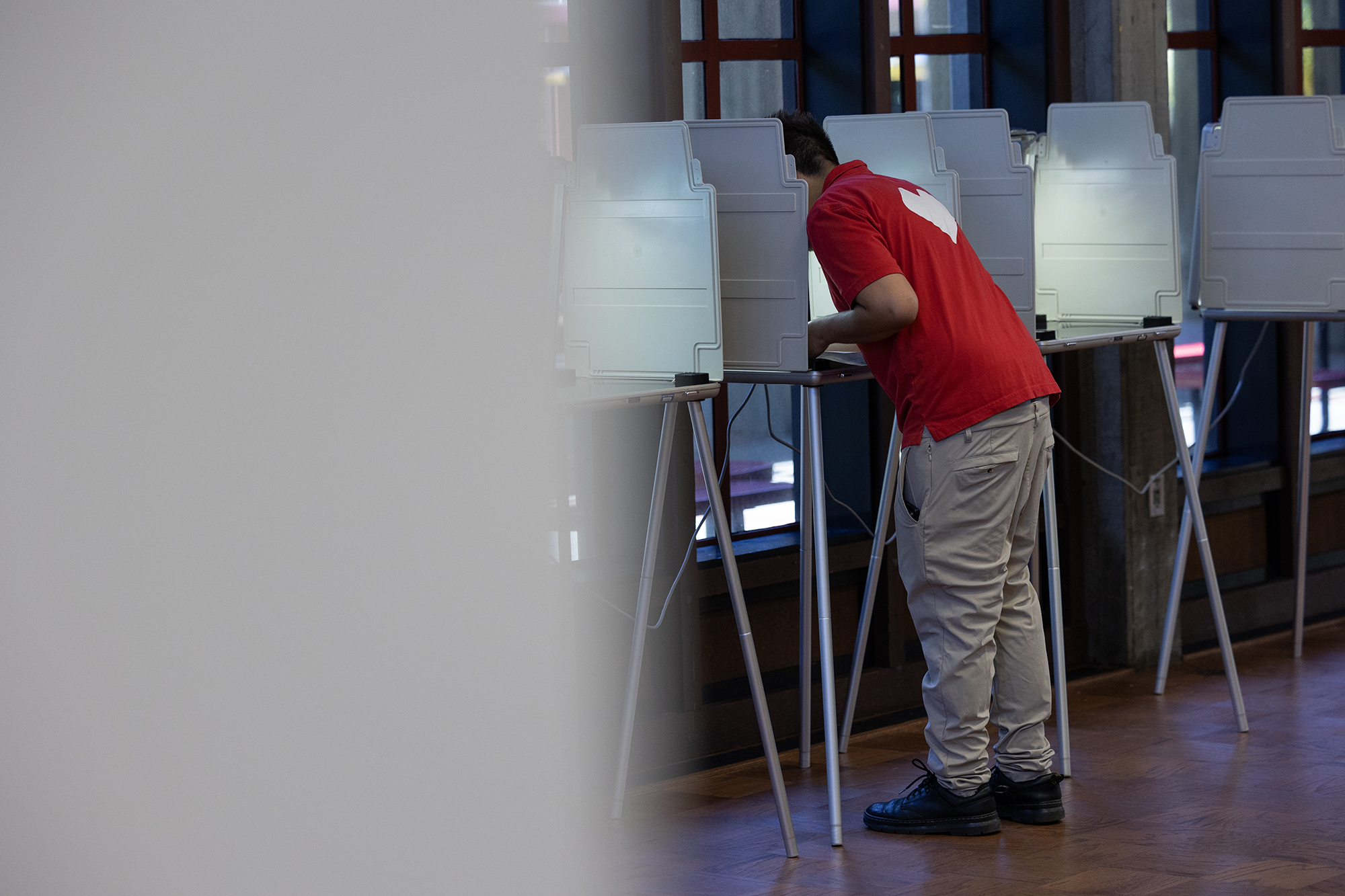
Early voting has already begun in some locations across all counties, and you can look up nearby voting centers here where you can vote in person or drop off your ballot.
You can also mail your ballot, which must be postmarked on or before Election Day and received by election offices within seven days after Election Day. Officials are urging voters to mail ballots early in case there’s any post office delays.
After you submit your ballot, you can track its status here. County elections officials must begin reporting results to the secretary of state on Election night, no more than two hours after they begin counting votes. The officials have 30 days to count ballots and finalize their results to the state. The secretary of state then has 38 days to certify the results. More information about California’s vote-counting process can be found here.
California governor’s race
In a state where Democrats outnumber Republicans two-to-one, Democratic candidate Xavier Becerra is the likeliest to win. Unlike his opponent, Republican Steve Hilton, Becerra has remained mum during the race about specific policies he’d enact as governor.
The son of working-class Mexican immigrants, Becerra has had a long history of public service: He served a dozen terms in Congress, became California’s first Latino attorney general and went on to become the first Latino U.S. secretary of Health and Human Services.
Becerra urges voters to look at his record to see where he stands, like when he sued the first Trump administration to preserve the Deferred Action for Childhood Arrivals immigration program or filed a lawsuit with Texas to preserve the Affordable Care Act. He was also an early supporter of LGBTQ+ rights and universal public healthcare.
Hilton, meanwhile, hopes to be the first Republican to hold statewide office in 20 years and is endorsed by Trump. Born in the U.K. to Hungarian immigrants, Hilton doesn’t fall neatly into one singular political ideology. While working in London to refresh the British Conservative Party’s image, he pushed to slash welfare, cut government employment and privatize government services. But he’s also endorsed a higher national living wage in the U.K. and is critical of the right for oftentimes blaming China and immigration for inequality in the U.S.
He’s run a cheeky campaign while touting lofty pledges such as abolishing the California DMV, lowering gas to $3 a gallon and halving electricity bills.
The two only debated each other once, in September, in which Becerra linked Hilton repeatedly to Trump and Hilton accused Becerra of dodging California’s real problems.
For more, see where the candidates stand on climate, healthcare, artificial intelligence regulation, water management and homelessness.
So many propositions
At this point you’ve probably heard about the proposed billionaire tax. But there are more than a dozen other propositions for you to consider.
To make it easier, we have a separate rundown on just the 14 ballot measures. You can also check out our explainers on just the five tax measures on the ballot, and another examining the three bond measures.
Besides our voter guide explanations and quizzes of the propositions, our reporters spent the past month digging into each one, going over what the measures would do and who’s for or against it.
Take a look:
Midterm congressional races
Many Californians will be watching results on Election Night just to see which party controls Congress in the final two years of the Trump administration. California has several hot races. Here’s a look at them.
- Congressional District 4, where longtime Democratic Rep. Mike Thompson faces a challenge from Democrat Eric Jones in Napa and Sonoma wine country.
- Congressional District 7, where Democratic Rep. Doris Matsui faces a challenge from the left by Democrat Mai Vang. They’re competing for a Sacramento-area district.
- Congressional District 11, where Democratic state Sen. Scott Wiener is competing with Democratic San Francisco Supervisor. Connie Chan to claim U.S. Rep. Nancy Pelosi’s San Francisco seat.
- Congressional District 13, where Democratic Rep. Adam Gray faces a challenge from former Stockton Mayor Kevin Lincoln, a Republican, to represent the Northern San Joaquin Valley.
- Congressional District 22, where progressive Democrat Randy Villegas is trying to unseat Republican Rep. David Valadao in the Southern San Joaquin Valley seat.
- Congressional District 48, where Democratic San Diego City councilmember Marnie von Wilpert is facing Republican San Diego County Supervisor Jim Desmond.
Insurance commissioner and more statewide races
Voters will also choose the state’s insurance chief, who regulates all kinds of insurance. Californians pay some of the highest insurance premiums, so who’s in charge could affect your wallet. If you’re a renter, you’ll also want to pay attention because the health of the state’s property insurance market can influence the cost of rent, housing supply and how well communities can bounce back from disasters.
Two Democrats — state Sen. Ben Allen of El Segundo and former San Francisco Supervisor Jane Kim — are vying for the position.
While they have a lot in common, both offer different ways to solve the state’s insurance problems. Kim is proposing more progressive ideas, including public disaster insurance and expanding low-cost auto insurance to all California drivers.
Allen’s plan for wildfire risk mitigation, meanwhile, would include pushing the insurance industry to do more to reduce fire risk. Political action committees have spent a record-high of more than $6 million on this race. More than half of that spending, $3.2 million, has been in support of state Allen.
The other races take on the traditional Democrat vs. Republican matchup. For more info on them, check out our voter guide:
CalMatters reporter Maya C. Miller contributed to this story.
Source link