Singapore TCM accreditation and integrative medicine push
SINGAPORE – Singapore is introducing a voluntary accreditation framework for traditional Chinese medicine (TCM) providers. It will also study whether accredited TCM practitioners, working with general practitioners, can be allowed to order X-rays.
These moves are part of a broader push to explore integrative medicine and expand the role of TCM in mainstream medicine.
They come alongside efforts to introduce local degree and master’s programmes in TCM, to undertake sandbox studies to bring TCM treatments into mainstream care, and to explore how TCM can contribute to preventive care programme Healthier SG.
Launched on Oct 17, the TCM Accreditation Programme will accredit the first five TCM providers.
They are: Kwong Wai Shiu TCM Centre in Serangoon; NTU Chinese Medicine; Singapore Chung Hwa Medical Institution Headquarters; Singapore Thong Chai Medical Institution Headquarters; and Thomson Chinese Medicine in Novena.
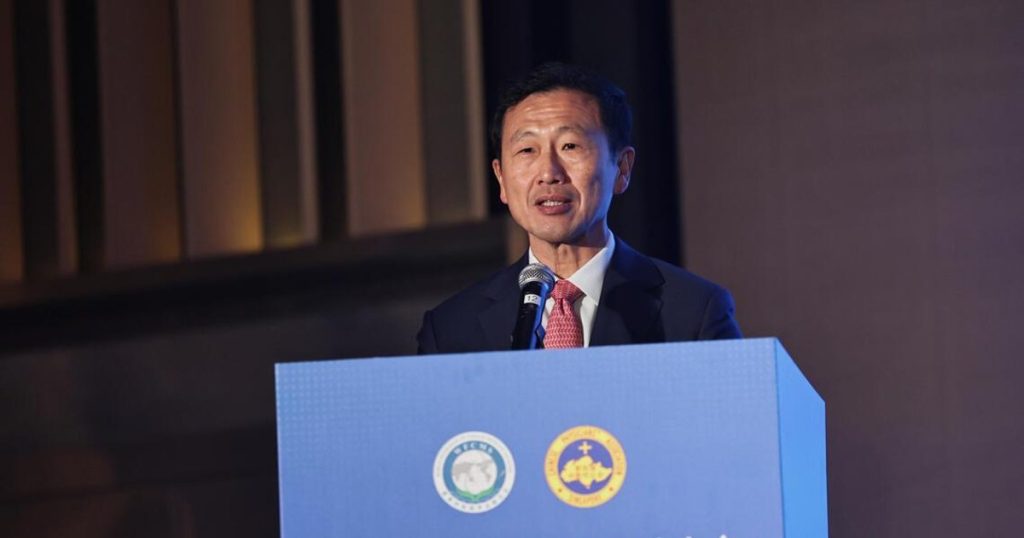
“Our objective is to establish accreditation as something beyond licence of practice,” Health Minister Ong Ye Kung said at the opening of the 23rd World Congress of Chinese Medicine on Oct 17. He said accreditation it shows a commitment to stronger governance, consistent standards and public confidence.
“It creates opportunities for accredited practitioners and providers to work with the Ministry of Health in co-designing future TCM care models and contributing to our national healthcare initiatives,” he added.
The TCM Accreditation Programme, administered by The Academy of Chinese Medicine, Singapore, has separate tracks for organisations and individuals. Organisations are assessed on factors including governance, hygiene and infection control, equipment, and the preparation and dispensing of TCM medications. Practitioners are assessed on qualifications, clinical experience and professional standing, among other criteria.
Accreditation goes beyond the existing requirements for TCM practitioners to be registered with the TCM Practitioners Board and hold valid practising certificates. Registered practitioners and providers can continue practising and operating without accreditation.
MOH will also open a second call for proposals under its TCM Integrative Sandbox from Nov 3. The initiative allows public healthcare institutions to test and evaluate selected TCM treatments in hospital settings.
The sandbox, launched in January 2025, evaluates whether treatments are clinically effective and cost-effective. Those that demonstrate positive results over one to two years could be considered for wider adoption and financial support.
Ong said MOH wants to support further work involving Chinese proprietary medicines, including their use in managing chronic diseases.
“The call for sandbox proposals will therefore remain open for another three years,” he said.
Seven acupuncture projects were selected for trials, out of 18 proposals submitted under the first call.
They cover stroke rehabilitation, migraine, knee osteoarthritis, female infertility, drug-resistant epilepsy and supportive cancer care, including the management of pain, insomnia and fatigue.
Currently, the only TCM treatments subsidised in public hospitals are acupuncture for neck pain and lower back pain.
“What we should not compromise on when developing integrative medicine is to build rigorous evidence for safety and effectiveness,” said Ong.
But he added: “TCM should not be forced into research approaches of modern medicine that do not recognise its long history of development and accumulated empirical evidence.”
“For example, randomised controlled trials may not always be practical for TCM. At the same time, neither should TCM be exempt from rigorous evaluation.”
MOH is also aiming to test how collaborative care between TCM practitioners and GPs could work, under Healthier SG, in the first half of 2027.
It has received 30 proposals and is shortlisting applications for further discussion.
The Agency for Integrated Care will also facilitate more partnerships between accredited TCM providers and active ageing centres to bring services closer to seniors. Kwong Wai Shiu TCM Centre and Singapore Chung Hwa Medical Institution have started collaborating with AACs, said Ong.