Are French lycées really all that bad?
French lycée students have been staging nationwide protests about the state of their schools, but is French schooling really that bad? We asked an education expert to explain.
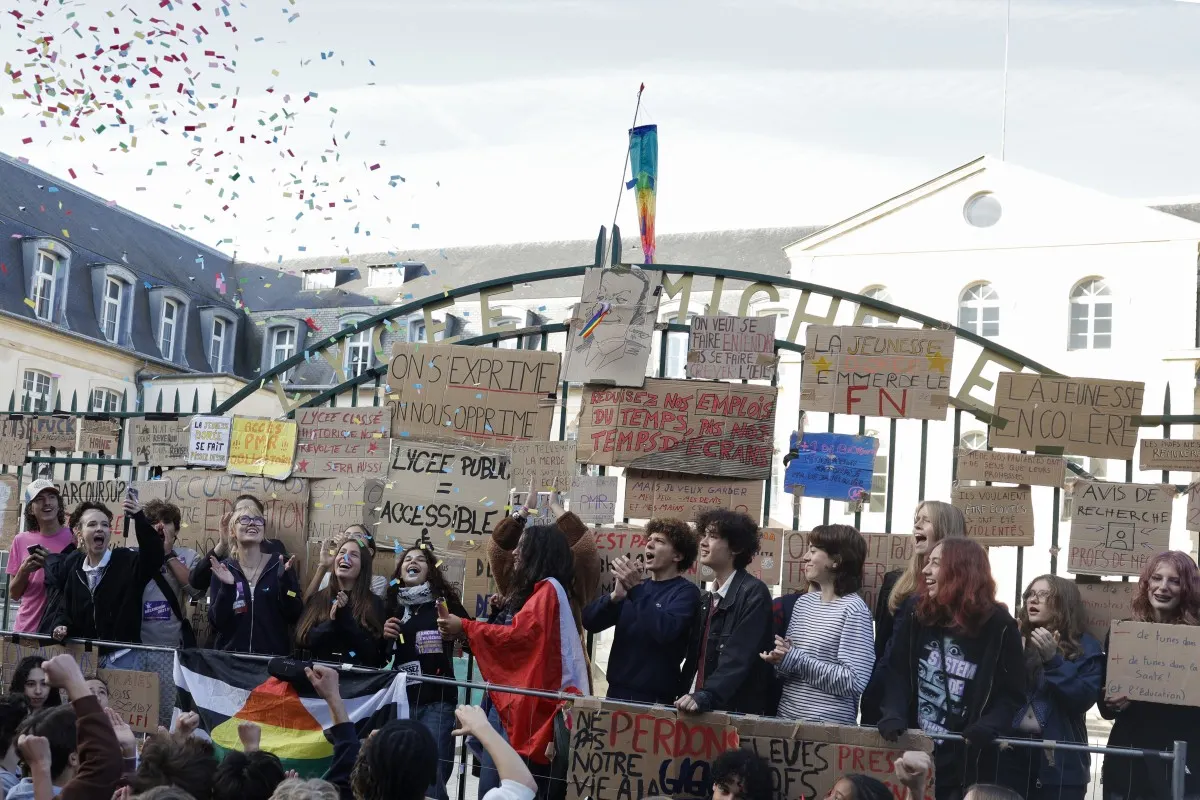
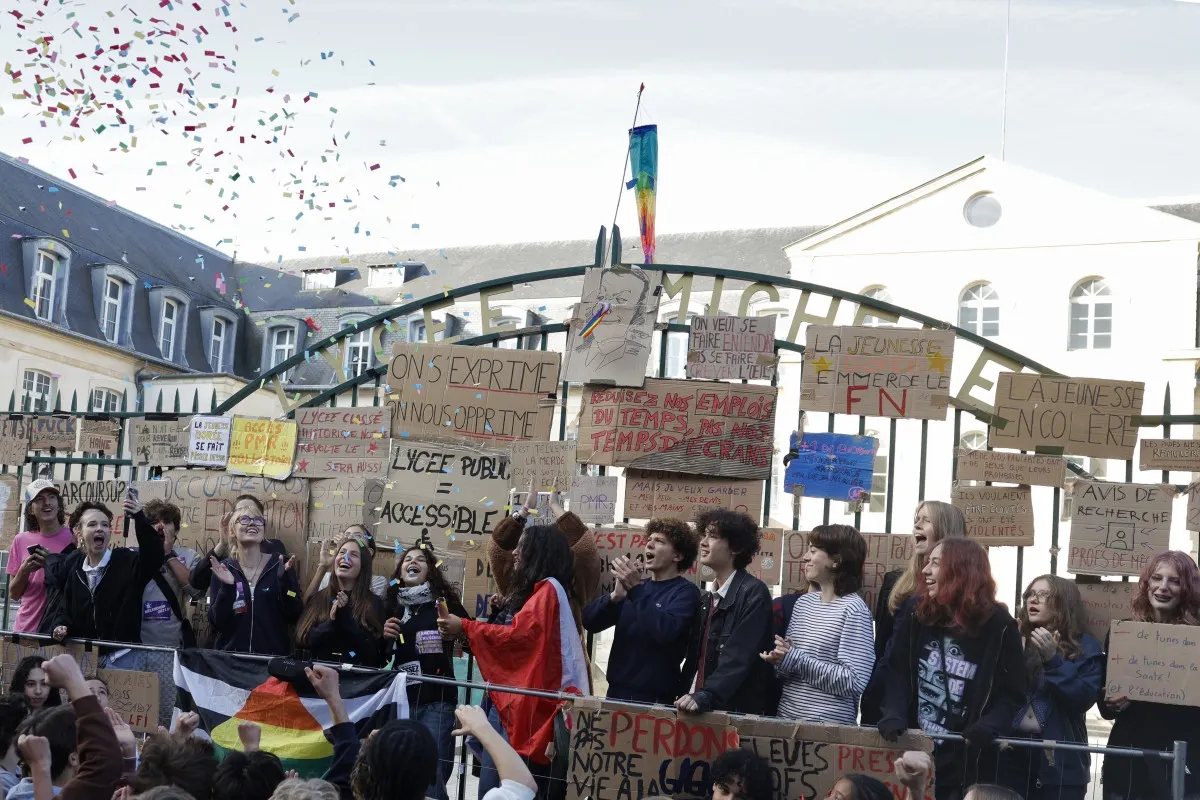
For the past two weeks the 15-18-year-old pupils at French lycées (high schools ) have been staging protests and blockades, some of which have flared into violence.
They are supported by their teachers, who on Tuesday declared a one-day strike in support of the student movement.
So what are they actually protesting about and are French lycées really so bad that they justify this level of protest?
The Local spoke to author and education expert Peter Gumbel to find out more.
The demands
Most of the core demands of the students are quite practical – they want more resources for schools, including for items like textbooks and an end to teacher shortages.
Many of their complaints focus on the state of schools, with pupils describing crumbling buildings and classrooms that are freezing in winter and stiflingly hot in summer.
There are also widespread complaints about the length of the school day, which commonly runs from 8am to 6pm, and large class sizes, while the overly complicated Parcoursup system, which assigns university places for pupils leaving school, has also come in for sharp criticism.
READ ALSO: Explained: What are French students protesting about?
The problems
So are their demands reasonable?
Peter told us: “There are several very important problems with the French school system, the system itself is very, very strained because there are not enough resources and teachers are not well trained.
“There is a strong sense of a decline taking place, of education getting worse – and it’s true that if you look at international test scores, French school kids are doing much worse now than they were 10 years ago and worse even than they were three years ago in things like mathematics and reading, when compared to schools around the world.
READ ALSO: Analysis: Why do French schools do so badly in international rankings?
“You also need to understand the context, there’s a long history of student radicalism going back to 1968, and every year around this time there are student demos.
“They complain about class sizes – the average class size in lycée is about 30 pupils, that’s pretty much the same as the US, the UK, or Germany.
“But they do have quite a lot to protest about, because the real problem is that the education system has not managed to keep up with the demands of today – they are not equipping kids with the right tools for the modern job market, not helping them adapt to a world of work that is different to how it was 30 or 40 years ago.
“The French education system is living in the past in many ways.”
Teachers
Teaching unions are supporting their pupils and have called a strike on Tuesday, October 6th. Many of the demands of the pupils – including for more resources – are shared by teachers and have been the subject of previous industrial action by teachers’ unions.
A major point of contention – which is a problem for primary schools and collèges as well as lycées – is that of teacher absences, with substitute teachers not being deployed if a teacher is off sick or absent for another reason.
This can lead to pupils at all levels facing hours with no teaching time at all.
Peter told us: “One of the major issues with the French education system is that it is very centralised, especially around the way that teachers are assigned to schools – so if you are an education director, for example, you don’t have a choice of which teachers you can hire, you get teachers given to you by a centralised HR system, and it’s very inflexible.
“One of the major demands of the students – for a substitute teacher if their teacher is off sick – is a function of this very centralised and rigid system.”
A long-standing criticism of this system is that it disproportionately affects schools in poorer areas, as newly-qualified teachers are more likely to be sent to disadvantaged schools while older, more experienced teachers have a greater say over which schools they go to.
But changing this would require root-and-branch reform of the education system.
Peter told us: “How do you change that? It’s difficult – education in any country is politicised, but in France it’s very politicised and very conservative, so you would really need to shake up the whole system to allow schools to have much more of a say about their teachers.
“But teachers would have to be more flexible, which they mostly don’t like to do – at the moment they have prescribed hours and they work their hours, and then that’s it, they’re not going to step in for their absent colleagues
“It’s not an easy one to fix. It’s interesting that the teachers support these protests – of course some of their demands align, they want more resources too. Teachers are famously badly paid in France – more money for them will obviously be welcome, but there needs to be a quid pro quo, and they need to be more flexible in how they work and be willing to step up and do things like cover for absent colleagues.
“There’s also the way the teaching profession itself interacts with the students to make them feel they can tackle problems and that they are receiving an education that is relevant, useful and interesting. These issues have been floating around for decades.”
What will happen next?
The protests have generated headlines in France and around the world, and forced the government to take action and hold meetings with student unions.
So how will this all end?
Peter said: “I think what will happen now is what always happens – the government will come out with a statement, the education minister will make some promises about class sizes and facilities at schools, and everyone will calm down and go back to the way things were.
“Which is a shame, because I believe that they need a much bigger and more profound shake-up of the system, of the way that teachers are assigned to schools, of the curriculum itself – and only that will make a real difference.
“The French education system is fixable, but it needs a lot of effort from the big players.”