How the air in Paris has become more breathable

According to a recent report by Airparif – the official independent organisation that monitors air quality in Paris – air quality continues to improve in the capital.
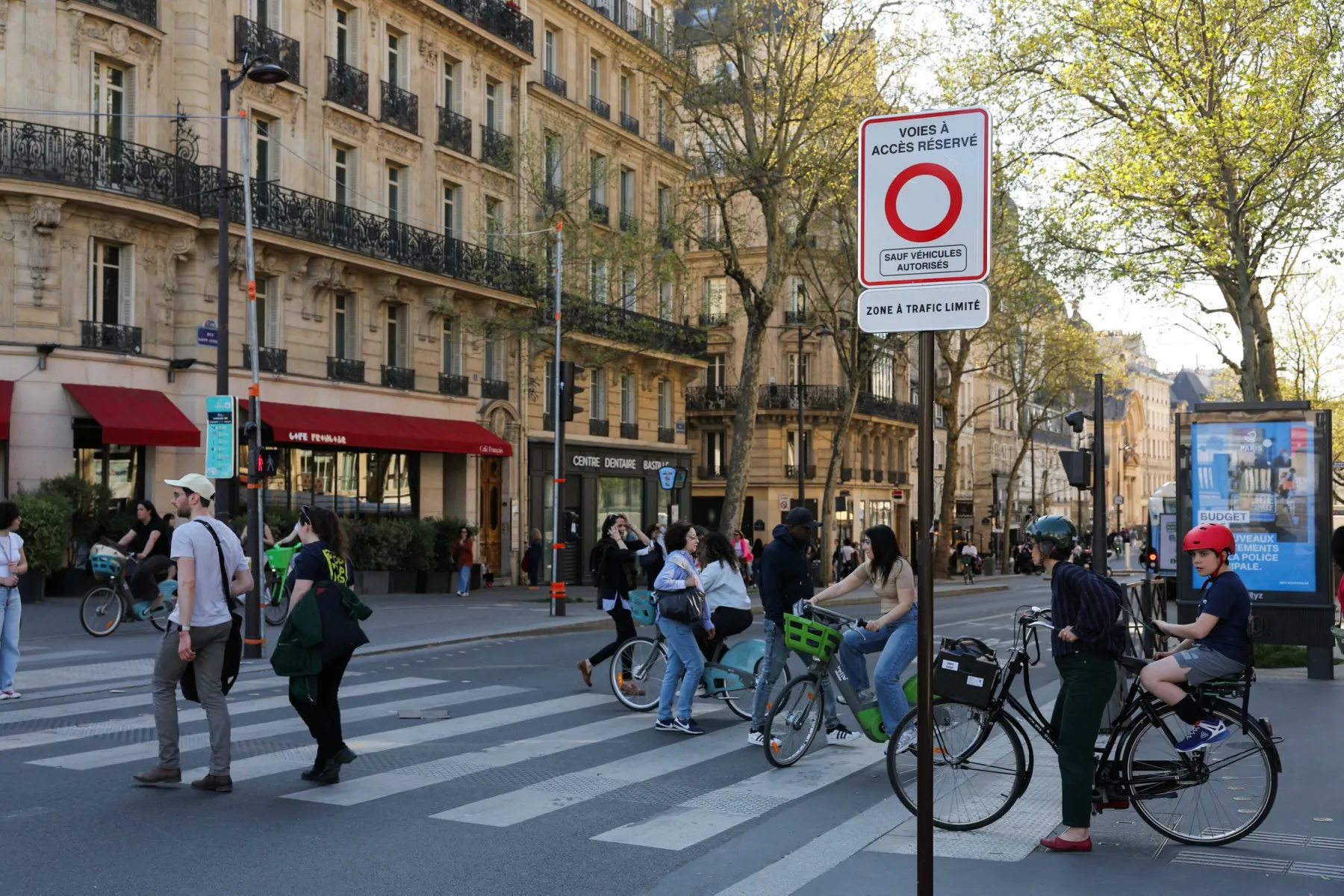
The study, published at the end of September, found that traffic had fallen significantly in both central Paris, where a zone à trafic limité – Low-Traffic Zone (ZTL) was introduced, and around Porte Maillot, west of the capital, following its redevelopment.
The reduction in traffic was accompanied by lower levels of nitrogen dioxide, a pollutant largely produced by road traffic.
Airparif looked at the impact of the Low-Traffic Zone covering the capital’s 1st, 2nd, 3rd and 4th arrondissements. The zone, introduced two years ago, aims to reduce traffic in central Paris by restricting vehicles from simply crossing the city centre.
Between 2023 and 2025, traffic inside the zone fell by 18 percent, according to Airparif. Traffic did increase on some of the major roads around the zone as drivers looked for alternative routes. However, this did not result in an increase in air pollution, according to Lou Méchin, an engineer at Airparif.
Airparif also examined the impact of the major redevelopment project at Porte Maillot, in western Paris. Traffic in the area fell by 29 percent following the changes.
The study found that nitrogen dioxide concentrations dropped by between 15 and 30 percent, particularly along the area between Place de la Porte Maillot and Avenue de la Grande Armée.
Paris is among a growing number of French cities introducing measures designed to reduce vehicle traffic and pollution. There are currently eight Low-Emission or restricted traffic zones in France – Paris, Nantes, Grenoble, Rennes, Lyon, Strasbourg, Clermont-Ferrand and Bordeaux.
Airparif emphasised, however, that traffic restrictions alone cannot explain the long-term improvement in air quality across the Paris region and France.
Speaking to French media France Inter, Méchin said other measures aimed at reducing vehicle emissions had helped offset the impact of the additional traffic on surrounding roads.
“The Low-Emission Zone helps to reduce pollution, but the overall reduction we have seen over several decades cannot be explained by a single public policy. It is really the combined effect of all the measures that will be put in place that explains this improvement in air quality across the Île-de-France region, and indeed, more generally, across France”.
These “road traffic reduction policies” therefore help to reduce “nitrogen dioxide concentrations” in the air and, consequently, “the exposure of the population in the areas concerned”.