
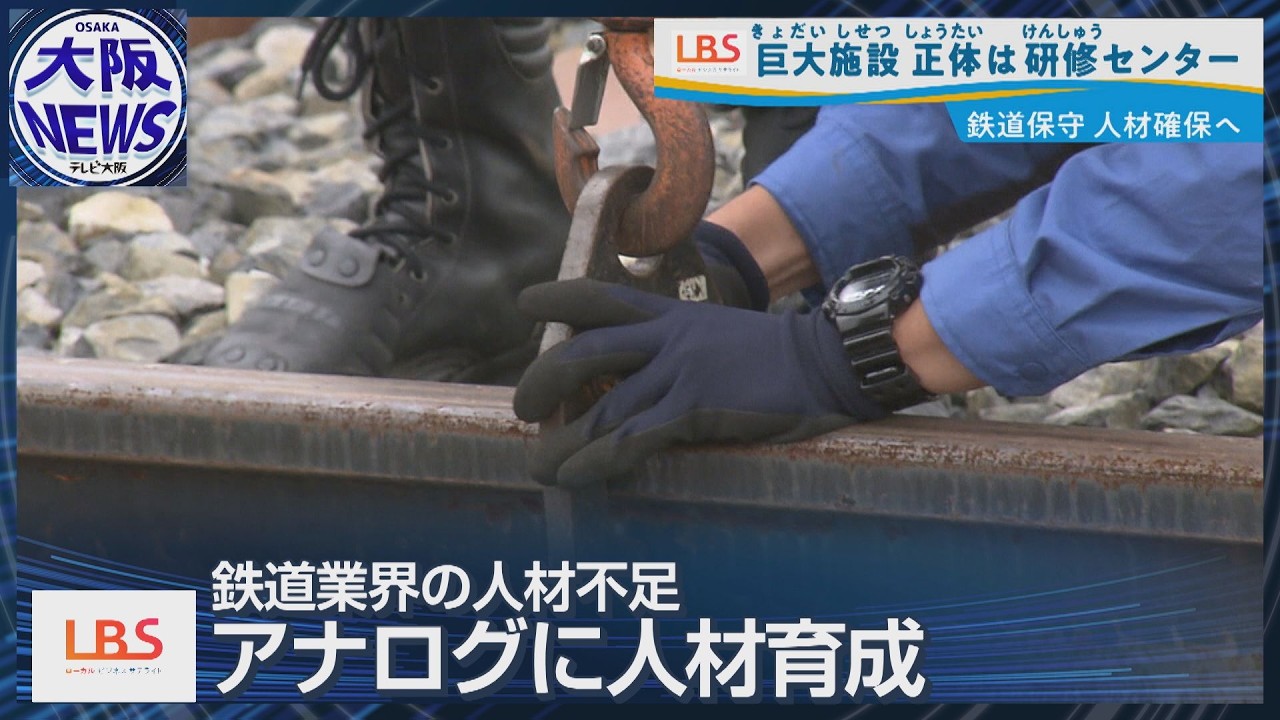
Japan Faces Shortage of 20,000 Railway Workers
AICHI –
A major new railway training center equipped with full-scale tracks, crossings and signals has opened in Kasugai, Aichi Prefecture, as Japan’s railway industry faces a growing shortage of skilled workers that could exceed 20,000 by fiscal 2028.
The facility, which opened in April near Kozoji New Town, one of Japan’s three major new towns, covers approximately 25,000 square meters and was developed at a cost of around 8 billion yen by Nagoya-based Meiko Construction.
The company specializes in railway construction and maintenance, including work on the Tokaido Shinkansen, where it handles approximately 60% of track maintenance operations. Its new center recreates actual railway infrastructure, allowing employees to practice complex maintenance procedures in a controlled environment without disrupting train services.
Railway maintenance is generally carried out late at night after the final trains have finished operating. Workers must complete demanding tasks within a narrow window before services resume the following morning.
One example involves replacing rails weighing more than one metric ton, which must be lifted using specialized machinery, removed and replaced overnight. Such operations require advanced technical skills, including adjustments using tools with millimeter-level precision.
Traditionally, these skills have been passed from experienced workers to younger employees through on-the-job training, or OJT, at actual maintenance sites. However, labor shortages and increasingly strict working-hour regulations have made it difficult for companies to provide sufficient practical instruction during regular operations.
According to government estimates, Japan’s railway sector could face a shortage of more than 20,000 workers by fiscal 2028, with securing personnel for maintenance operations becoming a particularly pressing challenge.
Meiko Construction developed the new training center to address these difficulties by providing an environment where younger employees can acquire practical skills without relying exclusively on overnight maintenance work.
During a recent training session, 18 new employees practiced replacing railway tracks under the supervision of instructors.
The exercise involved removing old rails, positioning replacements and checking components installed beneath the tracks. Particular attention was given to the placement and orientation of rail pads, with instructors explaining how each component should be correctly installed.
Unlike actual maintenance operations, where workers face strict time limits and may hesitate to interrupt experienced colleagues, the training center allows participants to ask detailed questions and resolve uncertainties immediately.
By carefully following each procedure, all 18 trainees successfully completed the rail replacement exercise within three hours.
One participant said the experience highlighted the importance of practical instruction, explaining that the tools were heavier and more difficult to balance than expected. The trainee said classroom lessons alone would not have provided the same understanding of the work.
A company representative said the center was intended to give younger employees greater confidence before entering actual maintenance sites, while also providing a place they could return to whenever they encountered difficulties.
The company hopes the facility will eventually serve as a central repository of technical knowledge, allowing employees to consult instructors and reinforce their skills throughout their careers.
The initiative reflects a broader challenge facing Japanese industries, where traditional methods of passing technical expertise from veteran employees to younger generations are becoming increasingly difficult to maintain.
Railway maintenance is particularly dependent on practical knowledge and physical skills that cannot easily be replaced by artificial intelligence. By providing realistic, hands-on training in a dedicated environment, Meiko Construction aims not only to preserve essential technical expertise but also to make railway maintenance careers more attractive to younger workers and strengthen recruitment in an industry facing a serious labor shortage.
Source: Television OSAKA NEWS