
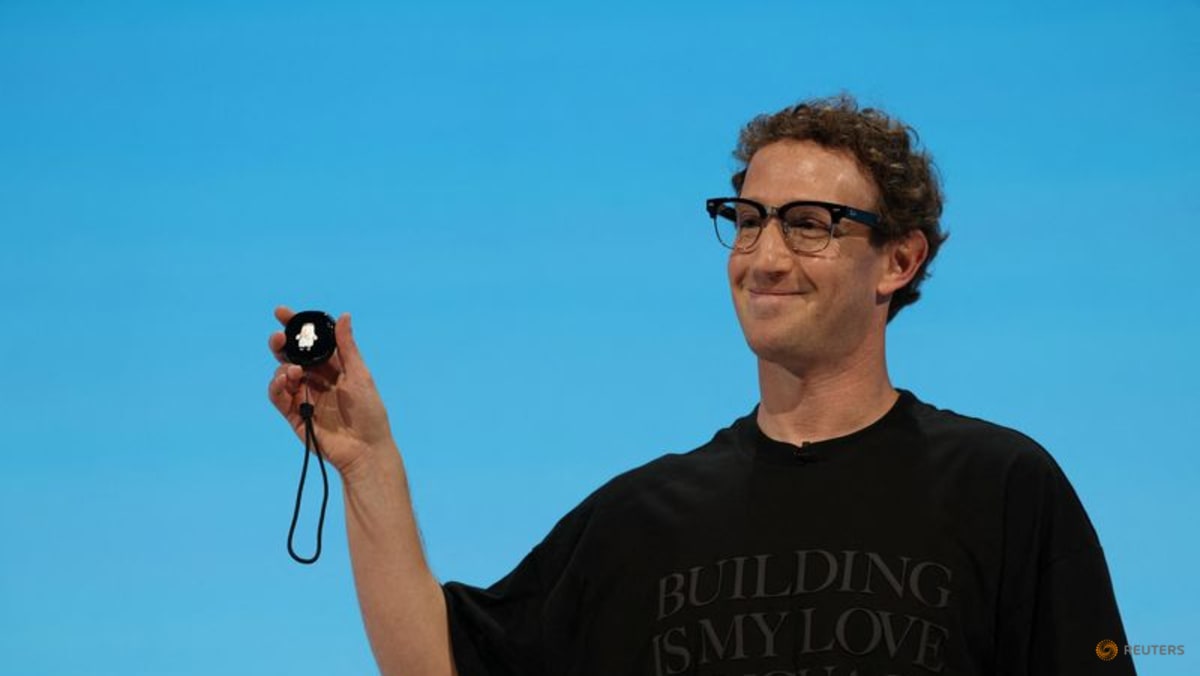
Commentary: Zuckerberg’s ‘Tamagotchi-like’ AI could be Meta’s iPod moment
STYLISH AND INNOVATIVE RECASTING
Perhaps Meta’s secret is Alexandr Wang. The most-talked-about hire in Silicon Valley last year, Wang leads Meta’s artificial-intelligence efforts (and, I predict, will one day lead the whole company).
On Wednesday, on stage at Meta’s developer conference, Wang described Meta’s achievement perfectly when he said: “It was only about six months ago that having a personal agent running on your own computer was the sign of someone who was completely AI-pilled.”
Today, by refining the technology and adding some consumer-friendly touches, Muse is to AI agents what the iPod was to MP3 players: A stylish and innovative recasting of an existing technology so it struck a chord with everyday people. The rewards for reaching the non-nerds could be enormous.
The energetic arrival of the iPod marked the rebirth of Apple as a company. Muse – whether it’s accessed through smartphone, glasses or the Charm – has the potential to do something similar for Meta.
But there are challenges. Muse’s head start will be brief. OpenAI engineers are scrambling to come up with their answer. Siri AI is finally rolling out to the iPhone and seems pretty great. Zuckerberg might get a taste of his own medicine as companies with bigger AI products simply look at what he’s done with Muse and copy the best bits.
There’s also what we might consider Meta’s “trust ceiling” – the upper limit of users prepared to give Meta the kind of access that any useful AI agent needs. Meta is asking customers to trust it more than ever before.
Some will just say no. The question is how many. A Gallup poll conducted in June suggests consumer trust in big tech companies is low and sliding. The most recent Harris Poll 100 has Meta’s reputation among US adults trailing almost all of its peers, ranked 96th, compared with Anthropic at 16th, Apple at 20th and Alphabet at 22nd.
And yet, 3.6 billion people use a Meta app every day, and the company’s playful pitch for Muse is clearly hitting differently than the doom and gloom emanating from some other AI companies. They talk about AI putting us out of jobs and maybe wiping us off the face of the Earth.
Muse is instead channelling the sentiment expressed by author Joanna Maciejewska, who wrote in 2024: “I want AI to do my laundry and dishes so that I can do art and writing, not for AI to do my art and writing so that I can do my laundry and dishes.”