
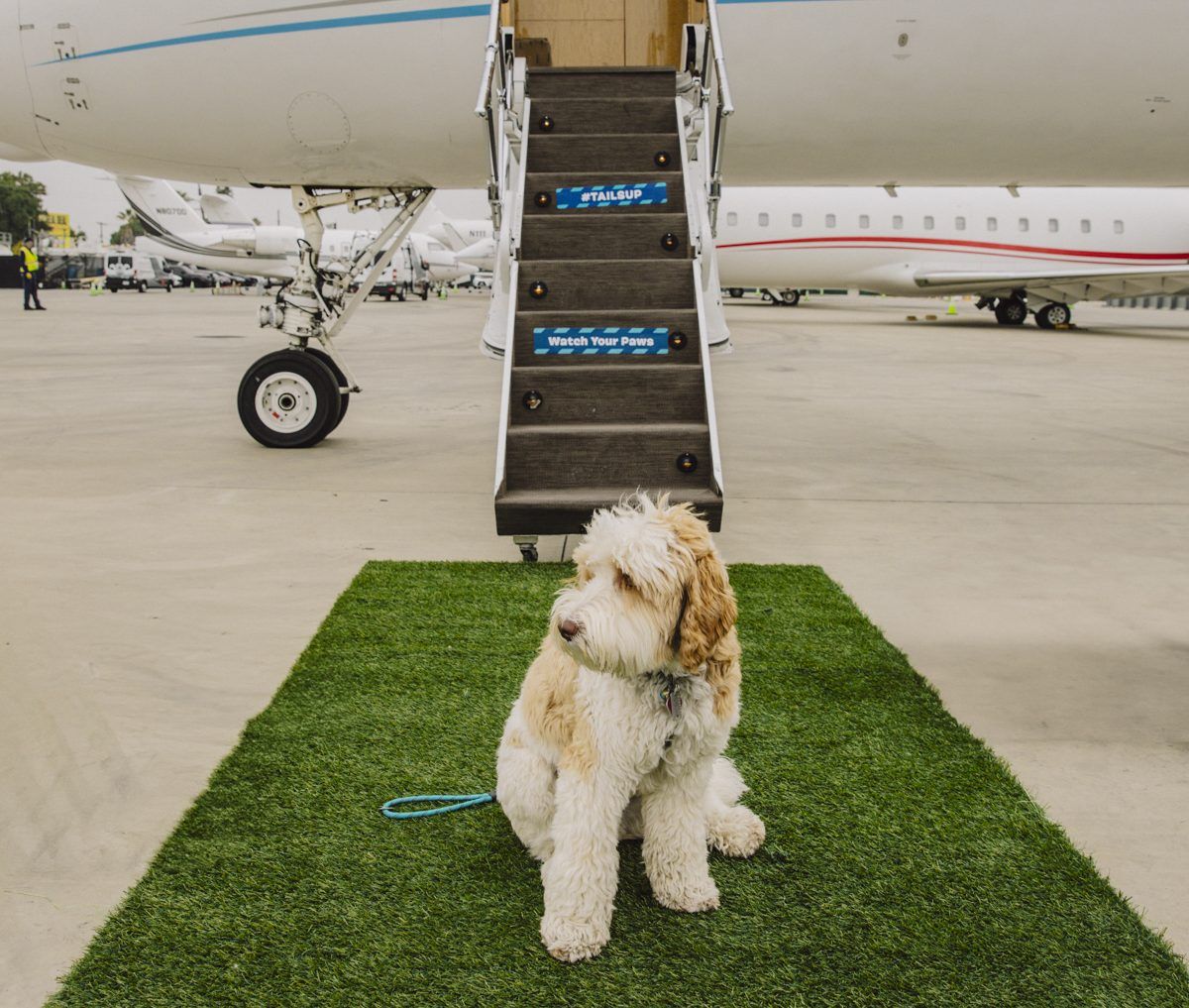
Bark Air Turned the Fur-Baby Economy Into a Private Jet Business
In 2011, Meetup co-founder Matt Meeker adopted Hugo, a 150-pound Great Dane. Living in a Brooklyn apartment, Meeker quickly discovered how difficult it was to find high-quality toys and treats built for a dog Hugo’s size. Standard pet stores offered tiny rubber balls and cheap chew toys that Hugo destroyed instantly. This frustration led to the creation of BarkBox, a monthly subscription box of toys and treats tailored to a dog’s size and chewing habits. The brand found a loyal audience among dog owners who shared Meeker’s devotion and treated their pets like family.
Fast forward 13 years, a subscription commerce boom and a pandemic later, Bark had become a billion-dollar public company, and “fur babies” had gone from punchline to default terminology for a generation of dog owners. Building on this cultural shift, in May 2024, Bark launched Bark Air, a charter flight service designed for dogs and the humans accompanying them.
Bark Air operates chartered business jets, such as Gulfstream GIV aircraft. A domestic one-way ticket for a dog and one human costs around $7,000, while a transatlantic trip from New York to London or Paris can run more than $10,000.
Despite the prohibitive price tag, the service has tapped into real demand. Two years into operation, Bark Air has flown more than 3,000 dogs. Its human customers include everybody from well-off 20-somethings embarking on major trips to empty-nest baby boomers whose pets have effectively become their children. The pitch is not merely dog-friendly. It is dog-first.
“When you book a flight, you’re buying a ticket for your dog, and you’re allowed to bring a human with you,” Michael Novotny, president of Bark Air, told Observer.
The timing is not incidental. Flying with dogs has become significantly more difficult in recent years as commercial airlines enforce tighter in-cabin rules and crack down on so-called emotional support animals, which have no official certification process. The U.S. Department of Transportation reclassified all emotional support animals as standard carry-on pets in 2021. According to a 2024 CivicScience survey, nearly half of American pet owners have given up on air travel with their pets.
That creates an opening for Bark Air, but also a difficult business problem. The challenge is not simply securing more seats on private jets or finding ways to bring down prices. Pet services are a high-emotion business. A single accident or serious complaint can severely damage trust.opera
“In the early days, a lot of people thought it was a crazy idea that didn’t make sense,” Novotny said. “We certainly had a hypothesis that people wanted to travel with their dogs. But when it came to the nuts and bolts of executing that idea, we learned by testing and trying different approaches.”
At its core, Bark Air is a hospitality service. Before a flight, the company asks owners extensive questions about their dogs, from breed, size and temperament to favorite treats and whether they prefer being greeted upon arrival or left alone. On board, dogs are served food and drinks before their humans. If an owner cannot accompany a dog—when, for example, a puppy is being delivered to a family member in another city—Bark Air can provide a chaperone.
Each plane accommodates between eight and 12 dogs, depending on size and sometimes temperament. “It’s a bit like putting together a Tetris puzzle,” Novotny said.
Currently, Bark Air flies between nine cities in the U.S. and Europe. The company also helps passengers navigate veterinary and vaccination requirements for international travel and places concierges on board to handle dogs’ needs in flight.
And ultimately, it’s about the peace of mind for the humans who pay the bills. “We want the human traveler to understand how seriously we’re taking this and how much detail we’re considering,” Novotny said. “When we were preparing to launch a service like this, you were mostly preparing for the dogs. But in some cases, we’ve found that people are more nervous or anxious than the dogs themselves.”
The luxury pet air travel market remains small, with only a handful of established players. Bark Air competes with pet-centric charter services such as K9 Jets and RetrievAir, as well as pet programs offered by private jet charters. Beneath the cute promotional videos of dogs trotting down runways and sprawling across jet cabins, the operation is more complicated than it looks.
“People might enter the space thinking they can simply get a plane, put dogs on it and take off. But there’s a lot of work involved in ensuring a safe flight for everybody,” Novotny said. “It starts with the people you hire. You need experts who have extensive experience handling dogs to do this well.”
Bark Air launched with domestic routes in 2024 and expanded to Europe last year. For now, Novotny said the company is more focused on building density on existing routes than adding new destinations, as it navigates high fuel prices and other costs.
The economics remain challenging. Bark Air—and its parent company—has yet to become profitable. In 2025, Bark Air generated $5.8 million in revenue, accounting for just over 1 percent of Bark’s total revenue. Bark still generates most of its revenue from subscription toy boxes. The company lost $33 million last year, although its gross margin improved slightly from the previous year.
Novotny, who has a 12-year-old Boston Terrier-Shih Tzu mix with just one eye, said he was deeply inspired by Meeker’s story with Hugo, and that was one of the reasons he stayed with Bark for so many years.
“When we launched Bark Air, it was really hard to fly with a big dog. We’ve now had many Great Danes on Bark Air,” he said.