Trump’s 2028 GOP successors split over midterm election losses
Republicans are still reckoning with a historic midterm wipeout, but the fight to assign blame and inherit President Donald Trump’s political movement is already underway.
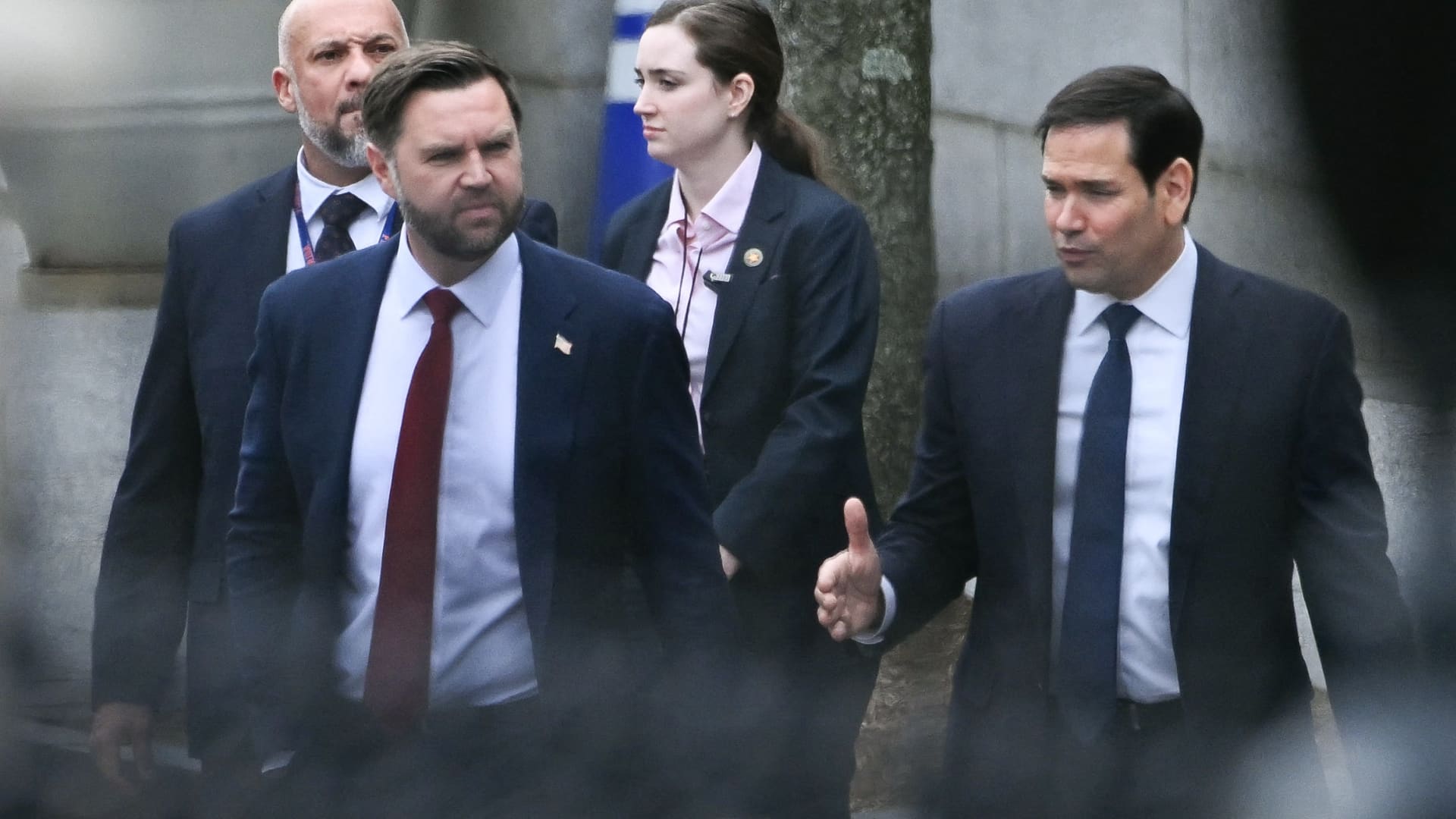
Vice President JD Vance faults the war in Iran. Secretary of State Marco Rubio defends it. Florida Gov. Ron DeSantis says Republicans fought the wrong battles. Texas Sen. Ted Cruz, R-Texas, argues the party lost touch with voters’ economic struggles.
The competing visions from potential presidential contenders offer an early glimpse of the Republican infighting ahead of 2028. But all face the same dilemma: How to convince voters the party can change course without alienating Trump or the MAGA base they need to win the nomination.
The biggest obstacle may be Trump himself, who has shown little appetite for a political retreat.
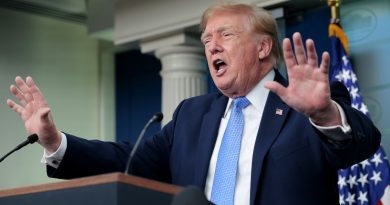
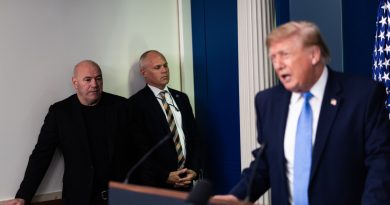
On Monday, Trump made a surprise appearance in the White House briefing room, declaring the Iran war “militarily is effectively over” while maintaining that the U.S. remains prepared to resume strikes. Earlier that day, he questioned the legitimacy of Republicans’ midterm defeat, suggesting without evidence that voting machines were responsible, days after saying that after years of election denial, he would accept the 2026 results.
Since the election, Trump has also replaced Chief of Staff Susie Wiles with immigration hard-liner Stephen Miller and backed Republican National Committee Chairman Joe Gruters against a challenger demanding an accounting of the party’s losses.
Trump is also keeping his would-be successors guessing. In a CBS interview Sunday, he praised Rubio alongside Vance but suggested he might stay out of the 2028 Republican primary.
“Maybe I’m better off not getting involved,” he said, while emphasizing the weight his endorsement could carry.
That dynamic leaves Vance in a precarious position. Entering the midterms as the clear political heir, Vance now faces a critical question: Can he inherit MAGA without inheriting the blame for Trump’s presidency?
In a lengthy post on X Wednesday as election results were still trickling in, Vance challenged Trump’s initial explanation for the Republican defeat.
“The reason we lost is the war,” Vance wrote, arguing voters who backed the Trump-Vance ticket in 2024 abandoned Republicans in 2026 over Iran.
Pointing to foreign policy allows Vance to criticize a defining administration decision without repudiating the broader MAGA movement, while echoing his longstanding opposition to foreign interventions. Vance also has national name recognition and donor ties to help his prospective candidacy.
But the election results complicate Vance’s argument.
Just 34% of House voters called the war crucial to their vote, versus 49% citing the cost of living and 55% government corruption, according to the CNBC Voter Poll – suggesting a broader backlash against the Trump administration that Vance has spent nearly two years defending.
“You can’t campaign against a war from within an administration you serve,” conservative commentator Joel Pollak wrote on X, questioning how Vance could distance himself from a conflict he had publicly defended.
In his CBS interview, Trump said he did not disagree with Vance’s assessment and acknowledged the vice president had discussed the post with him beforehand. But he insisted the decision to attack Iran was right and suggested Vance also has losses of his own to explain.
After Vance spent months fundraising and campaigning as Republican National Committee finance chairman, Democrats won both marquee races in his home state of Ohio. Amy Acton defeated Vance ally Vivek Ramaswamy for governor, after the vice president defended a controversial ad featuring Acton’s estranged mother. Former Sen. Sherrod Brown claimed Vance’s former Senate seat, defeating incumbent Republican Jon Husted.
Rep. Randy Fine, R-Fla., stated Sunday he would not support Vance in 2028 due to his war criticism, calling it a betrayal of Trump. “You have to be loyal to those people who brought you to the dance,” Fine said in an interview with LiveNOW from FOX on Sunday, naming Rubio and Cruz as alternatives.
Rubio is making a different bet: Defend the Iran war while distancing himself from the Republican defeat.
“Sometimes, when you do the right thing, you don’t know whether it’s popular or not, but it’s still the right thing to do,” Rubio told reporters Sunday before departing for France.
Rubio, who has denied he plans to run in 2028, largely avoided the campaign trail and has stayed out of the immediate blame game. But his dual role as secretary of state and national security advisor ties him directly to Trump’s foreign policy record, which could face renewed scrutiny when Democrats take control of the House. The House may vote this week on articles of impeachment against Defense Secretary Pete Hegseth in a rebuke of the Trump administration’s foreign policy.
DeSantis, who is not in the Trump administration, is questioning the party’s entire playbook.
The outgoing Florida governor called the midterms “close to an extinction-level event” for Republicans at a news conference Wednesday in Tallahassee, Florida, accusing Washington of failing to deliver on its promises while fighting culture wars that no longer resonated with voters.
“Republicans … really were fighting yesterday’s battle,” DeSantis said at the news conference.
It was a striking critique from a governor who built his national profile on those same fights.
DeSantis can point to Republicans’ ability to retain control of Florida even as Democrats flipped longtime GOP strongholds elsewhere. But Republican Byron Donalds won the governor’s race by just 1.3 points, while Democrats gained ground in the Legislature.
Still, Rep. Greg Steube, R-Fla., credited DeSantis with building a “massive sea wall against the blue tsunami” in an X post.
The scramble to succeed Trump extends well beyond Vance, Rubio and DeSantis.
Cruz called the midterms a “Watergate-level repudiation” in a post on X Wednesday, blaming Trump’s tariffs and the prolonged Iran war. Other potential 2028 contenders include Georgia Gov. Brian Kemp, Arkansas Gov. Sarah Huckabee Sanders and former Virginia Gov. Glenn Youngkin, who face the same challenge of moving beyond Trump without alienating his base.
Some wealthy Republican donors are already looking beyond Vance, weighing DeSantis and other alternatives amid concerns that a candidate from Trump’s administration would inherit the political baggage of his second term and low voter approval ratings.
The divisions extend to Trump’s own coalition. Among voters who backed Republican House candidates, roughly two-thirds of those under 30 approved of Trump’s performance, much less than the nearly nine in 10 voters 65 and older, according to the CNBC Voter Poll. Younger Republicans were also more skeptical of the Iran war and U.S. support for Israel, according to the exit poll data.
“If you’d like to argue it was worth it, that losing the Senate for the next 6 years was worth it, then do so,” Vance said Wednesday. “Agree or disagree, that’s at least honest. But everyone knows why we lost.”