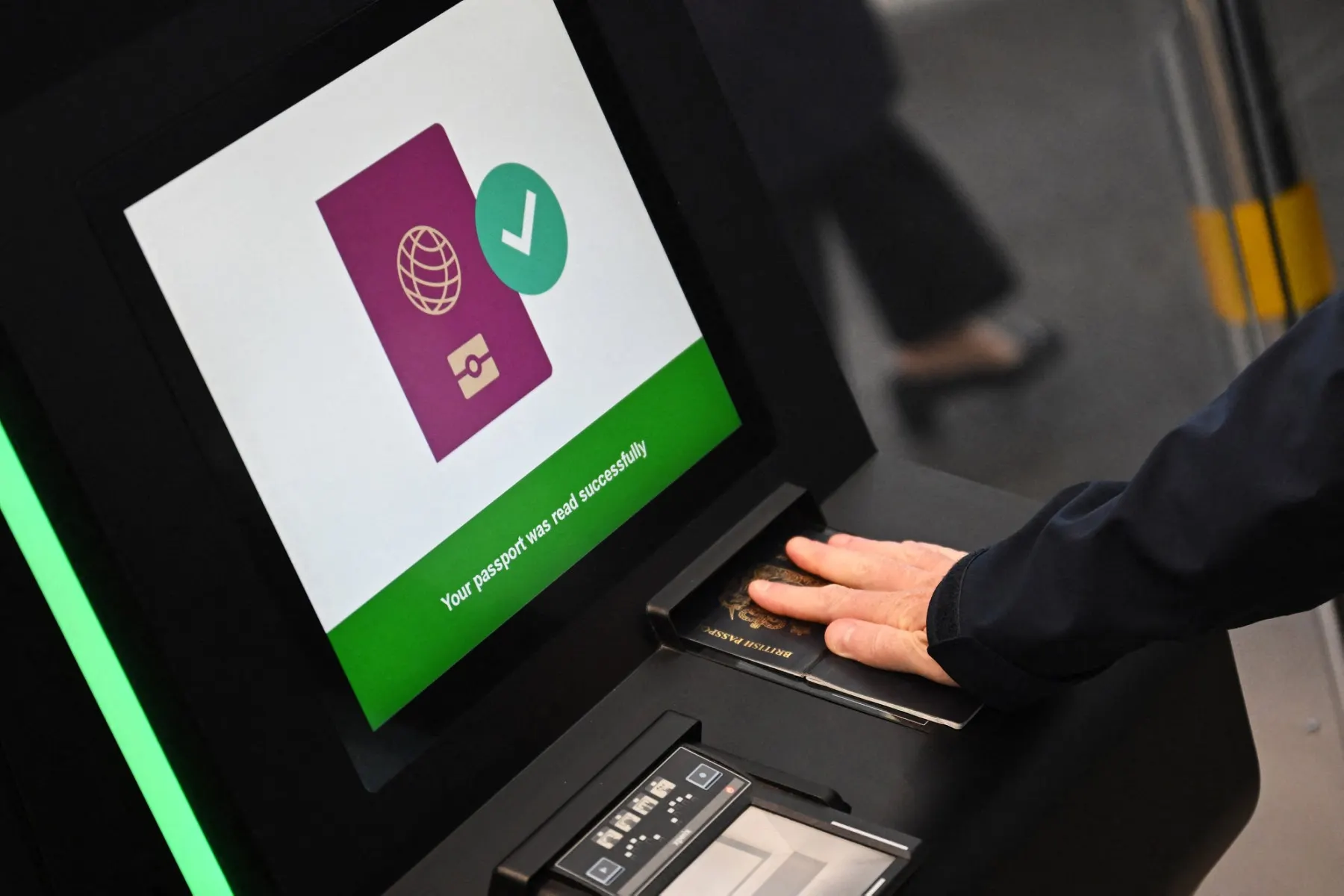
How to check your EES 90-day allowance, and what to do if it’s wrong

The EU’s new biometric passport system is supposed to make counting of the 90-day rule easier, but teething troubles mean that some people’s allowance has been wrongly calculated – here’s how to check, and what to do if it is incorrect.
The EU’s new Entry & Exit System, which came into force in April 2026, is supposed to increase border security, including tightening up enforcement of the 90-day rule.
This rule allows travellers from certain non-EU countries – including the UK, US, Canada, Australia, New Zealand, Brazil and Japan – to spend up to 90 days in every 180 within the EU Schengen zone without needing a visa.
Previously this rule was enforced through the stamping of passports as people entered or left the EU/Schengen zone – but the EES is supposed to digitise this and make it easier and more efficient.
However, the slightly chaotic implementation period means that some people’s allowance has been wrongly registered.
British author Jojo Moyes told UK consumer organisation Which? that she was accused by French border guards in Marseille of overstaying her allowance when departing from her second home in France. It turned out that after a previous trip to Portugal, her exit from the Bloc had not been correctly registered.
This is also impacting some Brits who are living in France with a carte de séjour – residency permit holders are supposed to be exempt from the system, but one Local reader told us the EES system showed that they only had 16 days left to stay in the Bloc.
So how can you check?
The European Commission has created an EES calculator, intended to show how long you can stay in the Bloc.
You can find it here – simply enter your passport number and the details of your trip, and it will tell you how long you have left on your allowance.
What does this calculator actually show?
The site has some significant caveats, which reflect the transition to the new system.
It reads – “Please note that the remaining authorised stay does NOT reflect any time spent in the Schengen area that began before 10 April 2026, regardless of whether the visit ended before or continued after that date.”
Furthermore – “Please also note that until 6 October 2026 included, the ‘OK’ answer may be unreliable for holders of a single or double entry visa who have already used any of the permitted entries in the period between 12 October 2025 and 9 April 2026 when the use of these visas was not recorded in the Entry/Exit System.”
Don’t miss our journalists’ daily news roundup from France
The site is using data from people who have been registered with the EES – but EES has not been fully rolled out at all French entry points yet (Eurostar and the Port of Dover are still doing only partial checks), so if you have travelled to France since April but were not required to complete EES pre-registration, it won’t count your days.
In short, for the moment travellers should continue to keep their own private record of their travels and use that to ensure that they are within the 90-day limit.
READ ALSO: CALCULATOR: How to work out your 90-day allowance in France
But then there are some cases when the site records the wrong number.
Some of the most common reasons for this are;
Exit not recorded – the system is supposed to log every entry and every exit. However, during the chaotic rollout period, not every border crossing has been recorded correctly.
If the system records you entering the Schengen zone but not leaving, it assumes you have been in the Bloc the whole time and might therefore have reached or overstayed your 90-day limit.
Residency permit/visa holders recorded – non-EU nationals who are living in an EU country like France with a long-stay visa or a residency permit should not be recorded on the EES system, since they are exempt from the 90-day limit.
Instead, long-stay visa or residency permit holders go directly to manned passport control points and show their passport together with their permit or visa.
However, in the chaos of the launch, some permit holders have incorrectly been registered in the system and will be shown as ‘overstaying’ their 90-day limit (which does not, of course, apply to them).
READ ALSO: What should residents in France do with EES passport checks?
Incorrect details – there have been some rare cases of the wrong travel details being attached to the wrong passport, especially in the case of twins.
What to do if the details are wrong?
If the EES calculator tells you the wrong total, you can contact the relevant data control officer and ask to have your travel record corrected.
This is also the case if a border guard tells you that you have over-stayed or are close to the limit of your days and you know this to be incorrect.
You contact the controller for the relevant country – which is either the country where the error was made or the country where you last travelled.
In the case of France, the relevant authorities are;
Directorate General for Foreign Nationals in France / Direction générale des étrangers en France
Ministère de l’Intérieur, Place Beauvau, 75008 PARIS – France
Contact details: donnees-personnelles-dgef@interieur.gouv.fr
You can find details for all other EU/Schengen zone countries here.
You should include a scan of your passport, proof of your exit (such as a boarding pass or ferry/train ticket), and a request to have your data corrected. If you are a visa or residency pass holder, include a scan of your permit. The Data Controller may ask for more evidence or information before correcting your EES data.
If you need to travel in the meantime, take with you evidence of all your recent travel in and out of the EU, so you can show your correct entry and exit dates.
Residency permit/visa holders – the law is clear that if you have a valid residency permit or a long-stay visa, that trumps passport stamping.
A carte de séjour residency permit gives you the right to stay in France for the duration of the permit, and you are no longer constrained by the 90-day rule.
You therefore have the right to travel, even if EES is incorrectly flagging an overstay- although it’s still worth trying to get your EES record corrected, just to avoid lengthy explanations at the border.