Can an Anonymous Celebrity Silence Abuse Allegations in U.K. Court?
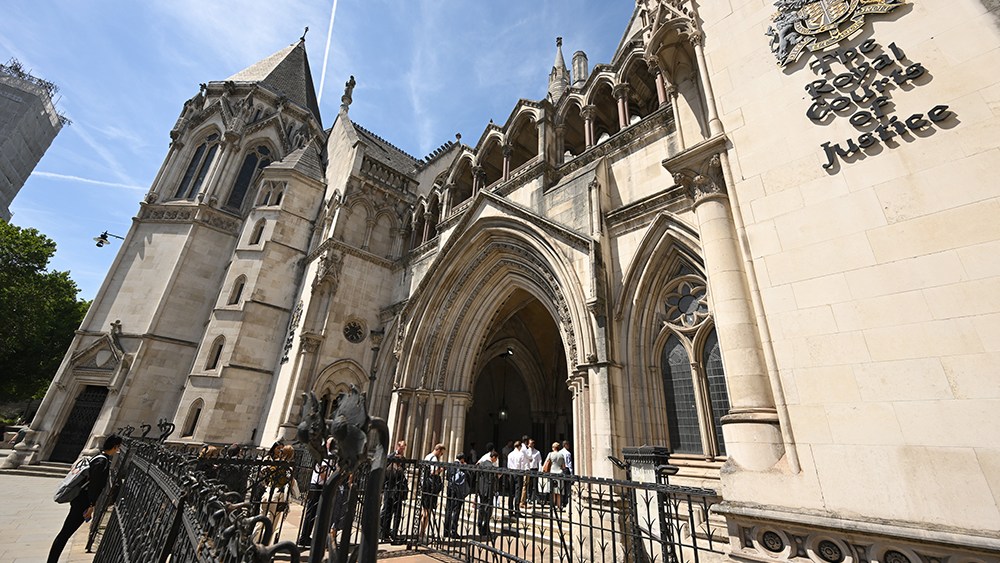
As has been widely reported on both side of the Atlantic, a “well-known individual” in the U.K. is currently waiting to hear whether his legal effort to block two media outlets from publishing allegations of “inappropriate and exploitative sexual activity with girls and young women” has been successful.
Lawyers for the individual — who denies the allegations — are seeking what’s called a permanent injunction against The Guardian and ITN to stop them publishing what they told the London high court last week was a “wide-ranging and rigorous investigation,” conducted over four years and involving more than 30 sources with first-hand accounts.
The argument from the legal team is one they themselves have acknowledged is “highly exceptional” — that the publishing of the allegations against the individual and exposing his identity would “highly likely lead him to commit suicide.”
The unusual case has become a major focal point of debate in the U.K. amid widespread speculation on social media over the celebrity’s identity. But does this argument — that publication “would have a potentially fatal impact”— actually stand up, legally?
According to Paul Tweed — a renowned defamation lawyer from Northern Ireland who has represented numbers of big-name clients, including Harrison Ford, Britney Spears, Jennifer Lopez and Justin Timberlake — it does.
Tweed acknowledges that such celebrity privacy injunctions, once notorious in British media (they were often referred to as “super-injunctions” although this, technically, also forbids reporting on the existence of the injunction itself), have become a rarity. But he says that the individual’s legal claim could be accepted in court.
“A threat to life, if there is a genuine risk of suicide,” he claims, is one of very few “main grounds that are remaining” for an injunction such as this in today’s world. “But that has to be confirmed by a competent psychiatrist and whatever other medical support that the court will need.”
Such evidence, he notes, will be heavily scrutinized by the judge.
“The court don’t grant that very lightly — they’ll be very thorough in their examination of whether there is a genuine risk of suicide, or whether that is being used just an excuse, basically.”
According to The Times, the unnamed individual at the center of the investigation wrote directly to both The Guardian and ITN in September when asked for his reply to their allegations. In his response, he said that if their story was “published or broadcast, at the earliest opportunity I will kill myself.” His lawyer last week told the court that he has a prior history of attempting to take his own life due to the story.
“This is not a case where an individual has spuriously raised ‘mental health’ concerns in the face of an impending publication that they do not wish to occur,” she said in court. “The claimant has attempted suicide twice as a result of these matters, been hospitalized for months, been the subject of involuntary detention and been examined by multiple — now more than 10 — doctors.”
The lawyer for the news outlets, meanwhile, argued that there was a “strong” public interest in publishing the “numerous allegations” against the individual, who they claim abused his status “over the course of many years.”
“Many of the women who have reported these allegations have been traumatized by the claimant’s alleged conduct and have suffered mental health crises and mental illness as a result,” he said, according to the Press Gazette, adding that upholding the injunction would require U.K. authorities to intervene in “lawful journalistic activities” of the media to prevent “an autonomous act by the claimant himself.”
Were the injunction to be enforced, however, Tweed notes that the column inches and widespread online chatter the case has already provoked highlights how trying to suppress information can backfire. He points to a famous case where Barbra Streisand efforts to sue a photographer over an aerial photo of her Malibu mansion resulted in online demand to see the image skyrocket.
“In the era of social media, the injunction is far less effective, as this particular case shows,” he says. “So in actually going for an injunction, knowing that people are going to speculate accurately or inaccurately on social media, runs the risk of the Barbra Streisand Effect.”
The current situation, expected to be resolved by a judge this week, has sparked fury in the U.K. over issues of press freedom and fears that, if the injunction is upheld, the argument could be used by others accused of being sexual predators.
“Finally, various people in showbiz are having to answer the accusations against them that have been swirling around for ages,” said Ian Hislop, editor of satirical and current affairs magazine Private Eye, speaking to The Times. “And if the first thing that happens is that they don’t have to, because it will affect their mental health, then that doesn’t seem very fair to all the accusers. I know it sounds extremely callous, but I think if this was allowed, it would set a very dangerous precedent.”