Vance offers to meet with former IRGC commander Rezaei
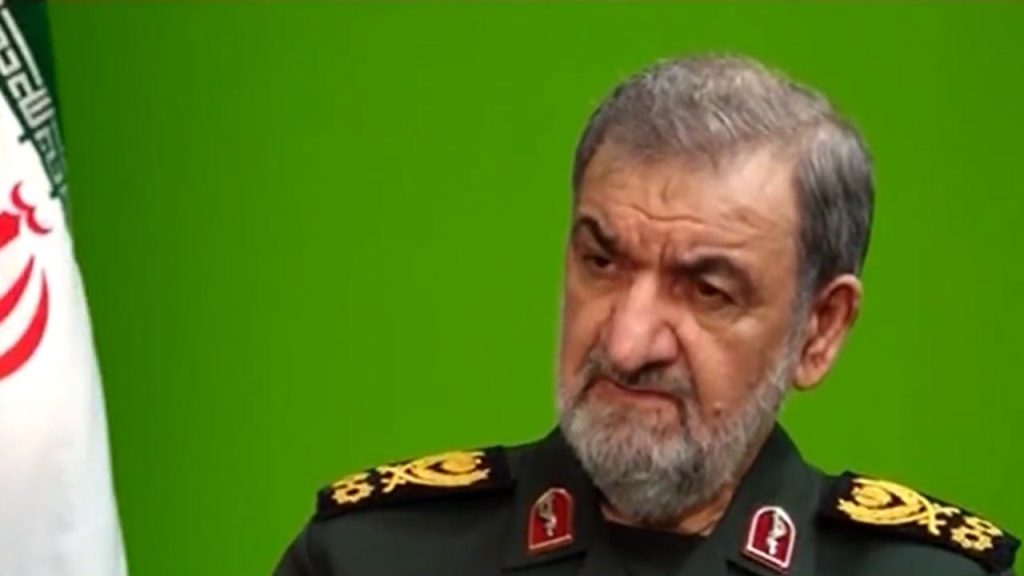
The White House believes Mohsen Rezaei, one of the Iranian regime’s staunchest hardliners, could be the key to an agreement that would prevent renewed war between the US and Iran, Washington Post columnist David Ignatius reported Thursday evening.
Ignatius, a veteran Washington journalist who covers foreign affairs and national security, cited conversations with a US official familiar with the negotiations, providing new details about the Trump administration’s latest effort to reach an agreement with Tehran.
Previous reports revealed that Vice President JD Vance sent a personal letter last week to Rezaei, secretary of Iran’s Supreme National Security Council and a former commander of the Islamic Revolutionary Guard Corps. In the letter, Vance expressed willingness to meet with him personally to discuss ending the war through negotiations.
The Wall Street Journal first reported the letter’s existence. Ignatius disclosed additional details about its contents and why the White House chose to approach a senior member of Tehran’s hardline camp.
According to the US official who spoke with Ignatius, the letter emphasized putting both countries’ national interests at the center of negotiations. Vance made clear that Washington’s primary interest was ensuring Iran did not acquire nuclear weapons.
He also pointed to Iran’s interest in rebuilding its economy, which has been severely damaged by the war and sanctions, and preserving its national sovereignty. Vance stressed that Iran must send representatives with the authority to negotiate the nuclear issue and reach binding agreements.
Rezaei the only person capable of building support for deal, US official says
A central finding in Ignatius’s report concerns US intelligence assessments of Rezaei’s influence within the Iranian regime. According to the US official, the Trump administration has concluded that Rezaei is its most important negotiating contact in Tehran and effectively the only person capable of building broad support for an agreement limiting Iran’s nuclear program.
US intelligence officials assess that Rezaei maintains regular contact with Supreme Leader Mojtaba Khamenei. The two are believed to have spoken in recent days, after the American letter arrived.
Rezaei, who commanded the Revolutionary Guards for years, is believed by US officials to retain the trust of commanders who previously served under him. Over the past year, he has also strengthened his position by reorganizing the Supreme National Security Council and appointing allies to influential posts.
He maintains close ties with senior officials responsible for Iran’s economy, which has been severely damaged by the naval blockade in the Strait of Hormuz and economic sanctions.
The Trump administration believes Rezaei understands the severity of Iran’s situation. His standing among hardliners could enable him to persuade opponents of compromise to accept an agreement.
If the two sides agree to meet, Istanbul or the Qatari capital, Doha, would be the most likely locations.
Ignatius noted that Vance has already played a central role in US efforts to reach an agreement with Iran. In April, he traveled to Islamabad, Pakistan’s capital, and met with Iranian Parliament Speaker Mohammad Bagher Ghalibaf.
During those talks, the administration offered to lift economic sanctions on Iran and pursue broad economic cooperation, an approach Trump officials called the “golden bridge,” in exchange for a binding nuclear agreement.
Ghalibaf, however, failed to secure support from the regime’s leadership in Tehran. The two countries signed a limited, vaguely worded memorandum of understanding, but it collapsed after exchanges of fire resumed in the Strait of Hormuz.
Since then, according to Ignatius, US intelligence has concluded that the Iranian regime’s real power rests with Rezaei, rather than necessarily with those who have led the formal negotiations.
Qatar continues to play a central role as a mediator, with its representatives maintaining regular contact with Rezaei and other senior Iranian officials.
Iran sees Vance’s letter as respectful gesture
According to the report, Iran’s leadership viewed Vance’s personal outreach as a respectful gesture. However, there is still no indication that Iranian officials have softened their positions on the nuclear issue, which remains the main obstacle to an agreement.
The report comes as military tensions surrounding Iran rise and the Pentagon prepares for the possibility of renewed, large-scale combat operations.
Earlier Thursday, US Central Command chief Adm. Brad Cooper reportedly visited the White House and presented Trump with options for further military action against Iran. Defense Secretary Pete Hegseth and Joint Chiefs of Staff Chairman Gen. Dan Caine also attended the meeting.
Ignatius wrote that White House officials fear time is running out to reach an agreement without resuming the war.
He also highlighted a significant difference between Washington’s and Jerusalem’s approaches. According to Ignatius, Prime Minister Benjamin Netanyahu is pushing for regime change in Iran, believing it is the only way to eliminate the threat once and for all.
Trump, meanwhile, continues to say he wants to “finish the job” in Iran as additional US forces deploy to the region. In Ignatius’s assessment, however, Trump and Vance clearly prefer a diplomatic agreement to another round of fighting.
Even as the US military prepares for a possible attack, a significant diplomatic effort is underway to reach an agreement with one of the figures most closely associated with the Iranian regime’s anti-American stance.
Ignatius, who has covered US foreign policy and the intelligence community for decades, expressed skepticism about the initiative’s prospects. He noted that Rezaei has effectively built his entire career on staunch opposition to the US and Israel.
Although Rezaei has the political influence needed to secure an agreement with Washington, doing so would represent a dramatic change of direction for him.
The initiative also illustrates Vance’s growing role in leading diplomatic efforts with Iran and his reservations about continuing a war that lacks broad support among the American public.
According to Ignatius, the political timing also matters. The initiative comes just days before the November 3 congressional midterm elections, as the Trump administration faces public criticism over the war and its economic consequences.
Beyond those political considerations, however, Ignatius concluded that pursuing a diplomatic solution is a worthwhile alternative to another round of fighting.
It remains to be seen whether Rezaei, whom Washington identifies as Tehran’s true center of power, will take the step US officials hope for: moving from decades of opposition to any agreement with the US to becoming the person capable of bringing the war to an end.