Long before the Salem witch trials, Connecticut executed its own
In 1648, Wethersfield’s Mary Johnson claimed the devil helped round up her hogs. She was then executed for witchcraft.
“I think the devil had bigger fish to fry than rounding up hogs,” Martha Smart, a volunteer librarian with the Wethersfield Historical Society, said.
Johnson was the second of 11 known people executed for witchcraft in Connecticut in the 1600s. In fact, Connecticut was the site of the first known witchcraft executions in America — decades before the infamous Salem witch trials.
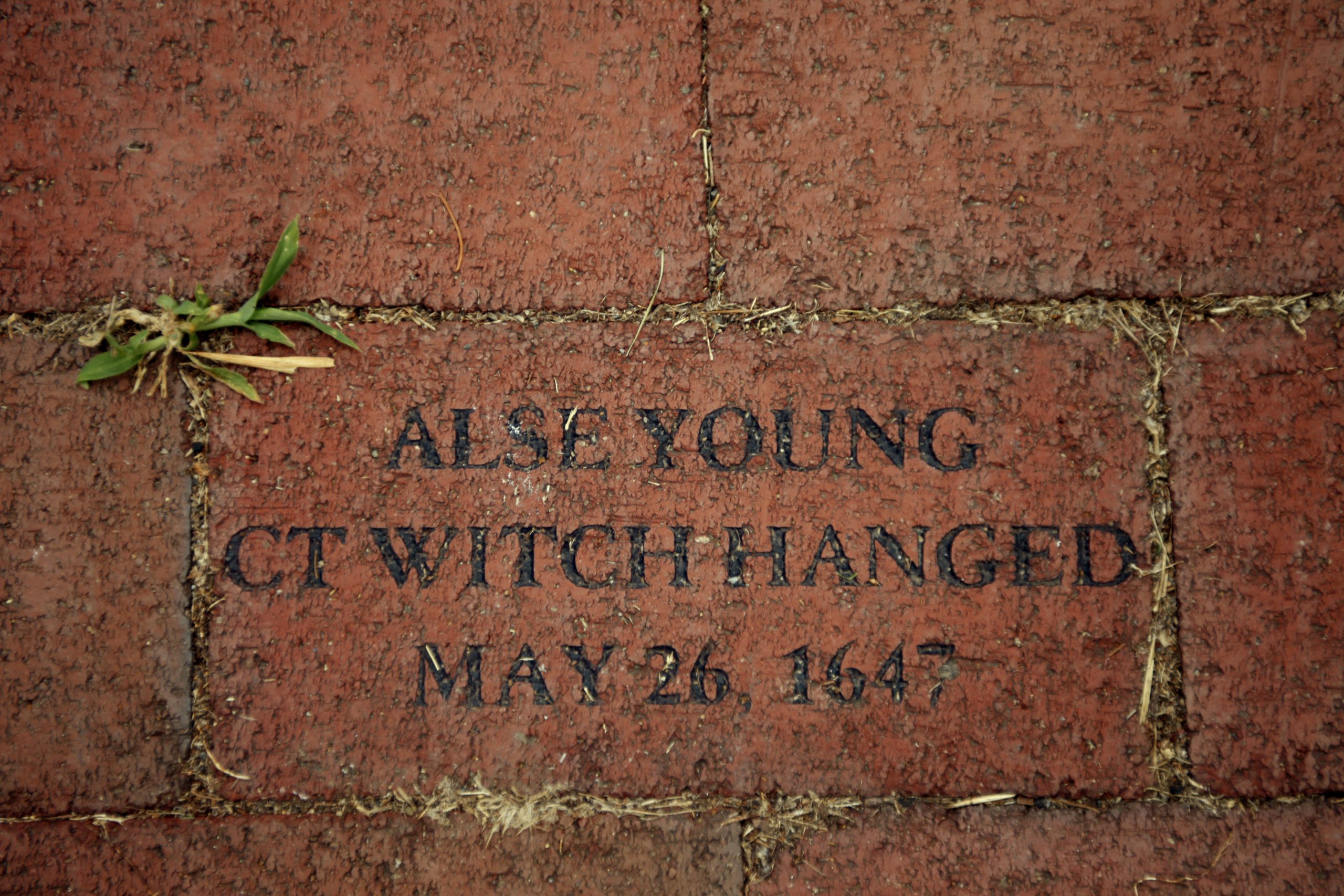
Alice, or Alse, Young of Windsor was tried, convicted and executed a year before Johnson. These two women went through the first of 27 documented witchcraft trials and 14 convictions in Connecticut. In total, there were 49 documented witchcraft cases in nine towns across the state according to the Wethersfield Historical Society and John Demos’ “Entertaining Satan: Witchcraft and the Culture of Early New England.”
Despite being the first witchcraft execution in the country, little is known about Young’s case. But in 1647, the same year Young was executed, there was an influenza outbreak in the Connecticut and Massachusetts colonies. Around 90 people died — including prominent leaders in the settlements.
“Puritans thought things didn’t just happen,” Smart said. “There was a reason for them.”
Many settlers believed these deaths were the work of the devil, according to Smart. So, they began searching for the “agent of the devil” within their own communities — witches.
“Thou hast entertained familiarity with Satan, the great enemy of God and Mankind; and by his help has done works above the course of nature,” reads the indictment of Joan Carrington, a Connecticut woman tried and executed for witchcraft in 1651. “According to the laws of God and the established laws of this commonwealth thou deservest to Dye.”
This type of indictment — accusing the indicted of familiarity with Satan — was common for those accused of witchcraft, Smart said. Joan Carrington and her husband, John, were both tried, convicted and executed for witchcraft in 1651.
Of the 11 people executed, nine were women and two were men. Some people had cases brought against them multiple times, and some people escaped before their punishment or trial. Others had their sentences reprieved.
In 2023, the state House of Representatives offered absolution, though not exoneration, to the nine women and two men hanged for witchcraft.
The trials are closely related to documented spread of disease in the colonies. The first trials and executions came during the flu outbreak. In 1662, a second group of trials, coined the “Hartford Witch Panic of 1662,” began after the death of a young girl who was believed to have been bewitched. Dozens of people during these two periods were put on trial.
For the next 24 years, there were no trials, convictions, indictments or executions on the basis of witchcraft. But in 1692, more people fell ill, and seven more people were indicted within the year.
The last two trials were held in Connecticut in 1697 — the same year as another flu outbreak in the state.