French student protests are now an ideological battle over university access

The rebellious lycée students have won – writes John Lichfield – the government has found a billion euros for schools down the back of the education minister’s sofa.
The hated university admissions platform will be amended and then replaced next year. Class sizes will be smaller. There will be 500 extra teachers and 15,000 extra university places.
READ ALSO: France announces education reforms, but students to continue protests
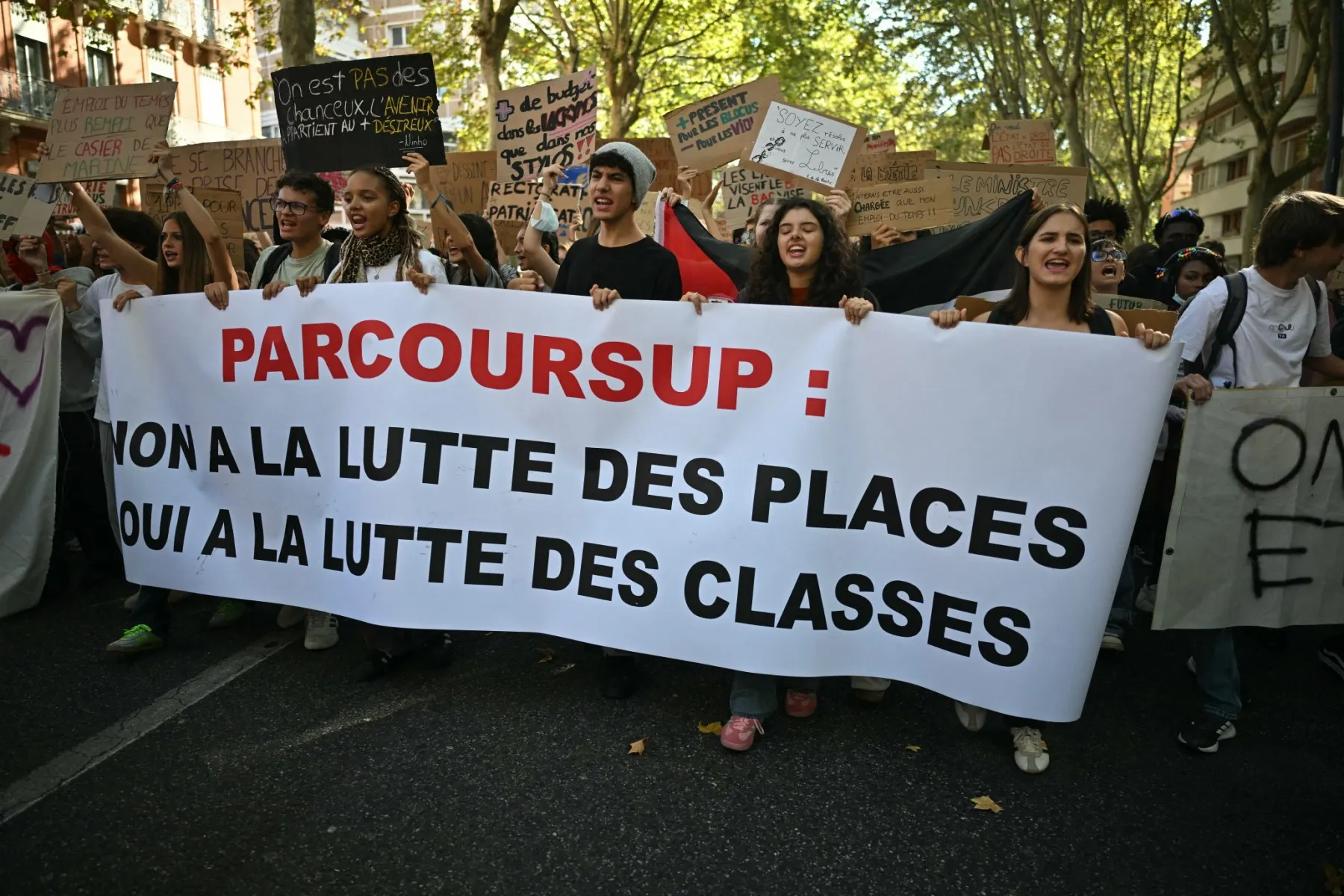
Not enough, the lycée student unions say. We want an extra €10 billion for education immediately. The admissions platform, Parcoursup, must be abolished instantly. Selection for university places must end now.
Who says that French children learn nothing these days? They learn how to be French. They learn how not to take yes for answer.
It remains to be seen whether most of the lycée students will be as intransigent as their leaders. The government believes that the high school protests will weaken when classes resume after the All Saints holidays on Monday. If so, it hopes, the wider social unrest will also diminish.
Don’t bet on it. The lycée student leaders, egged on by Jean-Luc Mélenchon’s hard-left La France Insoumise, are preaching “jusqu’auboutisme” – a wonderful French phrase for a destructive French habit. Translation: a bloody-minded insistence on abstract solutions to labyrinthine problems.
Consider the case of Parcoursup, the government platform which is supposed to match high school students with university places. Many of the lycée unions’ other grievances are practical and justified. They object to crumbling schools, unwieldy classes, teacher absences and long, jumbled timetables.
READ ALSO: Analysis: Are French lycées really all that bad?
The revolt against Parcoursup is also practical, in part. The platform is accused of being slow and opaque. But the core of the opposition is ideological.
Both the student unions and Mélenchon’s LFI say that Parcoursup promotes social and racial exclusion because it allows universities to select their students. They want to revert to the old system in which anyone who passed the baccalauréat could apply for any university course anywhere.
Don’t miss John Lichfield’s expert French politics analysis
If there were insufficient places, students were chosen by lottery. Some students were enrolled in courses for which they were unsuited; others were excluded from the studies in which they might have excelled. Only 40 percent of students completed their degrees, compared to an average of 78 percent in Britain.
Parcoursup was invented by President Emmanuel Macron’s first education minister, Jean-Michel Blanquer in 2018. It allowed selection for the most demanding studies, such as medicine, law and engineering. Otherwise, selection on merit was banned in theory but permitted in reality.
Decisions are made partly by algorithm and partly by human juries, based on, amongst other things, school reports and letters of motivation. Critics say that discriminates against kids from the poor, racially-mixed inner suburbs (banlieues). Universities don’t see the names of applicants; they do see the names and locations of their schools.
The debate is tainted with hypocrisy on both sides. Parcoursup symbolises how ideology gets in the way of practical solutions in France and practical solutions become so convoluted that they are no longer practical.
Why not have a simple system like UCAS in the UK based on predicted A-Level grades? Or the points system for allocating university places in Ireland? Both have their critics but they are transparent and broadly fair. In France, they would be regarded as inegalitarian, even unconstitutional. Instead, a laborious system was invented in which selection exists but scarcely dares to speak its name.
The hypocrisy does not end there. A separate, third level education system exists in France – the Grandes Ecoles – which is brutally selective. In theory these élite institutions are open to all; in reality only young people from the better private and state schools have much chance of passing the entrance exams.
READ ALSO: EXPLAINED: The difference between a French university and a ‘grande école’
Did the Parcoursup system – now to be scrapped – work better for universities and students than the old system of all-are-welcome-but-not-really? Yes and no. The failure rate for generic courses remains very high. For the more prized and demanding subjects, the drop-out rate is much reduced. One law course reported a 56 percent success first year success rate in 2024 – compared to 37 percent pre-Parcoursup in 2018.
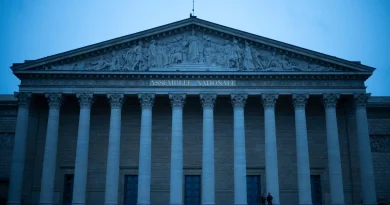
What now?The National Assembly will debate the issue on Wednesday. That is likely to produce the same invective and muddle as all other debates in this splintered assembly. It will be for the new President and Prime Minister elected next year to decide.
Do the student protesters really want to go back to lotteries for places? Some do. That was as least egalitarian, they say.
The more militant student leaders and Mélenchon’s LFI are more ambitious (but attached to the moon). Tens of thousands of university places should be created overnight, they say, so that young people can be enrolled in any course that they fancy.
On TV this week, LFI’s parliamentary leader, Mathilde Panot was confronted with the case of Assas, the sought-after Paris university which specialises in law and political science. It has 1,000 first year places and 20,000 applicants. How would that work if selection and lotteries were banned by an LFI government? Simple, Mme Panot said. We would create 19,000 new places.
And also, presumably, 19,000 new jobs for lawyers and political scientists.
Here is the real core of the issue. The Parcoursup row has been 40 years in the making. It is a row about the problems of yesterday, not the solutions of tomorrow.
In 1984, a Socialist French government decided that the proportion of French children who passed the baccalauréat – then 30 percent – should be increased progressively to 80 percent. Four decades later the target has been reached largely by dumbing down the “Bac”.
There are not enough university places for all who qualify. Academic study is not suited to many of those who claim the limited places. There are not enough graduate jobs for those who do complete their degrees (and the post-graduate courses which French employers demand).
The situation is about to get worse. Artificial Intelligence will destroy whole new geological strata of graduate jobs in the next few years.
The 15,000 new university places announced by the government on Monday were all for vocational and healthcare courses. Quite right! France should not be dancing on an ideological pin’s head about selection for third level education, it should be preparing for a new age when most career opportunities for young people will be practical and vocational.