Quorum Court stands by data center regulations, overrides Hyde veto
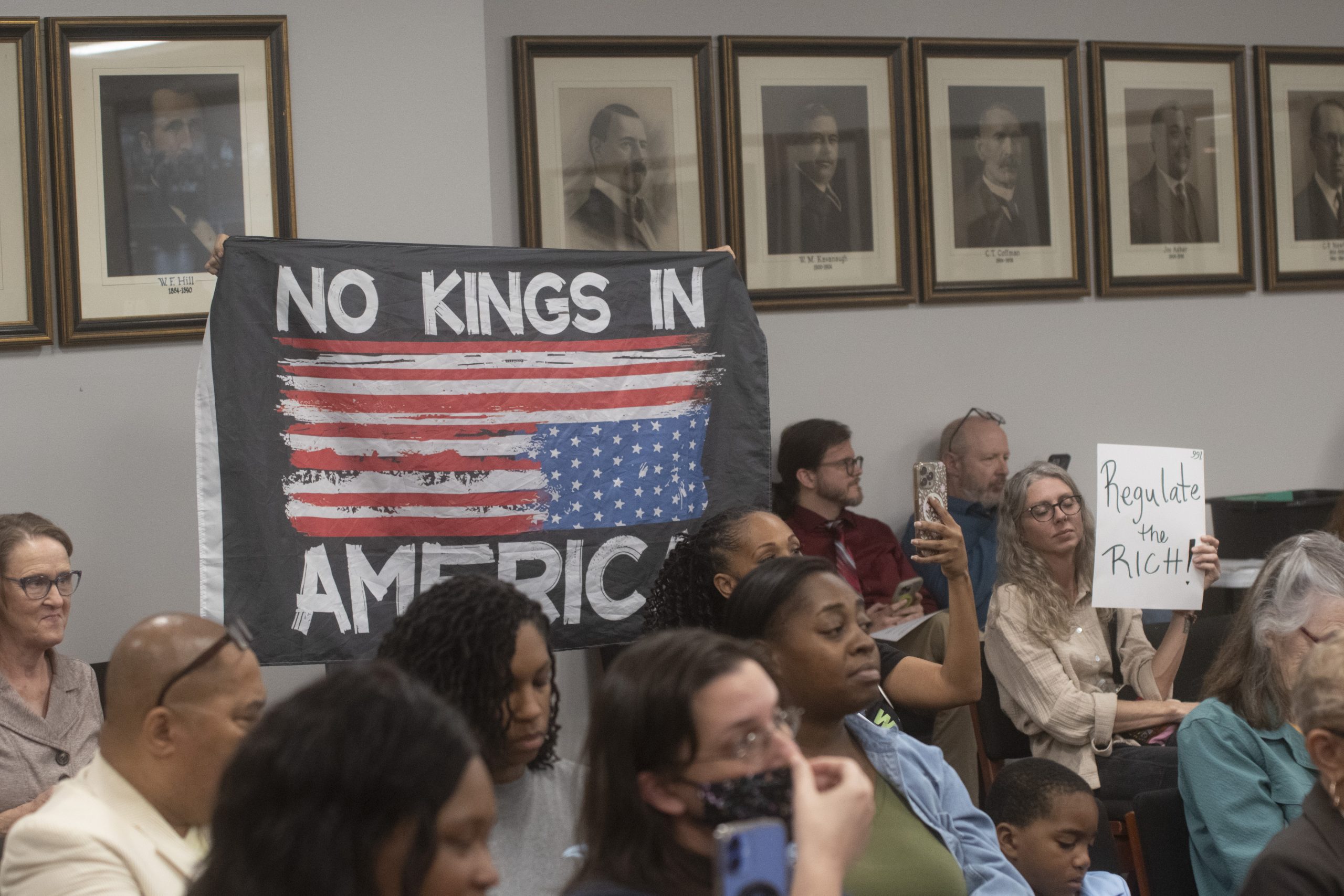
Data center apologists on the Pulaski County Quorum Court pulled out all the stops on Tuesday night in a last-ditch effort to help AVAIO Digital build in Pulaski County sans any sort of regulations on noise, light pollution and energy and water consumption. Those efforts failed. County Judge Barry Hyde vetoed the ordinance last month, after the Sept. 22 vote to pass the regulations. At Tuesday night’s meeting, his vote was overridden in a 10-4 vote.
Hoping to sway the vote, Justice of the Peace Douglas House, a Gov. Sarah Huckabee Sanders appointee and former Republican House member who joined the court last month, gave a lengthy invective about the threat of legal action from AVAIO, based on documents he claims to have received from AVAIO’s legal representation at Kutak Rock law firm.
“These folks are fixin’ to go to court with us,” House said. “They have already told us they’re going to sue. I have asked them to wait and let this process work out and they have so far withheld the legal action at this time. They’re not going to wait any longer.”
House attended the Pulaski County Planning Board meeting earlier on Tuesday, saying he had written an alternative piece of legislation to the one presented by Justice of the Peace Julie Blackwood and finally passed. He said at the Quorum Court’s agenda meeting two weeks ago that he would pursue his proposed ordinance if the justices of the peace were unable to override Hyde’s veto, but that if the override was successful, he would discard his measure. He repeated that on Tuesday, telling planners his measure, at this point, still needed some revisions.
The irony is that the Pulaski County Planning Board and Quorum Court have since May dragged out efforts to pass a moratorium to pause the incoming project, in order to get proper regulations in place, arguably giving AVAIO Digital a longer timeline to build what’s known as “vested rights” — legalese for more grounds to sue — in its massive $6 billion project outside of Wrightsville.
AVAIO has had logging trucks at the site all summer, residents living on the edge of the project say, and the crews have been clearing trees on the site throughout the entire battle over regulations. In September, the company bought 300 adjoining acres next to its already-enormous project site, indicating it has no intentions to leave town.
“I’m sympathetic. I wouldn’t want this thing in my backyard either,” House said. “But the fact is we can’t let emotion dictate how we’re going to vote. We have to follow the law.”
Tina Ward, the justice of the peace who represents Ward 9 — the working-class, minority-heavy area where both the AVAIO and Google data centers are planned — shot back at House, “We were elected. You were selected.”
Dominique Lane, the deputy county attorney, was also asked to read a freshly issued legal opinion by Attorney General Tim Griffin on the matter. Lane, reciting and paraphrasing sections of the opinion, which few in the room had read, said that the county “has limited authority to regulate a data center” without a zoning ordinance in place. On the matter of personal liability, the AG is of the opinion that the elected officials’ personal immunity from an AVAIO lawsuit would be covered “unless it is waived through applicable insurance coverage,” a point many JPs (and likely everyone in the audience) struggled to understand.
The justices of the peace — who have heard variations of House’s argument about the threat of lawsuits for months — were unmoved.
Those who voted in favor of overriding Hyde’s veto of the ordinance regulating data centers in Pulaski County included Julie Blackwood, Natalie Capps, Donna Massey, Luke McCoy, Kathy Lewison, Steven Person, Curtis Keith, Tina Ward, Patricia Young-Baker, and Staci Medlock. JPs Dianne Curry, Aaron Robinson, Douglas House and Paul Elliott voted against the override. Rebekah Davis was absent.
The Quorum Court now faces the unenviable task of sorting out how to implement the ordinance on an emerging industry that has sizable impacts the public — and regulators — are scrambling to understand. The regulations have a sweeping and technical scope, dealing with matters as diverse as wastewater and fire prevention to keeping noise and light pollution to a minimum.
Wendell Griffen, the Democratic candidate for county judge and drafter of the ordinance, spoke during a public comment period, noting that the regulations are not anti-industry or anti-development but an attempt to put the public back in the driver’s seat on a project many didn’t know about until years into its development.
“Regulation is not destruction of development,” Griffen said. “It is not destruction of industry. It is the protection of the people that industry is supposed to serve.”
Griffen beat Hyde in the Democratic primary in March, although Hyde’s political sympathies have been called into question. A September report on campaign contributions showed that Hyde had given to a number of Democratic causes, but he also contributed almost $2,100 to Sanders’ reelection effort.
Byron Tate contributed additional reporting for this article.
Source link