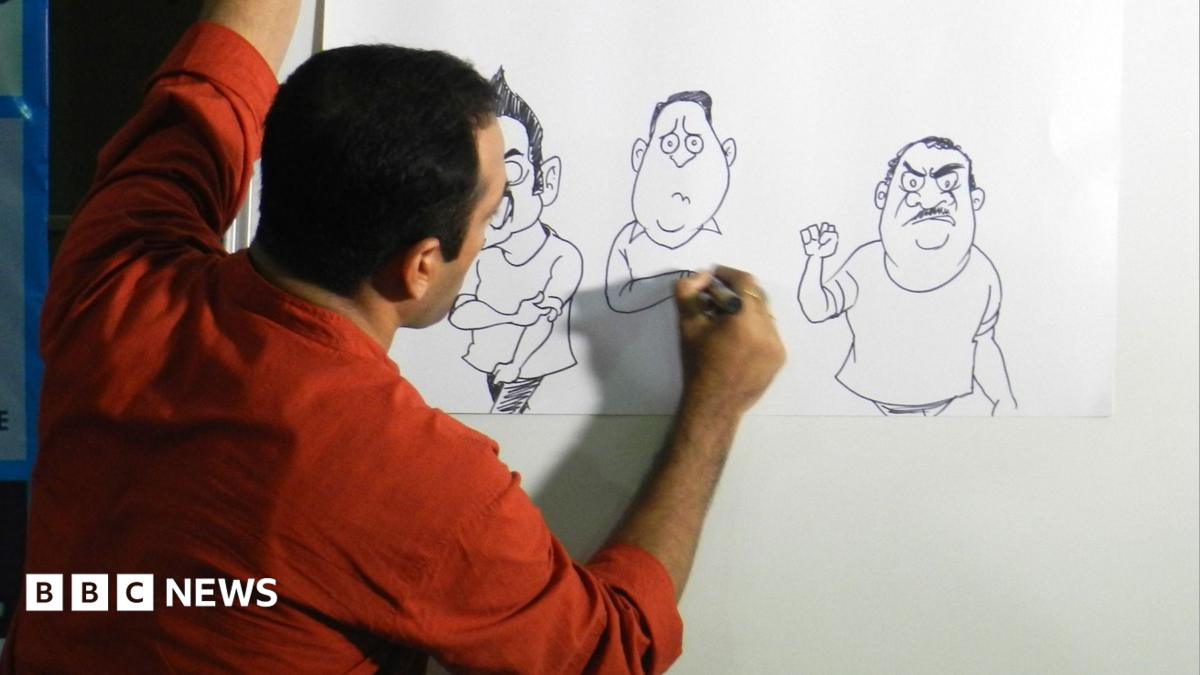
Satish Acharya, Manjul: India’s cartoonists built an audience online – now their posts are being restricted
Of course, political satire has a long history in India – as do attempts to curb it.
Cartoons have been a fixture of Indian journalism since independence, with RK Laxman‘s Common Man becoming one of its most recognisable characters.
But cartoonists have also faced censorship. During the Emergency in the 1970s, when civil liberties were suspended and the press was tightly controlled, Abu Abraham continued drawing, even as dozens of his cartoons were stamped “not passed by censors”.
In 2012, cartoonist Aseem Trivedi was arrested on sedition charges over cartoons allegedly mocking the Indian constitution. The charges were later dropped.
Today, concerns about restrictions on political expression extend beyond cartoonists. India ranks 157th in Reporters Without Borders’ World Press Freedom Index, while critics accuse the government of putting growing pressure on independent media. The government rejects the criticism, saying India’s media remains free and vibrant.
Comedians have also faced controversy over political satire. Kunal Kamra, known for his jokes about Prime Minister Narendra Modi and his party, has faced threats, cancelled shows and legal action.
For cartoonists, however, challenging those in power is central to their work.
“We are among the default opposition,” says Sandeep Adhwaryu, a cartoonist at a leading Indian newspaper.
“The nature of the craft is to oppose,” he says, adding that cartoonists, like journalists, must question whoever holds power.
Acharya says he has followed that principle throughout his career. Before 2014, many of his cartoons targeted the Congress-led government and were shared by BJP leaders.
“I never faced official restrictions on my cartoons during the previous governments, though there would be some trolling occasionally,” he says.
Now, with the BJP in power, much of his satire is directed at Modi’s government.