Fate of CA wealth tax could be decided well after election
The passage of Proposition 13 in 1978 was arguably the most significant political event in California during the last half of the 20th century.
While its primary purpose was limiting property tax increases, it also made raising other state and local taxes more difficult. It shifted public school support from local taxpayers to the state, profoundly impacted residential and commercial property markets, and spawned tax limitation campaigns in other states.
Prop. 13 also fuels a perpetual debate over how California’s public services should be financed that has spun off other ballot measures. One is Proposition 98, a 1988 measure that guarantees a certain level of state school support. And in 2020, voters rejected Proposition 15, which would have eliminated limits on taxing commercial property.
This year, Prop. 13’s advocates are pushing Proposition 43, which would require local tax increases to gain two-thirds voter approval. It would counteract a prior state Supreme Court decision exempting from that threshold taxes proposed via initiative.
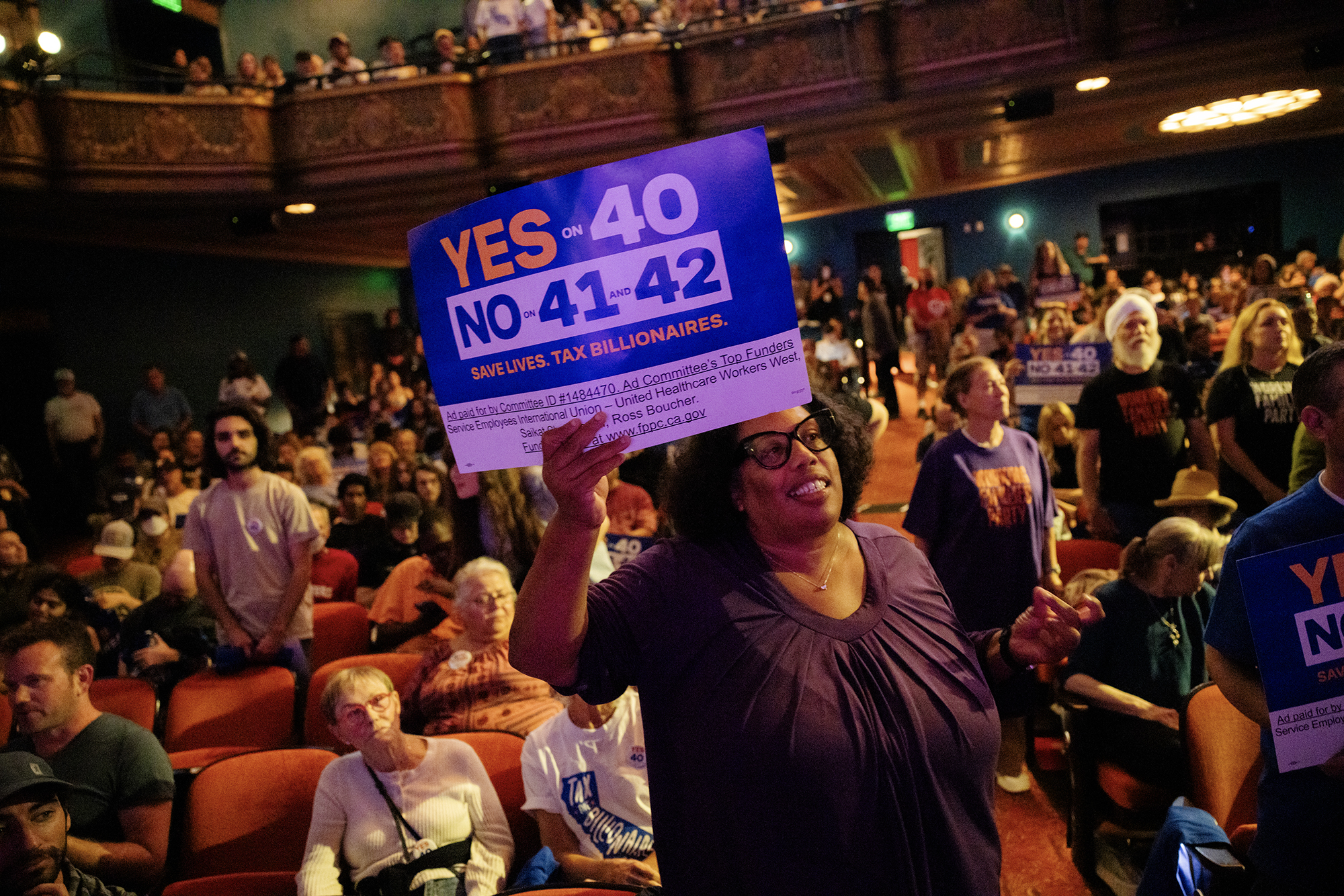
Another measure on the ballot this year, Proposition 40, could have consequences that would rival Prop. 13’s life-altering effects if it were to pass. Prop. 40 would impose a one-time 5% tax on the wealth of about 200 California billionaires, with all but a small share of its proceeds used to shore up healthcare services that have seen declining federal and state support.
It’s sponsored by SEIU-United Healthcare Workers West and draws support from left-leaning groups and politicians, such as U.S Sen. Bernie Sanders. Mainstream Democrats and other unions are divided. Gov. Gavin Newsom and his almost certain successor, Xavier Becerra, are opposed.
2026 Voter Guide
Get ready for California’s midterm election. This voter guide has everything you need to know
Billionaires such as Google co-founder Sergey Brin are spending hundreds of millions of dollars to oppose Prop. 40 and to pass Proposition 41 and Proposition 42, which would negate Prop. 40’s implementation if they gain more votes.
At the moment, Prop. 40 appears to be trailing. The most recent survey by the Citrin-POLITICO poll puts support at 46%, with 43% opposed.
If Prop. 40 fails, we’ll never know what its consequences would be, just as Prop. 13 was a shot in the dark and its history is still being written.
However one could make some educated guesses about what might occur should Prop. 40 enjoy a late-stage surge.
The first post-election factor would be whether Prop. 41, Prop. 42 or both also passed with more votes than Prop. 40. If Prop. 40 is not thwarted by either of those poison-pill measures, the next test would probably come in the courts, both state and federal.
Lawyers who helped draft the measure believe they have made it legally bulletproof. However, critics have laid out an array of potential legal challenges that would be novel because a wealth tax itself is unprecedented.
Assuming it survives the legal challenges, Prop. 40’s next hurdle would be logistic. The state Franchise Tax Board would devise ways to define, locate and value the taxable items of wealth. Cash and monetary investments would be fairly easy, but intangibles such as corporate ownerships and jewelry are trickier. Each of those procedural steps could also face legal hurdles.
There is also the question of residency. Prop. 40 says every billionaire who was a California resident on Jan. 1 must pay, but those who change residence after that date could contest the issue, and it could be years before their cases are settled.
Gilbert Hyatt, an inventor, moved from Southern California to Nevada before receiving royalty payments for one of his devices in the early 1990s. The Franchise Tax Board dinged him for income taxes in 1993, he resisted, and the case is still not completely settled after litigation in California, Nevada and federal courts that has gone as far as the U.S. Supreme Court.
Source link