Iran strikes PAK in latest attack on Kurdish Iranian opposition groups
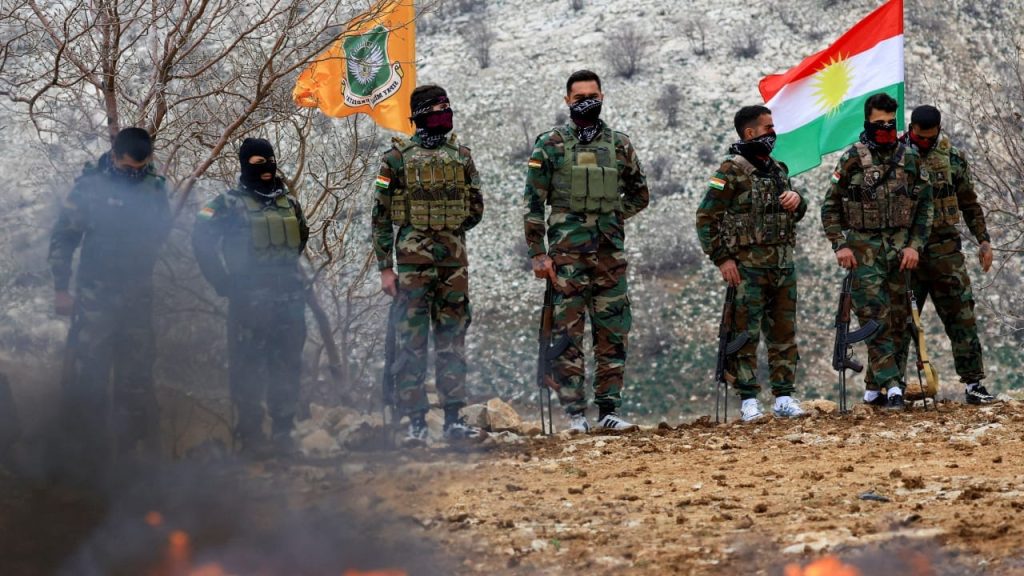
Iran carried out new attacks targeting Kurdish Iranian opposition groups on Wednesday, with reports saying that Iran targeted a site linked to the Kurdistan Freedom Party (PAK) in the Balisan Valley, northeast of Erbil.
This comes after Iran has targeted the Democratic Party of Iranian Kurdistan (PDKI), Komala, and Khabat groups in recent weeks, and is also pressing Iraq to expel Kurdish Iranian opposition groups.
Rebaz Sharifi, a PAK spokesperson, told Rudaw that “between two and four projectiles targeted the group’s positions at around 9:30 am near the village of Hasanawa, in the Balisan mountains.” He also confirmed that there were no casualties.
A security source confirmed the attack, saying that they believe Iran used two Hadid-110 drones in the attack. It is unclear whether this is accurate.
“At least one strike hit the western side of Bani Harir mountain 70km northeast of Erbil, according to a resident of a nearby village,” Rudaw noted.
Iran’s Ambassador to Iraq Mohammed Kazem Al-e Sadegh wrote on social media on Wednesday that Iran and Iraq had come to an agreement under which Iraq would expel the Kurdish opposition groups. The groups have rejected this, and Iraq’s National Security Council did not mention it in recent meetings. Iran appears to be messaging that it wants Iraq to act.
PAK fighting against Iran for Kurdish self-determination
PAK is an Iranian Kurdish opposition group that has operated for decades from the Kurdistan Region of Iraq. The group advocates Kurdish self-determination and has maintained an armed fighting force. Its fighters gained fame during the war against ISIS in Iraq, when they fought alongside Kurdish Peshmerga forces in some of the most exposed frontlines.
In February 2026, PAK joined four other Iranian Kurdish opposition groups in announcing a new coalition. The coalition includes the PDKI, the Kurdistan Free Life Party (PJAK), the Khabat Organization of Iranian Kurdistan, and a Komala branch. Later, a second Komala branch joined.
Iran has carried out more than 1,000 attacks on the Kurdistan Region of northern Iraq since February. Reports in March 2026 indicated the US might support a Kurdish uprising or transfer arms via Kurds to resistance groups in Iran. However, other Iranian opposition groups have slammed Kurdish groups as “separatist.” Many Kurdish groups have exercised caution regarding an uprising.
In recent weeks, Iran has launched increased operations against the Kurdish PJAK group in Iran, targeting Shaho mountains and areas near the border.
Iran has continued targeting Iranian Kurdish opposition groups in northern Iraq with drones and missiles. On October 17, two drones launched from Iran struck a Komala base in the Balisan area of Erbil province, according to Rudaw. One drone hit the base, and another struck a guard post. Buildings were damaged, but no casualties were reported.
On October 12, the PDKI said an Iranian drone targeted its Azadi Camp near Koya, where families of party members live. The group said this was the third attack on the camp in two weeks. On October 8, a drone also targeted a residential complex in Khabat district north of Erbil, with no casualties reported. Khabat here refers to the district, not necessarily the Kurdish opposition organization.
Iraq, Kurdistan Regional Government reach new agreement
Iraq and the autonomous Kurdistan Regional Government have also reached a new agreement. “The Ministry of Martyrs and Anfal Affairs in the Kurdistan Regional Government (KRG) announced on Tuesday that it has reached understandings with the federal government to unify financial entitlements for the families of martyrs and for political prisoners in the Kurdistan Region. These entitlements are to be included in the federal general budget bill for 2027,” Iraq’s INA state media said.
Rudaw noted that “the Kurdistan Region’s internal political rivalries and institutional paralysis have weakened its bargaining position with Baghdad and accelerated the erosion of its federal powers, a monitor warned, urging immediate reforms to avert further fragmentation.”
Meanwhile, an official from the Kurdistan Democratic Party of Iran (KDPI) told Rudaw that “the party would not lay down its weapons or abandon its struggle for Kurdish rights, rejecting Tehran’s demands the same day after Iran claimed Baghdad had agreed to expel Iranian Kurdish opposition groups or hand them over to the Islamic Republic.” An Iraqi source also denied any agreement to expel the groups.
In Turkey, the Nationalist Movement Party (MHP) leader Devlet Bahceli mentioned the PJAK group, Rudaw said in a report. He said that it was important to create a “terror-free” region. PJAK is linked to the Kurdistan Workers’ Party (PKK). Turkey and the PKK have a new peace process. PJAK is not involved in this process, which concerns Turkey.