Society formed to help public better understand nuclear energy, combat misinformation
SINGAPORE – A new society has been set up to help the public better understand nuclear energy as the Government assesses whether to adopt this cleaner energy source – a potentially polarising issue.
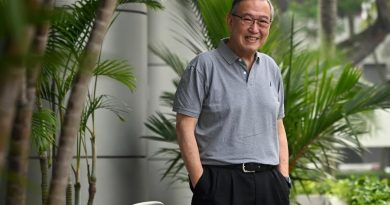
Nuclear energy is a socially charged topic marked by a gap in general nuclear knowledge and awareness here, said Matthew Chew, president of the Nuclear Learning & Understanding Society (NUCLEUS), which is a ground-up initiative that was formed in September.
“For Singapore in particular, nuclear will be a sensitive topic. A lot of people like the idea of nuclear until you ask them how they feel if it’s close to their backyards, and then all of a sudden, they’re not really sure,” he told The Straits Times in an interview on Oct 7.
One topic that often draws attention is the management of nuclear or radioactive waste, said Chew, a consultant who has a master’s degree in nuclear science and engineering from the Massachusetts Institute of Technology.
Addressing the misconception that such waste is difficult to manage and people may be inadvertently exposed to excessive radiation, Chew clarified that there is a proper way to store it, such as through land-based dry casks or deep underground geological storage, to ensure that the radiation does not reach humans and the environment.
According to a 2023 study by the Singapore authorities and a Swedish company, there are no major technical roadblocks to storing the Republic’s nuclear waste, possibly deep underground, if the country decides to adopt nuclear energy.
However, as the findings were based on a desktop study, which does not include on-site investigations, future surveys will be needed to make a comprehensive assessment.
Other topics that are often raised include nuclear safety, the location of nuclear power plants as well as careers in the nuclear field, Chew said.
NUCLEUS currently has 10 members, and has met twice since its formation to discuss its objectives and mission.
The society hopes to host a variety of events for members of the public, including seminars, workshops and networking events, as well as give talks in schools.
It is looking to hold its first networking event in November.
Through such events, NUCLEUS hopes to share general knowledge about nuclear energy, including its science and engineering, and help people understand why governments are considering adopting it, as well as why they need to take certain steps before deciding whether to deploy it.
Chew said: “It is really to provide the public with a way to learn about nuclear energy and allow them to ask the questions that they have in a non-judgmental space, because there is no wrong question.
“The society is very clear that its role is not to advocate for or advise the Government on nuclear as an option for Singapore.”
The other nuclear observers who have joined Chew on the society’s committee are business development manager Brendan Tan; senior scientist Rowinski Marcin, who holds a PhD in nuclear engineering; and automation company managing director Nicola Scarpelli, who has a master’s degree in energy and nuclear engineering.
As the only committee member without a nuclear engineering or science background, Tan hopes to bring a layman’s perspective to the table.
“In a room filled with engineers, sometimes the topic can dive too deeply into a rabbit hole, and that’s where I try to steer the conversation back to what it means in practice,” said Tan, who works at an energy technology company.
“I always try to put myself in the position of what a member of the public would think and ask. If the society is made up of only engineers, it could end up talking to itself, like an echo chamber.”
With his background in the finance sector, he hopes to help people understand how nuclear plants, especially those using advanced nuclear technologies such as small modular reactors (SMRs), can be financed.
SMRs are advanced nuclear reactors that are thought to be more suitable for the land-scarce, population-dense city-state, as they have a lower power capacity, enhanced safety standards and require much smaller buffer zones than conventional reactors.
Tan said: “It’s an evolving space and everybody is learning the commercial and financial aspects of SMRs. So for me, at least, it’s about engaging with people, learning together and hopefully building up an ecosystem that’s ready if Singapore decides to deploy SMRs in future.”
For more information, contact the society at nucleus-sg@outlook.com.