France vows to deploy 3,000 substitute teachers after fresh student protests
France is to deploy 3,000 substitute teachers “within the next hours” to struggling high schools, the education minister said Thursday, after nationwide protests over the state of schools and absent teachers.
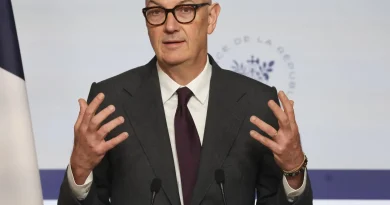
“Within the next hours, 3,000 teachers will be joining these institutions,” Education Minister Edouard Geffray announced during a live interview on the TF1 television channel, adding they would be posted to schools from Friday to Tuesday.
He said he would also authorise the recruitment of “a few hundred” more teachers.
Prime Minister Lecornu in a post on X added that 114 schools highlighted as especially in need of help would be the first served.
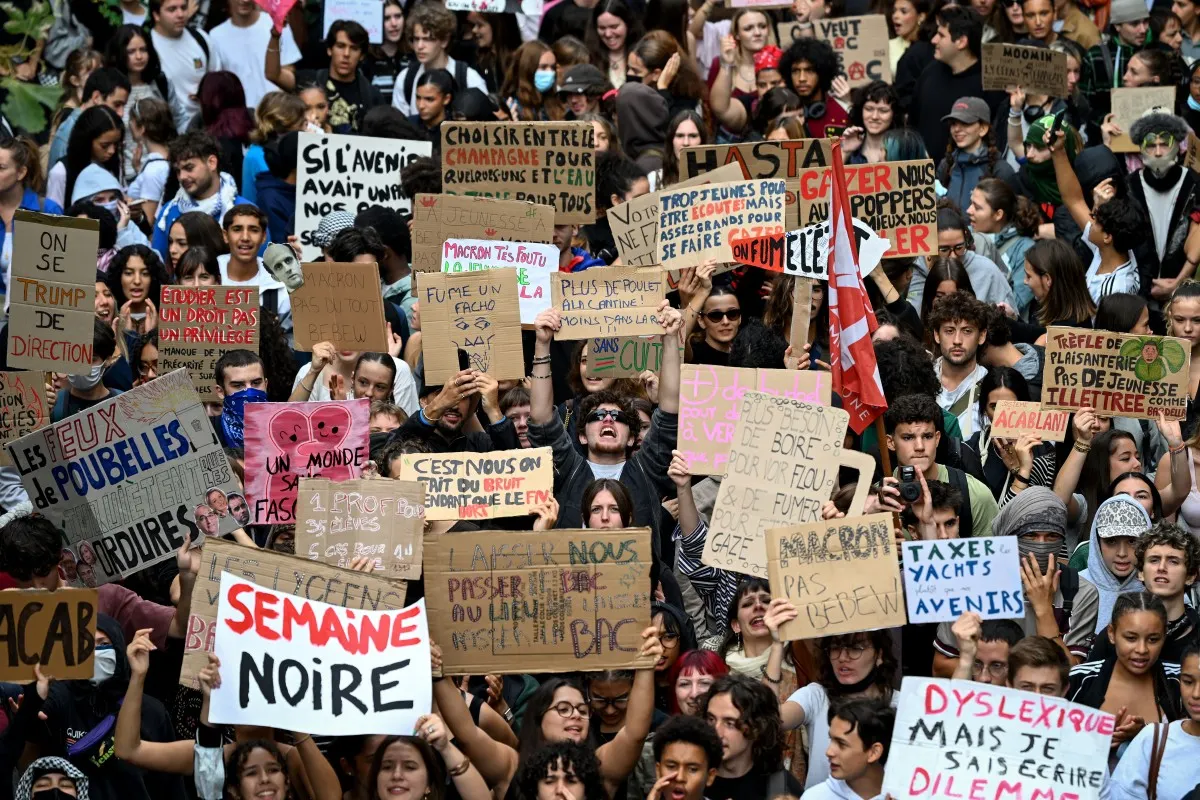
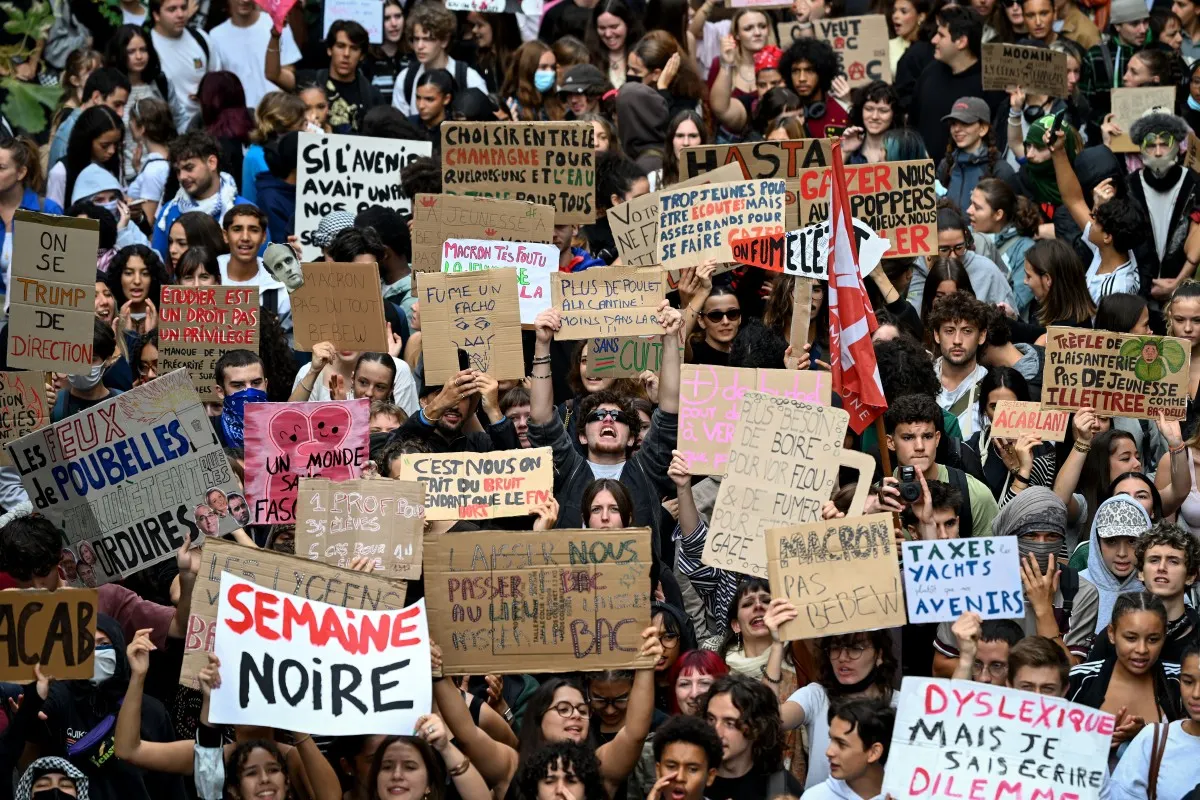
His announcement came after student-led protests saw 71,500 people take to the streets across France on Thursday, with police detaining more than 500 people, the interior ministry said.
Don’t miss our journalists’ daily news roundup from France
Some 55,000 of the protesters led actions outside schools, while the others joined marches, it added.
Students once again marched to demand better education and less police brutality, despite government attempts to ease a crisis that has rocked the country for more than a week.
Students have blocked entrances to hundreds of high schools, with squads of riot police deployed — occasionally resulting in violent clashes.
In Paris, where some 24,500 took to the streets, a few fireworks streamed up into the sky as students from schools and universities rallied in Place de la Bastille.
Crowds of students climbed the famous monument at its centre, some waving the French flag and singing the national anthem.
A student sat with his legs dangling on the top of a bus stop, clutching a sign reading: “Reason for absence: Too busy fighting for our future.”
There were violent clashes later on Thursday as French riot police moved in to clear out the young protesters.
Protesters face a water cannon during a demonstration of high-school students at Place de la Bastille, in Paris, on October 8, 2026, as part of a nationwide protest movement over learning conditions. Since late September, pupils have barred the entrances to hundreds of schools, complaining of teacher absences, overloaded timetables, dilapidated classrooms and buildings ill-adapted to rising temperatures, among other grievances. (Photo by Kenzo TRIBOUILLARD / AFP)
French police officers clash with protesters during a demonstration of high-school students at Place de la Bastille, in Paris, on October 8, 2026, as part of a nationwide protest movement over learning conditions. (Photo by Kenzo TRIBOUILLARD / AFP)
French Republican Security Corps (CRS – Compagnies Republicaines de Securite) police officers in riot gear scuffle with protesters as they attempt to evacuate a blockade action during a demonstration of high-school students near Helene Boucher high school in Paris, on October 8, 2026, as part of a nationwide protest movement over learning conditions. (Photo by SIMON WOHLFAHRT / AFP)
Student demonstrators — many attending high schools called lycees for children aged between 15 and 18 years old — have complained of absent teachers, overloaded timetables, dilapidated classrooms and buildings that cannot cope with rising temperatures.
Jeanne, a 15-year-old student from a top Paris high school, said she wanted to show solidarity with pupils in less privileged areas outside the capital.
“Everyone has the right to be educated at the same level. There shouldn’t be people who are more educated than others when we’re all in the public education system,” she said.
Marianne, a 20-year-old university student who also did not want to give her second name, said she was also there to protest excessive police force in recent days of protest.
“For me, that’s just unacceptable,” she said.
Some demonstrators have started fires and vandalised bus shelters. In response, police have used tear gas, batons and blast balls, prompting rights groups and the children to accuse them of using disproportionate force.
A 15-year-old lost a hand on Monday after police fired a stun grenade, and the government has suspended the use of the weapon.
Police on Thursday evening said they used tear gas in Bastille to disperse some “high-risk profiles”.