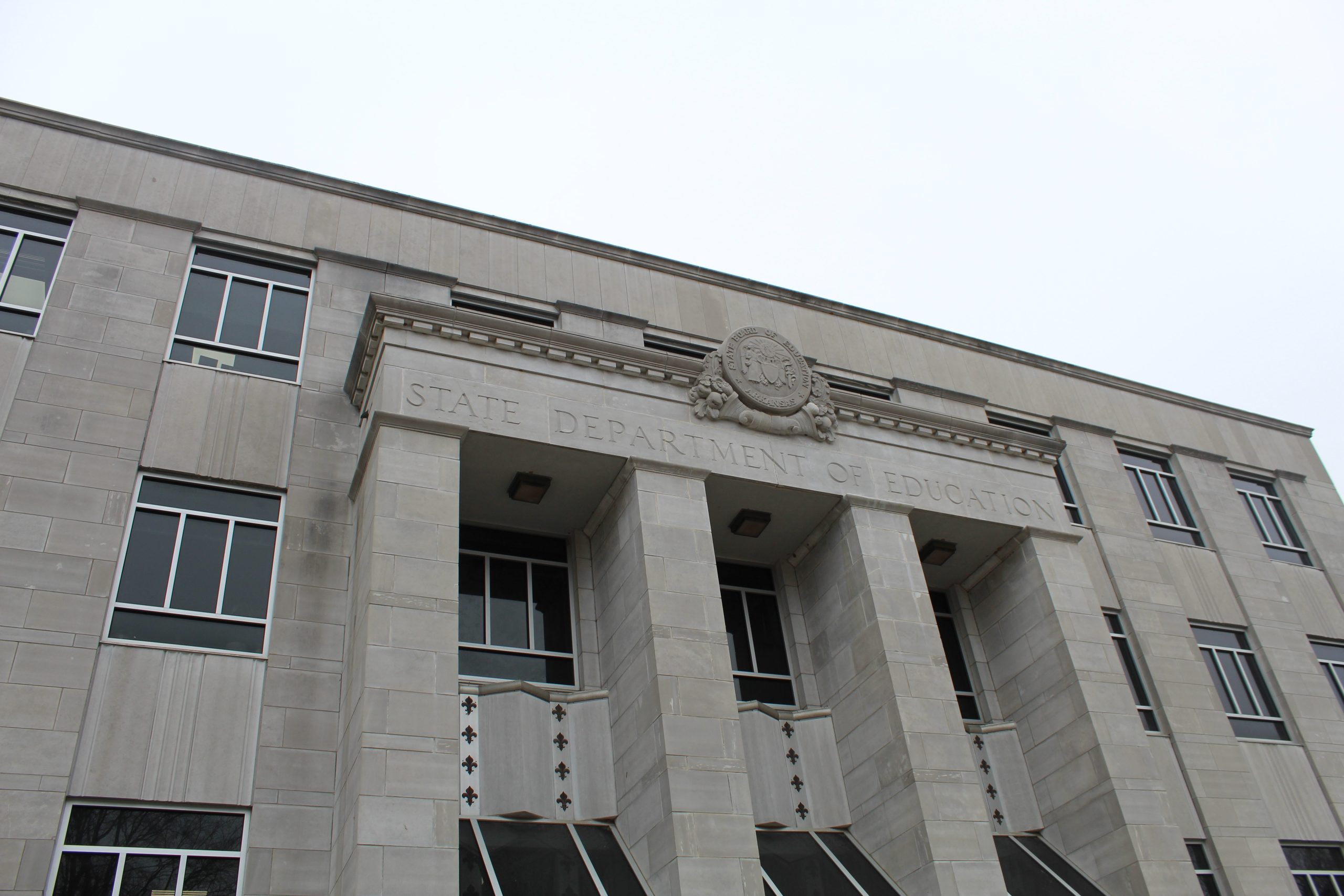
Arkansas Department of Education blames letter grade discrepancies on a sorting error
Revelations of temporary but significant discrepancies in letter grades the Arkansas Department of Education issues to public schools and school districts is causing a bit of an uproar this week, as advocates speculate about why the grades changed and question the value of those grades to begin with.
Helena World Publisher Andrew Bagley launched the uproar with an article posted Tuesday, describing a team of journalists’ discovery of a conflicting set of grades on a spreadsheet that’s since been deleted from the education department’s website.
Bagley noted that schools in his newspaper’s coverage area ultimately and officially were awarded grades lower than the grades on this shadow spreadsheet that’s no longer online.
“Clearly this is a wide gap with serious implications, and I have some questions,” Bagley wrote. “What is the basis for the lower grades received by these districts in comparison to the spreadsheet attached obtained from DESE’s website and that public access to has since been removed? Were the changes made to the formula for calculating the grades between creation of the spreadsheet attached and the release of the public grades? If so, what were those changes and why were they made?”
Good questions! On Thursday, education department spokesperson Kaelin Clay Luttrell offered this response:
The Arkansas Department of Education posted a spreadsheet containing school letter grades online that was incorrect simply due to a sorting error. Once discovered, it was immediately taken down. However, MySchoolInfo — which is ADE’s public data center that allows the public to search and access district and school information across the state — has contained accurate information since published. Additionally, every school district received accurate letter grades and access to support when letter grades were released. To find up to date, accurate information regarding school and district letter grades, please visit myschoolinfo.arkansas.gov.
Luttrell shared a link to the criteria used to determine those grades.
Regardless of whatever the sorting errors might have been that raised questions about the rubric and the dependability of the grading process, the official and final letter grades issued by the state are what they are, and they have meaning. Parents and the public look on them as sources of pride or shame. Districts send out press releases bragging when their schools do well or pledging to improve when their schools fare poorly. In the era of universally available LEARNS school vouchers worth more than $7K a pop per year, parents have a new economic incentive to leave their public school district, or to stick with the private school the state now helps them pay for.
Lower-performing schools, as identified by this grading process, are eligible for extra help from the state in the form of literacy coaches, tutoring programs and extra reading interventions. On the flip side, these schools and districts that consistently score Ds or Fs are also in danger of being taken over by the state and farmed out to charter school companies.
A teeming hive of public school educators and advocates raged and debated the validity of these grades this week in a private Facebook forum, both railing against what these grades really measure and conceding that they carry a lot of heft.
The state took over the Little Rock School District from 2015 to 2021, offering the entire state a glimpse at why these grades matter and why you do not want to find a D or an F on your own schools’ report cards. The state shamed and blamed educators for the poor academic performance that’s a plague for high-poverty schools pretty much everywhere. Little Rock public school teachers lost due process and bargaining rights, and the state greenlit more charter schools to absorb students fleeing an insulted and embattled district.
Since then, thanks to Gov. Sarah Sanders’ LEARNS Act, schools with D or F grades can be taken over by charter companies instead. That’s happening now in Blytheville and at Marvell-Elaine. Whether removing local school boards and local control and throwing the reins to charter operators will improve districts remains to be seen, but similar experiments elsewhere have shown mixed results.
There’s no doubt, however, that bringing in charter operators to run public districts supercharges the already aggressive school privatization push that’s the darling of conservative politics and that now has Arkansas taxpayers dedicating nearly $400 million a year to pick up the private school tuitions and homeschool costs that parents used to have to cover themselves.
Speaking of, the state’s annual report on its school voucher program is due out today, and should include some new information gleaned from the 2025-26 school year.
Source link