New York Magazine discovers the gentrification of Walmart
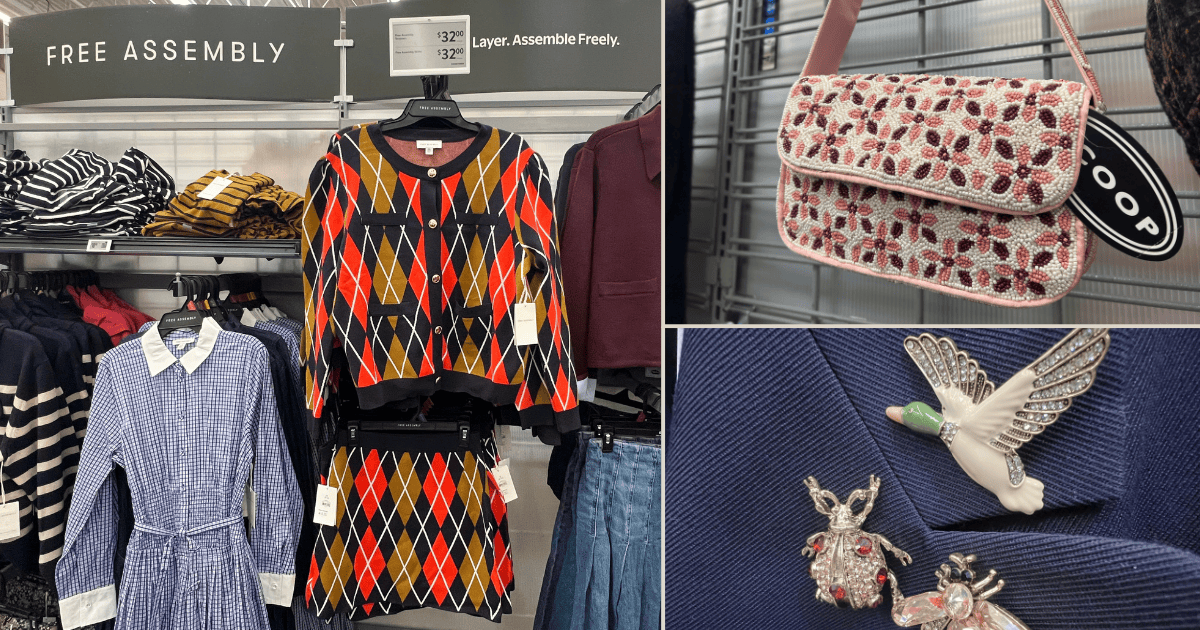
Apparently, fashion folk are excited that Walmart is now cool, and by cool we mean the clothes aren’t as ugly as they used to be. Some of them are even cute. In between the racks of stretch pants and NASCAR T-shirts are well-constructed blazers, beaded handbags, and cardigans in thick knits designed by fashion heavyweight and former Lady Gaga stylist Brandon Maxwell.
A New York Magazine reporter named Chantal Fernandez came down to Fayetteville recently to cover this urgent and unexpected news in the fashion world. Fernandez delved deep into the retail behemoth’s makeover as a place to buy not just socks and Tweety Bird T-shirts, but fashion. The company, we learned from Fernandez, has hired a Saks Fifth Avenue executive to back its “well-funded effort to turn Walmart into more than just a place for bargain hunters,” she wrote.
Free Assembly and Scoop are two of the newer and more stylish Walmart clothing lines we learned about in the story, both designed by Maxwell and popular among TikTok fashion influencers. Scoop recently did a Devil Wears Prada movie collab. Actress Millie Bobby Brown and pop star Megan Thee Stallion have both designed collections for the chain. The company now hosts pop-ups in Soho to showcase its trendier in-house brands.
Walmart has indeed undergone something of a glow-up in recent years. It’s mostly shaken its early-aughts reputation as a bargain-basement retailer where you could buy dirt-cheap but ill-fitting jeans while suspecting they were probably made in sweatshops in far-flung lands.
But Arkansans aren’t so easily fooled by a makeover, even one that includes blazers with bejeweled mallard brooches and cute beaded handbags. Walmart was founded in Bentonville, of course, and the Walton family’s money works like an invisible hand.
Arkansans contend each day with the tension between the Waltons’ spectacular wealth, the state’s persistent poverty, the family’s role in the rapid gentrification of the entire northwest corner of the state — and how a tightly-woven thread runs between all of these things.
Walmart’s great un-wokification
Walmart was, for most of my young adult life, associated with terrible labor practices and ruthless cost-cutting that pushed mom-and-pop retailers out of business. Fernandez, no doubt younger than me, only hints at Walmart’s dodgy past, calling the company’s well-cited problematic labor practices of the 1990s and early aughts “alleged.”
Some context for the younger readers: Walmart was a leading force in the globalization of manufacturing, amassing corporate wealth while sourcing almost all of its products —including its clothing — from poor nations in the Global South. For a brief history of Walmart’s worst labor snafus, see the Kathie Lee Gifford 1990s sweatshop scandal. Walmart also manufactured jeans in Rana Plaza, a Bangladeshi factory that collapsed in 2013, killing 1,132 people. The company denied that the factory was an authorized contractor and said it wasn’t producing anything there at the time.
But that’s all ancient history. Let’s pull back the hood and see what other less-than-cool things the company has been up to lately.
Walmart is also both the country’s and the state’s largest private employer, and its record on wages versus executive compensation and profits is anything but chic. Walmart now touts its higher retail wages, and it has, in fact, moved more employees to full-time roles, where they can finally qualify for healthcare benefits. Yet many Walmart workers — just like its shoppers — are still poor, despite Walmart’s more than 60-year history.
According to a June 2026 report by the Government Accountability Office, in Arkansas, Walmart employs more working adults on SNAP than any other large company evaluated, including Dollar General and McDonald’s. Walmart also ranks among the top three employers of working Medicaid recipients in the states studied, including Arkansas, where more than 4,000 of its employees are enrolled.
When we look at why so many Americans are so goddamn poor, we have to look closely at retailers like Walmart. Despite some modest pay increases, the sector still pays abysmally compared to what it takes to support a family and a life. Why? Lack of unionization is part of the story, but it’s also arguably because these are jobs occupied by women and people of color, folks we’ve decided don’t deserve to earn enough to get by.
Wages for Walmart’s retail workers, stockers and in-store shoppers in the Little Rock area start at $14 an hour, according to Indeed job postings, well below MIT’s estimated $21.19 living wage for a single adult in Arkansas, and less than half the $34.70 an hour it estimates a single parent with one child needs to cover basic expenses.
While Americans may not be thinking about what the typical Walmart factory worker in China and Bangladesh earns, it’s worth noting she is getting squeezed, too. According to McKinsey’s, a consulting firm, Walmart asked its Chinese factories to lower prices last year in the face of tariffs. Those factory workers need fair pay, too, and yet the retailer asked for cost cuts rather than cutting profits or CEO pay.
Incredibly, last week, the Walmart Foundation — the company’s philanthropic arm — gave $10 million to support a new statewide initiative designed to tackle food insecurity in Arkansas. How about Walmart simply pays its people more? Now that would be cool.
What’s more, what’s bringing most people through the doors of the local Walmart isn’t the fashion — it’s the prices. In fact, as Americans struggle to pay for basic goods, more people are shopping at Walmart today than five years ago. And yet, Walmart has mostly passed the cost of tariffs and inflation on to consumers. Since Trump’s trade war on China and its Liberation Day tariffs of 2025, Walmart prices have inched upward. Today, Walmart remains the country’s largest importer, with about 60% of its products made in China as of 2025.
Meanwhile, profits and executive pay are soaring. The company’s annual profits have leapt by nearly $5 billion in the past five years. Former CEO Doug McMillon, who stepped down earlier this year, had a compensation package worth a staggering $28 million in his final year on the job, making 930 times the rate of his lowest-paid retail employees.
Finally, Walmart, like many other corporations bending to conservative pressure, dumped its diversity, equity and inclusion efforts as soon as it was no longer politically convenient. In late 2024, Walmart scrapped its in-house Center for Racial Equity and removed some third-party products for LGBTQ+ shoppers. The company also scrubbed mentions of “diversity and inclusion” from its annual report.
Walmart has stayed the course on some of its environmental goals. Notably, the company still appears to believe that climate change is a thing and is working toward cutting greenhouse gas emissions from its own operations and supply chain. But that’s very difficult, the company admits, as it keeps making more and more stuff.
On Monday morning, I went to the Walmart on McCain Boulevard in North Little Rock to check out the clothes. I located some Free Assembly pieces with alluring waterfowl prints, as well as a dark-hued cheetah-print denim jacket I might go back for. I was also astonished to find that the aforementioned well-constructed blazer festooned with a mallard brooch was fashioned out of recycled polyester, which is less wasteful and fossil-fuel-intensive than virgin polyester (made from oil), though almost certainly just as clammy.
Still, the clothes were disheveled and wrinkled and displayed next to cases of Bud Light and Monster Energy drinks. The blazer was made in India, where more Walmart clothes are now crafted, as it searches for places cheaper to manufacture than China. A pink beaded Scoop handbag would have been cute had the beads not been falling off the strap.
Fernandez wrote that she enjoyed the annual phantasmagoria, known as Walmart Associates Week, where what Walmart employees don’t make in livable wages and benefits they get back in inspirational talks and concerts, this year starring Shaboozey and P!nk. Walmart has gotten expert at putting a shiny sheen on a business model that’s still quite ruthless underneath.
Source link