Germans fear inflation more than war or climate change
People in Germany are more politically engaged than they have been in a long time. This was also evident in the high voter turnout in the September state elections in Saxony-Anhalt, Berlin and Mecklenburg-Western Pomerania.
Germans are passionately debating immigration, the upcoming reforms to pensions, healthcare and long-term care, as well as democracy and the rule of law.
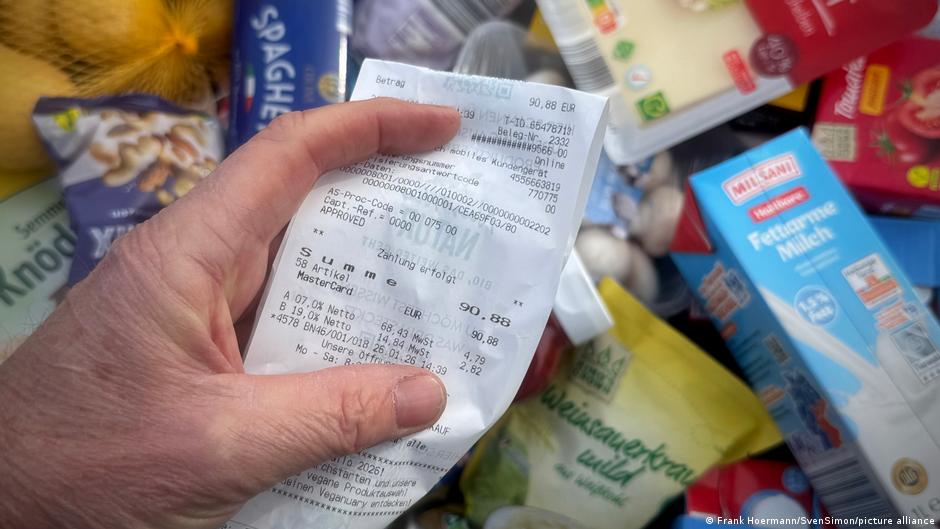
But by far their greatest fear is the cost of living in Germany, which is becoming increasingly expensive. At least, that is the finding of the 2026 study on “Germans’ Fears,” which the insurer R+V presented in Berlin.
From early May through late July of this year, researchers surveyed some 2,400 German-speaking citizens aged 14 and older.
The cost of living is again their top concern, as it has been in the survey for many years in a row. This study has been conducted annually since the early 1990s.
Last year, 52% of those polled cited the rising cost of daily life as their greatest concern; in 2026, that figure has risen to 59%.
At a press conference in Berlin, Isabelle Borucki, a political scientist from Marburg who served as a consultant on the study, explained why.
“The price of key items — energy, housing and food — has risen noticeably. This reduces the financial leeway for leisure, vacations and purchases. People can afford less and less.”
Germans worry about higher taxes and contributions
The study also shows that people are well aware that Germany’s social security systems are in a serious crisis. Both the state pension fund and long-term care insurance are chronically in the red.
Most people also seem to realize that taxes and contributions will rise. That is why the fear of higher taxes is stronger than in previous years.
“Behind the fear of higher taxes and benefit cuts lies the question of fairness, with people wondering who will bear the costs of modernization,” Borucki said. “And they worry, ‘Can I still rely on getting benefits I am entitled to?'”
Less fear of war, immigration and Donald Trump
But what about the issues that are also dominating the headlines in Germany? What about immigration and the increasing polarization of society? Or global upheavals?
A narrow majority of 52% of those surveyed fear that the number of refugees is overwhelming the German state. This fear ranks third among all concerns.
But when it comes to global upheavals, Germans are not so concerned.
Only 45% of respondents fear that US President Donald Trump‘s policies are making the world a more dangerous place, researcher Grischa Brower-Rabinowitsch said.
“That’s significantly fewer than during his first term.”
In 2018, during Trump’s first term, 69% responded to the same question by saying that this made them very afraid. “After years of constant geopolitical alarm bells, people are starting to get used to it,” Brower-Rabinowitsch said.
German politicians got poor grades
This trend also seems to hold true for other areas of concern: Germans are looking to the future with considerably less anxiety than expected. Only 34% now fear a war involving Germany, down from 41% last year.
Since 1992, the study has asked people if they are afraid of losing their job? Currently, only 20% of the surveyed members of the working population answered “yes.” That is the lowest figure ever recorded.
However, the assessment of politicians — both those in the government and those in the opposition — is sobering: Respondents were asked to grade politicians with one being the best and six the worst (the grading system used at German schools). The result was an average score of 4.1, which is barely a passing mark.
Political scientist Borucki places the primary responsibility on the current government of conservative Christian Democratic Union (CDU) and center-left Social Democratic Party (SPD) under Chancellor Friedrich Merz which came to power in May 2025.
After the end of the previous coalition government, many associated the new coalition with hopes for more leadership, less conflict and a rapid economic turnaround.
“That has not come to pass,” says Borucki. “There is now a gap between the grand announcements and tangible results. People are disappointed and losing confidence.”
This article was originally written in German.