Sales tax increase for Colorado passenger train
The Front Range Passenger Rail District promises Colorado residents it has enough money to build out and launch round-trip passenger train service from Denver to Fort Collins three times a day by 2029.
But voters in several Front Range cities will be asked in November to increase their sales taxes by about 33 cents per $100 spent to expand the service further — more trips and with a stop as far south as Pueblo.
Here’s who is supporting and opposing the measure, where the sales tax increase would be imposed. and how much money the tax hike is projected to generate.
What Ballot Issue 7A would do
The rail measure asks 2.4 million voters in about 30 communities from 13 counties that would be served by Front Range passenger rail service to approve a 0.333% sales tax increase on top of other state and local sales taxes they already pay.
The sales tax increase is projected to increase revenue by $295 million annually. The measure also asks voters to allow the Front Range Passenger Rail District to sell $580 million in bonds.
Ballot Issue 7A will appear only on ballots in the district.
The district includes municipalities and special districts where at least 20% of the population lives within five miles of a planned station. It includes Pueblo, Colorado Springs, Sterling Ranch, Littleton, Denver, Westminster, Broomfield, Louisville, Boulder, Longmont, Loveland and Fort Collins.
For a list of all the communities included in the district, go here.
The Front Range Passenger Rail District says it already has enough funds to create three round trips a day between Denver and Fort Collins in three years, with the route heading northwest to Boulder and Longmont on the way to Larimer County.
The $332 million limited phase cost would come from a state transportation innovation fund built up by various fees, and RTD money set aside for FasTracks rail lines north of Denver that were never built. The state and RTD would split the $30 million to $36 million annual operating costs for that phase.
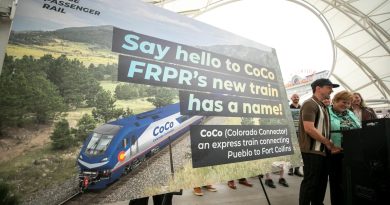
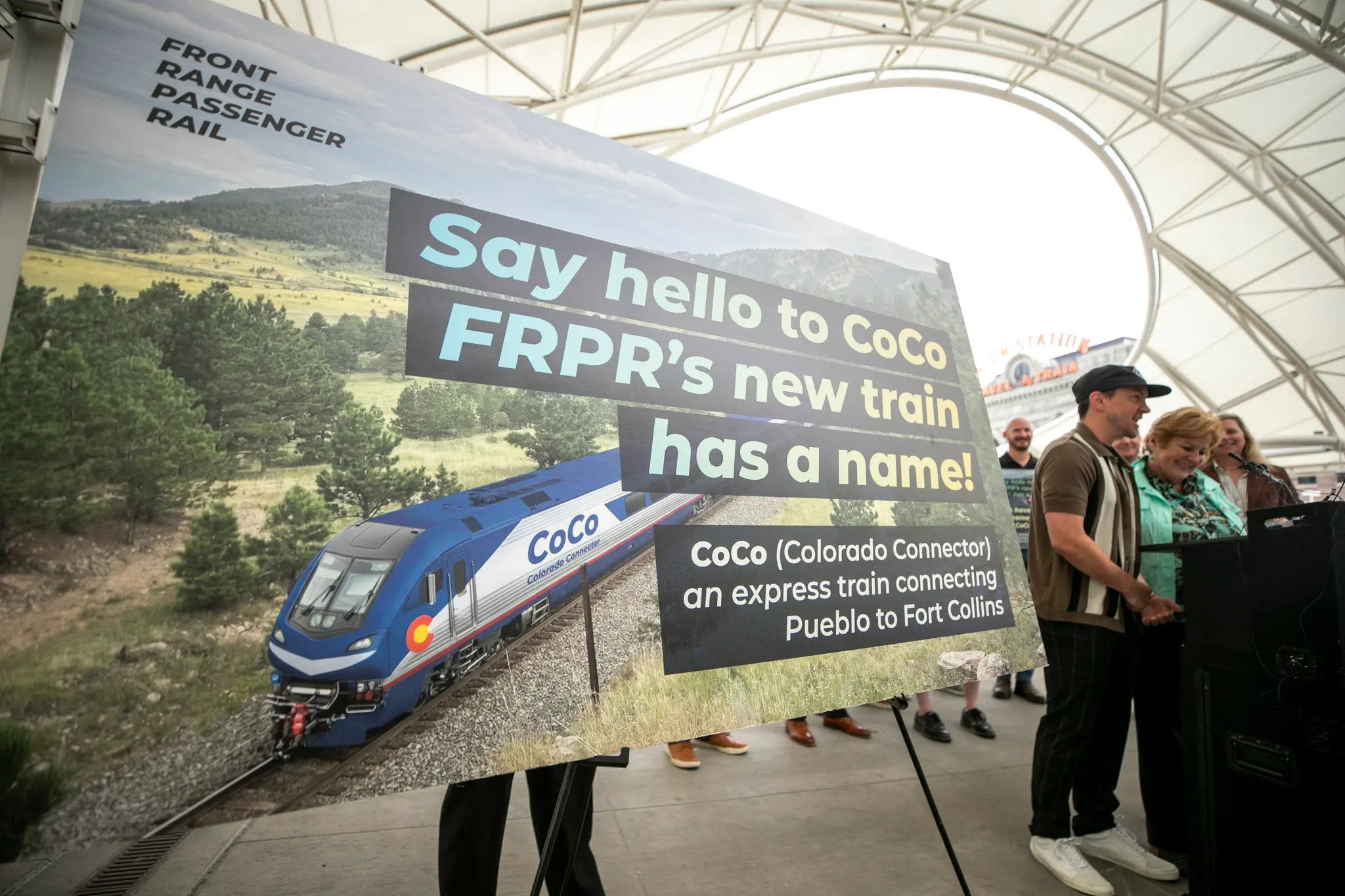
Full buildout down to Colorado Springs and Pueblo under the proposed sales tax would take a total of $2.7 billion for the newly named Colorado Connector, or CoCo, and take five years from the vote — if Ballot Issue 7A is approved — to complete. The fully funded system would also feature more frequent service throughout the route.
The full system would cost $85 million to $116 million annually to operate.
All that expansion, the district says, could be funded by the 0.333% sales tax increase.
Use the calculator below to see how much more you would pay should Ballot Issue 7A pass:
Ballot Issue 7A
What would a sales tax increase to pay for a Front Range passenger train cost you?
Ballo Issue 7A would add a 0.333% sales tax in the Front Range Passenger Rail District — about 33 cents on every $100 of taxable purchases. Enter what you spend in a year to see the added cost.
Added tax per year
$66.00
On $20,000 of taxable spending.
Arguments for Ballot Issue 7A
The Front Range district board and its supporters say there is pent-up demand for more passenger rail in populous counties with residents frustrated by the cost and time of driving crowded roads.
In Boulder, Longmont, they note, many residents have complained for years that RTD never fulfilled its promises in the 2004 FasTracks sales tax vote to bring commuter rail to their neighborhoods. They’ve paid additional sales tax into accounts accumulating unspent at RTD.
Moreover, the boosters say, there is an appetite to take rail instead of cars to special events or destinations, from college and professional sports to major concert venues. Once the basic and expanded systems are built out on the Front Range, promoters want to tie Colorado’s trains into southern Wyoming and northern New Mexico destinations. They also want to branch off to ski trains serving more destinations frustrated by Interstate 70 traffic, drawing on the success of the Denver-to-Winter Park ski train.
The district board said they can avoid some of RTD’s buildout problems by using existing tracks controlled by privately owned railroads, and have already negotiated such deals. They also eliminated some potential “no” votes by asking the state legislature to narrow down the original district boundaries to only those communities they could argue would be directly served by the new trains.
Arguments against Ballot Issue 7A
Those extra trains face headwinds as voters grapple with inflation, high cost of living and rising fuel costs, as well as RTD’s record on past rail promises including failing to deliver on a northwestern rail line.
RTD is projecting a structural budget deficit of more than $200 million annually in 2027, and the transportation district’s board has proposed service cuts as ridership continues to lag behind pre-pandemic levels.
Northern suburban voters helped approve RTD’s FasTracks expanded sales tax for more rail service in 2004, yet have not seen train projects arrive in their part of the metro area.
Affordable Colorado is an issues committee that has registered to campaign against 7A and a couple of other ballot questions. Randal O’Toole is a transportation policy analyst representing Affordable Colorado, and he cited a few main points against the new tax:
It won’t take many cars off the roads, northern Colorado suburbs would be much better served by expansions of the well-used Flatiron Flyer comfortable bus service; and sales taxes are the most regressive form of tax.
“The people who are going to ride it are people who are going to be relatively well off,” O’Toole said. The expansion plan proposes spending hundreds of millions of dollars, “a lot of it coming from the pockets of low-income people, so a few snobs can ride a train who wouldn’t ride a bus,” he said.
One deep-seated perception is that RTD spent hundreds of millions of sales tax dollars building out light rail lines under FasTracks, and yet sees falling ridership every year and now enormous maintenance bills coming due on older tracks. Drivers on Interstate 25 see empty or near-empty light rail cars passing by at rush hour many days of the week. Frequent service breakdowns, and the failure to deliver on trains to Boulder and other suburbs, add to public distrust.
Criticism of expanded fixed-line services across the nation also questions how the projects will serve “last mile” needs. Rail critics say users will be frustrated if there’s no way to get to and from isolated train stations to their destinations, whether that’s their jobs, neighborhoods, or to concert and sports venues in outlying areas.
“It’s just not going to be convenient for people to use,” O’Toole said.
Money behind the measure
Rail supporters have registered an issue committee, Coloradans for CoCo, with the Secretary of State’s Office to raise and spend money in support of Ballot Issue 7A.
The group had raised $339,000, with little spending reported, through Sept. 16. Its major donors include Sterling Ranch, Conscience Bay Research, the Colorado Rockies and Colorado businessman Daniel Caruso.
Denverite also reported that RTD planned to spend $3 million on “education and outreach” for the Colorado Connector line that would be built for the basic plan already underway. That will be in effect a marketing effort also for the Colorado Connector sales tax vote. Some RTD board members argued against the spending, saying it was the wrong thing to do when major bus and rail service cuts are also on the table.
Affordable Colorado registered to oppose 7A, but had not reported raising any money by Sept. 16.
How Ballot Issue 7A appears on the ballot
Shall Front Range Passenger Rail District taxes be increased $295,000,000 annually and by whatever amounts are raised annually thereafter, and shall Front Range Passenger Rail District debt be increased $580,000,000, with a repayment cost of $785,000,000; to construct, operate, and maintain Colorado Connector (CoCo) passenger rail service on Colorado’s Front Range and connect communities, including Pueblo, Colorado Springs, Sterling Ranch, Littleton, Denver, Westminster, Broomfield, Louisville, Boulder, Longmont, Loveland, and Fort Collins; in order to:
- remove vehicles from highways and increase travel capacity;
- connect travelers to employment centers, colleges, sports arenas, and entertainment hubs along the Front Range; and
- invest in station area improvements and local connections to rail stations;
by establishing a 0.333% sales and use tax (equal to one third of a penny on a $1 purchase), with exemptions provided under Colorado law, including those for gasoline, food, residential electricity and gas, prescription drugs, and medical supplies; and to retain all such revenues, public and private contributions, and any investment income on revenues and debt proceeds, as a voter-approved revenue change under Section 20 of Article X of the Colorado Constitution; and requiring that all such dedicated revenues be reviewed annually by an independent auditor and a rotating group of citizen taxpayers who live in the district?
The question will appear in all capitalized letters on your ballot.
Read the nonpartisan state ballot guide analysis of the measure.