
Colorado targets addiction recovery coaches as Medicaid spending jumps 286%
The letter Brian Bauer received in the mail hit hard — with one sentence, his northern Colorado nonprofit providing addiction counseling and sober living to people fresh out of prison and homeless shelters was over.
It was a 90-day notice that the regional agency that dispenses Medicaid funding was ending its contract with Bauer’s organization, called Abundance Foundation. It meant that 230 people receiving support from 11 recovery coaches would lose services. The nonprofit’s three sober living houses would close.
Bauer doubts those clients will find help elsewhere, as similar services are shrinking throughout Colorado.
The cuts affecting Bauer and others are the result of state Medicaid spending that is projected to overgrow its budget by nearly $1 billion next year and the decisions that have followed in an attempt to rein in that spending. The latest target is peer counseling, which includes services provided by people with lived experience instead of licensed clinicians.
At Abundance Foundation, peer coaches who have gone through addiction recovery, and spent time in jail or without housing, help others navigate the journey.
The legislature passed a law in 2021, when there was more federal and state money for Medicaid, that said the government insurance program for people with low incomes would cover peer support. The intent was to create greater capacity in the behavioral healthcare system, where waitlists to see a psychiatrist or mental health therapist are often months long.
It worked.
The law, passed with widespread bipartisan support, was estimated to cost $35,000 in state funds the first year and about $54,000 the next, according to its fiscal note.
That was way off. Last year, “peer and support services” cost $293 million, split between federal and state funds. It covered services for 35,000 people per month.
“That is causing us concern,” said Gretchen Hammer, executive director of the Colorado Department of Health Care Policy and Financing. “There may not be appropriate clinical oversight.”
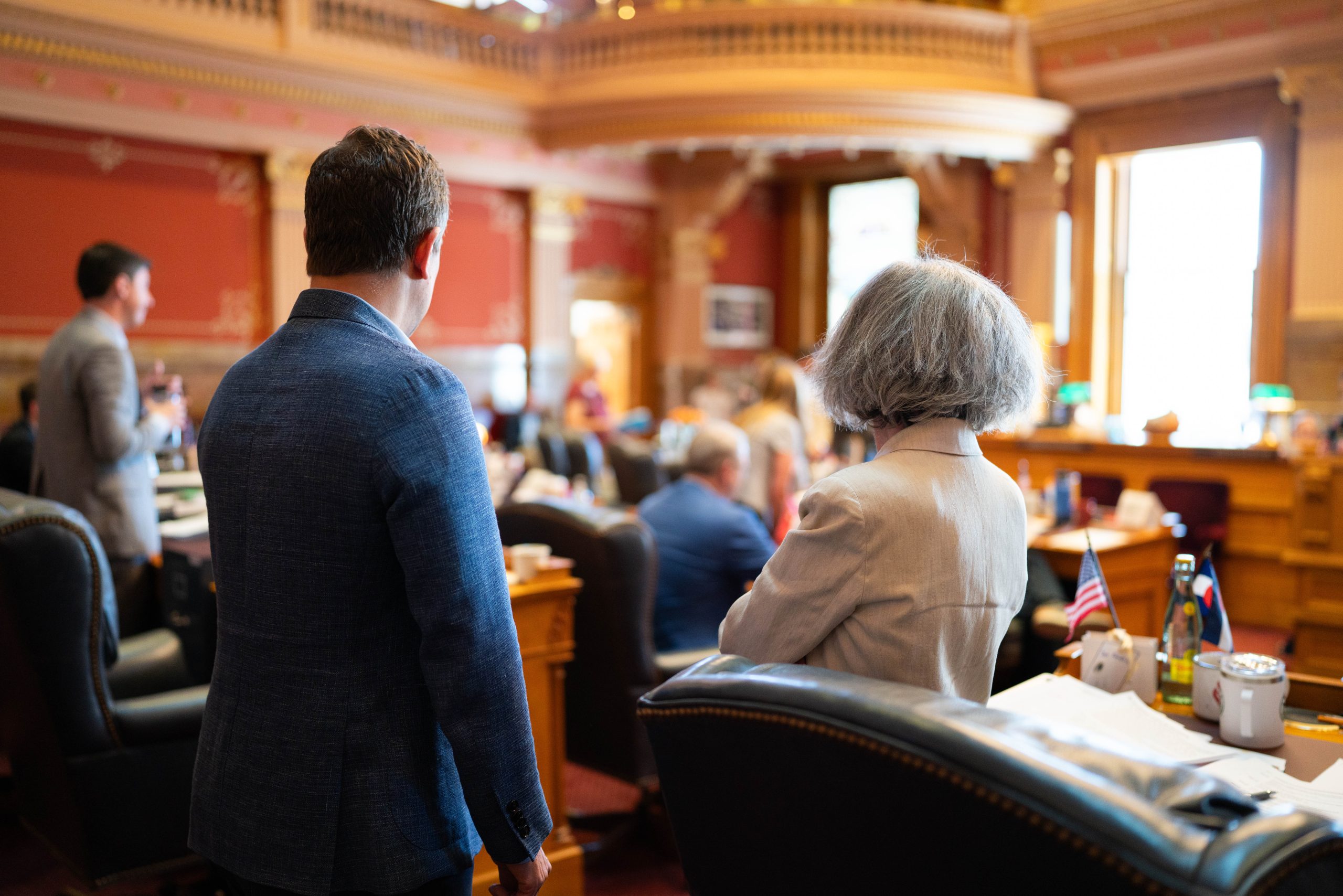
The spending was discussed during a recent meeting of the state Commission on Medicaid, which includes 10 lawmakers charged with coming up with solutions to create a sustainable Medicaid budget. The numbers enraged lawmakers, who unloaded a round of attacks on peer services, and any other services Medicaid is paying for that are provided by unlicensed clinicians.
That includes peer counselors who are running sober living homes across the state.
“You don’t go to somebody who had cataract surgery to get your cataracts removed,” said Sen. Judy Amabile, a Boulder Democrat and commission chair. “You go to a doctor.
“I am getting a lot of feedback from people that they are not actually getting excellent care. Medicaid is paying for people to be in places where they are actually being harmed,” she said. “This is an area that we should really be taking a close look at.”
Sen. Barbara Kirkmeyer, a Brighton Republican, asked whether the state healthcare department could just end the program now.
“That’s outrageous,” she said. “Can we work to eliminate it, … and we are not just supporting people so they can go to AA and whatever kind of things? The governor can stop spending, even if the legislation has been passed.”
Hammer, the head of the department that includes Medicaid, said state healthcare officials were already in talks about a “moratorium” with the regional agencies that contract for peer services — like the one that sent notice it was ending Bauer’s contract three weeks ago.
There was a 286% growth in spending in what the Medicaid program defines as self-help and peer services from 2022 to 2024, state officials said. That included a jump to $51.8 million last year from $8.4 million three years earlier for just one peer services billing code.
The Health Care Policy and Financing Department is “working to address the growth in expenditures and bring spending in line with the budget,” spokesman Marc Williams later told The Colorado Sun via email. That has included asking “regional accountable entities,” the agencies that contract with providers, to work with providers that can “demonstrate improved health outcomes.”
Bauer, who has been sober for 14 years, said it’s clear that lawmakers on the committee don’t understand how peer counseling works. People coming out of the corrections system, or out of homelessness, want help, at least initially, from those who’ve walked the same path, he said. That’s how they figure out how to stay sober, how to get a job, and make probation and therapy appointments, he said.
“The argument that they need a medical professional is invalid,” he said. “The idea is that when somebody gets out of jail or prison, the main person they trust to do the next right thing has been in jail or prison. Getting them to go to a psychiatrist to sit down and talk about their feelings is not something they are going to do.”
Otherwise, are they “just supposed to white knuckle sobriety?” he asked.
Other services are not available, he said. The largest nonprofit mental health center in Larimer County, SummitStone Health Partners, often has a waiting list.
And in August, Jefferson Center Mental Health closed its adult residential recovery program due to “substantial reductions in Medicaid reimbursement rates,” the center said in a community letter. About 50 employees lost their jobs.
“Significant budget challenges for Medicaid and safety net behavioral health funding have squeezed providers for some time now,” the center wrote.
Bauer acknowledged that fraud exists in the peer services industry, because it has been operating as “the wild west” for the past five years. But the solution, he said, is not to eliminate services that are working for people who need them.
Rocky Mountain Health Plans, the regional entity that canceled Bauer’s contract, did not respond to questions about why. In an email, a spokesperson said the agency’s “goal is to help people find the right services at the right time” and that “peer support services can be an important part of a member’s behavioral health care.”
Amabile cautioned against talk of abruptly eliminating peer services. Colorado spent years trying to build up its behavioral health system so that people had more access to care, so state officials should use caution as they look for cuts, she said.
“This talk of ‘let’s just get rid of all that’ is a little bit dangerous,” she said.