
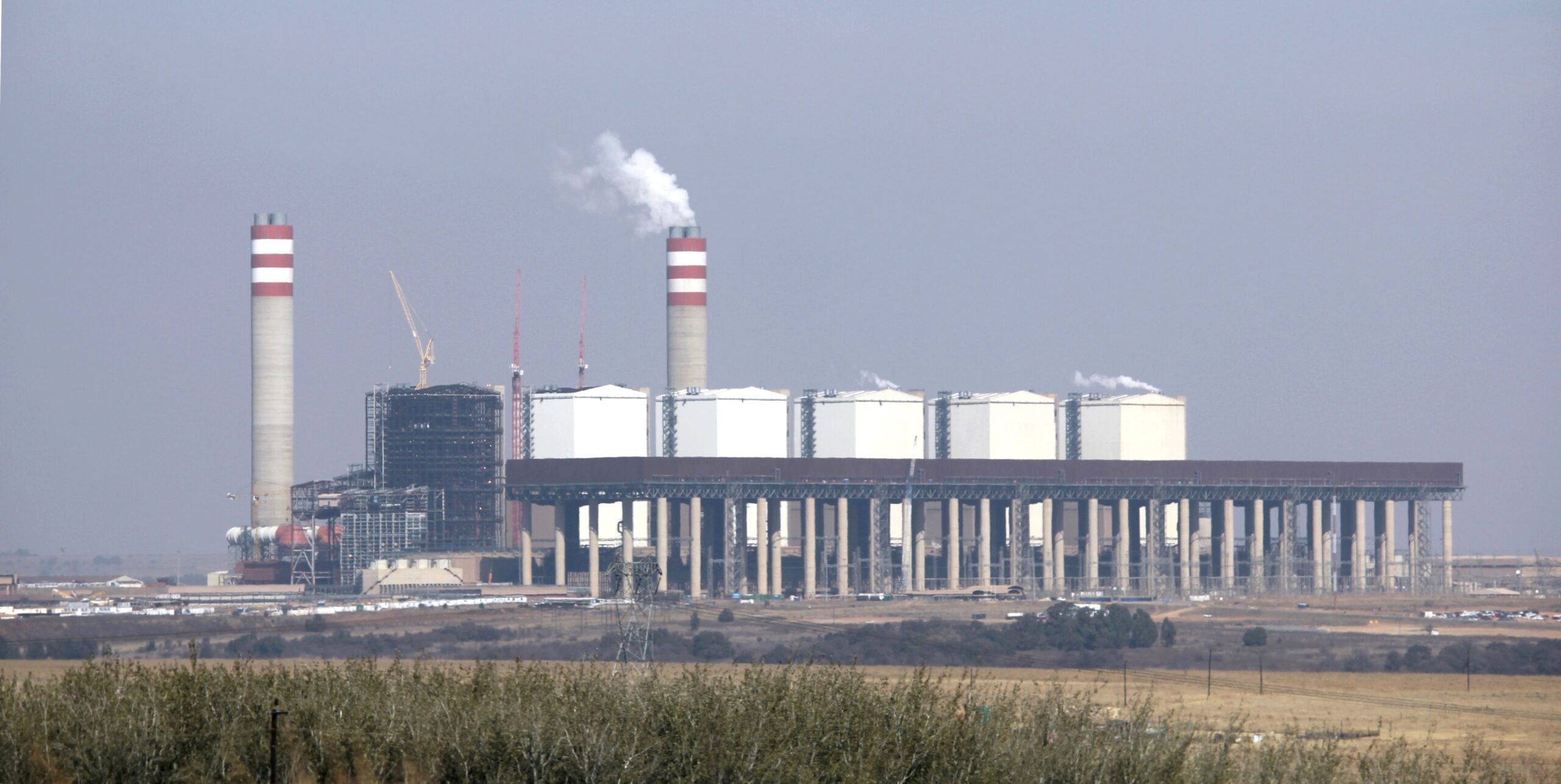
South Africa’s emissions targets may be too easy to hit
South Africa · ENERGY
Key Facts
- —The country About 65 million people, Africa’s most industrialised economy. Output was about US$427 billion in 2025, a little smaller than Denmark’s. Coal still generates most of its electricity.
- —Why it matters Under the 2015 Paris climate deal, each country sets its own emissions cap, called a Nationally Determined Contribution (NDC). Weak caps from big coal users make the global warming limits harder to reach.
- —Why now On Friday 25 September, news site GroundUp and data publisher The Outlier argued the country could meet its caps without extra effort.
- —What happened A draft national inventory, gazetted on 29 May 2026, puts net 2024 emissions at about 444 million tonnes. That is already inside the 2025 target range.
- —The numbers Caps of 350 to 420 million tonnes of carbon dioxide equivalent for 2030. The 2035 range is 320 to 380 million tonnes.
- —What it means for you Investors and exporters should watch the gap. Loose targets could cost South Africa climate finance and expose its goods to carbon border charges abroad.
- —Still open Whether the government tightens its range, and whether delayed coal-plant closures push energy emissions back up before 2030.
South Africa’s emissions targets may be met with almost no extra effort, a new analysis argues. Critics say that makes them a formality rather than a real climate commitment.
One-stop reference
Company Intelligence
Every listed company in Latin America — financials, ownership and structure for 1,450+ companies across 26 exchanges, in one place.
Ask Rio Times
Latin American markets, currencies and companies.
Answers are generated from Rio Times reporting only â every claim links to its source article.
South Africa is the most industrialised economy in Africa and still relies on coal for most of its electricity. That makes its climate pledges a test case for coal-dependent emerging markets everywhere.
On Friday 25 September, Cape Town news site GroundUp and data publisher The Outlier examined whether the country is on track. Their answer was yes, but mostly because the bar is low.
What the targets say
Under the 2015 Paris Agreement, every country sets its own emissions cap, called a Nationally Determined Contribution, or NDC. South Africa’s cap for 2030 is a range of 350 to 420 million tonnes of carbon dioxide equivalent.
Carbon dioxide equivalent is a common unit that converts all greenhouse gases into the warming effect of carbon dioxide. The 2030 range dates from the country’s updated NDC of September 2021.
In October 2025 the government submitted a second NDC with a 2035 range of 320 to 380 million tonnes. It keeps net zero as the goal for 2050.
Both ranges include the carbon that forests, grasslands and other land absorb. That detail matters, because the land has recently done much of the work.
Why the targets look easy to hit
The draft tenth national greenhouse gas inventory was gazetted for public comment on 29 May 2026. It puts gross 2024 emissions at about 478 million tonnes.
After subtracting about 33 million tonnes absorbed by land, net emissions come to about 444 million tonnes. That figure already falls within the range the country set for 2025.
Emissions peaked around 2008 and 2009 and have drifted down unevenly since. GroundUp notes the Presidential Climate Commission, a state advisory body, ties that fall mostly to economic stagnation and power cuts, not policy.
GroundUp also reports on government-commissioned research from the University of Cape Town. It found that existing policies could bring 2035 emissions to between 289 and 359 million tonnes.
That would put the country at or below its 2035 range without new measures. “The targets are so unambitious that we could hit them by doing what industry and government have already promised to do, without lifting a finger further,” said Déna Jansen.
Jansen is an analyst at Just Share, a Cape Town shareholder-activism group. She told GroundUp that “a target that doesn’t ask anything of you isn’t anything more than a formality.”
What independent analysts say
Climate Action Tracker is an independent research project run by Climate Analytics and the NewClimate Institute. It rates South Africa’s overall climate effort as “insufficient”.
In its December 2025 review, the tracker said the 2035 target implies a cut of 16 to 29 percent from 2022 levels. A fair share of the effort to hold warming to 1.5°C would need a 40 percent cut.
The tracker also found the 2035 range less ambitious, relative to a 1.5°C path, than the 2030 range. If every country acted like this, it says, warming could reach about 3°C.
It praised some features, such as an economy-wide target set in absolute tonnes. It also urged the government to narrow the ranges, which leave wide room for interpretation.
The coal problem underneath
The easy headline hides a harder reality in the energy sector. That sector covers fuel burned for power, industry and transport.
It emitted about 375 million tonnes in 2024, according to the draft inventory. That alone exceeds the lower end of the 2030 target.
After rolling power cuts eased in 2024, the state utility Eskom burned more coal and energy emissions rose. Total emissions fell only because land was estimated to absorb more carbon, an estimate the inventory treats with caution.
To reach the top of the 2030 range, net emissions must fall by about another 24 million tonnes. Reaching the bottom would require a cut of about 94 million tonnes.
The national electricity plan retires about eight gigawatts of coal capacity by 2030. GroundUp notes this depends on six gigawatts of new gas power being ready, which is uncertain.
Eskom has already pushed the closure of five coal stations to 2030, citing delays in private power projects. Each delay keeps more coal burning for longer.
The law behind the pledges
President Cyril Ramaphosa signed South Africa’s first Climate Change Act in July 2024. The law lets the government set sectoral emission targets and carbon budgets for large companies.
Critics say whether South Africa’s emissions targets bite depends on how firmly those budgets are enforced. Several key clauses were deferred when the law took effect in 2025, which slowed that process.
What it means for investors and exporters
Jansen warned that a credibility gap could cost South Africa access to international climate finance. It could also expose exports to carbon charges in the countries that buy them.
The European Union’s carbon border levy is the clearest example. It prices the emissions embedded in imports such as steel and aluminium. Charges apply to goods imported since January 2026, and importers start buying the certificates to pay them in February 2027.
For companies operating in South Africa, the carbon intensity of coal-based electricity feeds into the cost of almost everything they produce. Cleaner power would lower that exposure over time.
What to watch next
The first test is whether the government uses the Climate Change Act to set binding carbon budgets that go beyond current plans. Analysts will also watch the final version of the 2024 inventory.
The deeper question is whether South Africa’s emissions targets act as a ceiling or a floor. For now, the evidence suggests they describe where the economy is heading anyway.
Frequently Asked Questions
What are South Africa’s climate targets for 2030 and 2035?
The 2030 cap is 350 to 420 million tonnes of carbon dioxide equivalent. The 2035 cap is 320 to 380 million tonnes, with net zero planned for 2050.
Why do analysts say the targets are too easy?
Net 2024 emissions of about 444 million tonnes already sit inside the 2025 range. Climate Action Tracker says the 2035 goal means a 16 to 29 percent cut from 2022, against a fair 40 percent.
Is South Africa on track to meet them?
Not guaranteed. Energy emissions rose after power cuts eased in 2024. Closures of five coal stations have slipped to 2030 because new capacity is delayed.