ECI revises SIR notice process, extends Delhi and Maharashtra deadline
The Election Commission of India (ECI) says voters who receive SIR notices over unmapped records or logical discrepancies will no longer have to appear for hearings – Booth Level Officers (BLOs) will instead visit their homes to collect documents, with hearings held only in exceptional cases. The Commission has also ordered a review of ECINET and extended the Delhi SIR claims and objections deadline.
The ECI announced the changes on September 26, as part of a broader set of decisions on the ongoing Special Intensive Revision (SIR) process. Voters would otherwise have had to appear before Electoral Registration Officers (EROs) in person.
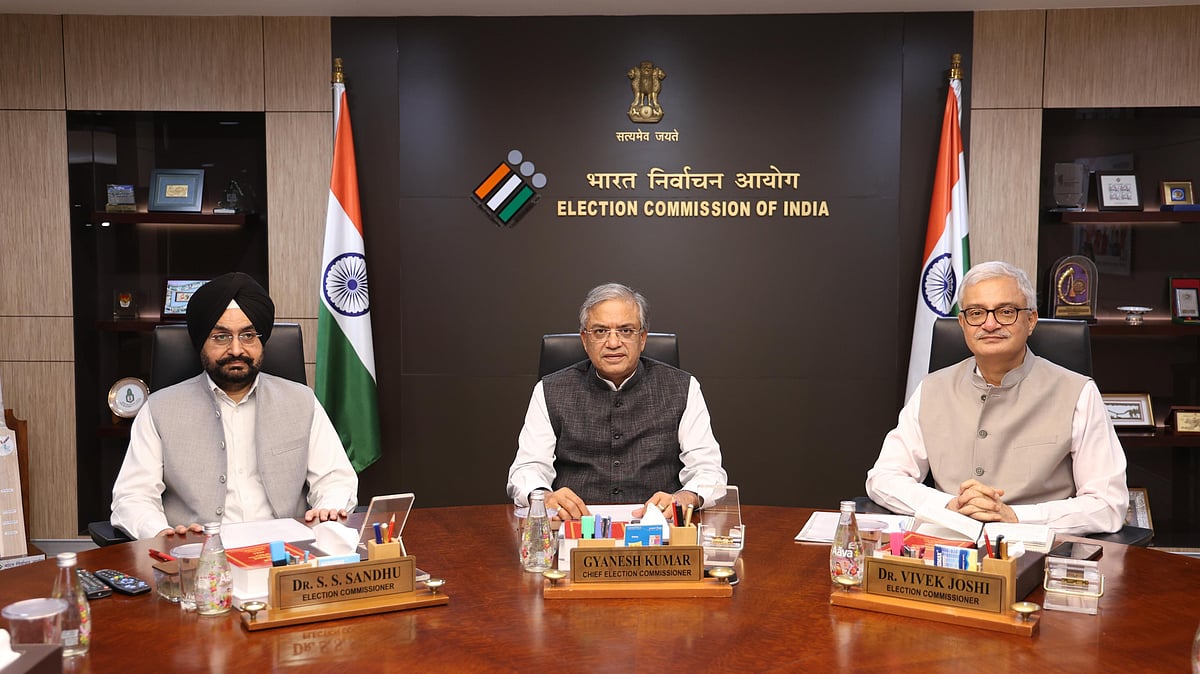
The decisions were taken at a meeting of the full Commission chaired by Chief Election Commissioner Gyanesh Kumar at Nirvachan Sadan in New Delhi. Election Commissioners Sukhbir Singh Sandhu and Vivek Joshi were also present. According to the ECI, the meeting began at 3 pm and the decisions had the approval of the full Commission.
The changes follow an Indian Express that reported repeated objections from Sandhu and Joshi over decisions on voter registration, changes to Form 6 and access to ECINET, and come days after the Supreme Court sought an explanation from the Commission on the basis for “logical discrepancy” notices issued during the Delhi SIR.
Under the revised procedure, BLOs will visit the homes of people who have been issued notices during SIR because their records are “unmapped” or show logical discrepancies. The BLOs will collect the required documents from the voters and upload them on the ECINET platform, after which the matter will be decided by the concerned ERO.
The decision comes amid questions over the large number of SIR notices being issued in Delhi and the procedure voters have to follow to establish their eligibility. The Delhi CEO had earlier said that more than 31 lakh notices had been generated for voters in the capital, issued to people whose names were not linked to the previous intensive revision or where the ECINET system detected “logical discrepancies”.
The Supreme Court had the rationale and clarity of these notices and sought further explanation of the criteria being used.
What did the Indian Express investigation report?
An Indian Express published on September 23 reported that Sandhu and Joshi had raised objections on at least 14 occasions over 10 months, concerning decisions on voter registration, deletion of names, restoration of voters, and access to electoral-roll data.
The report raised questions about whether there were differences within the three-member Commission over important aspects of the SIR exercise, including changes to Form 6, the statutory form used for registration of new voters.
Form 6: What was questioned, what the ECI said
The Indian Express report said these objections included changes to the online Form 6 process on ECINET, such as new requirements for linking new voters or their family members to previous electoral rolls, and that Sandhu and Joshi had questioned the legality and authorisation for some of these changes.
On Saturday, the Commission addressed the controversy directly. It said the declaration attached to Form 6 for the SIR period had been upheld by the Supreme Court, and clarified that outside the SIR period, the forms prescribed under the Registration of Electors Rules, 1960, would apply. The clarification is significant because the changes to the online Form 6 process were among the issues the Indian Express report said the two Election Commissioners had questioned, triggering a wider debate over whether the additional requirements imposed through the online system had sufficient statutory basis.
Another issue concerned access to the election database and ECINET. The Indian Express report said the two Election Commissioners had raised concerns over the handling of the Commission’s IT systems and access to electoral-roll data. The issue became particularly significant because ECINET is being used for several stages of the SIR and electoral-roll updating process.
The Indian Express report also raised questions about a letter sent to the by the two Election Commissioners regarding the functioning of an officer on deputation and changes concerning the IT division.
The ECI has now specifically addressed that issue in its press note. It said the letter to the Cabinet Secretary was not related to any policy matter of the Commission or its IT division, but concerned the working of an officer on deputation. The Commission said the work redistribution orders issued by that officer were not implemented after directions from the two Election Commissioners, and that oversight of the IT division by the Deputy Election Commissioner was never withdrawn.
The Commission has also announced a review of ECINET. A committee headed by a Senior Deputy Election Commissioner and including an independent expert from an IIT will review the system and “double-check” its compliance with the relevant Acts and Rules.
The ECI said the committee would submit its report to the Commission and that any further flexibility required by field officers would be made operational. It also decided that future initiatives concerning IT modules and portals would first be discussed by the Committee of Officers before being placed before the Commission for approval.
ECI says all SIR decisions were unanimous
The Commission has also directly responded to the Indian Express report’s questions about internal differences.
In Saturday’s press note, the ECI said that the nationwide SIR order issued on June 24, 2025 – beginning with Bihar and followed by West Bengal and 30 other states and Union Territories – was issued with the unanimous approval of the Commission.
It similarly said the schedules for SIR issued on October 27, 2025, and May 14, 2026, were approved unanimously. The Commission said the final number of electors would only be known after publication of the final rolls in the remaining 12 states of Phase III.
The ECI also released a photograph of Chief Election Commissioner Gyanesh Kumar flanked by Election Commissioners Sandhu and Joshi, in an apparent show of unity following the controversy.
Delhi, Maharashtra get more time for claims and objections
The Commission has also extended the deadline for filing claims and objections in Delhi and Maharashtra.
The decision was taken following a request from the Delhi Chief Electoral Officer. The deadline has now been extended to October 30, 2026, while the deadline for disposal of notices and claims and objections has been extended to November 30, 2026.
For Maharashtra, the deadline for filing claims and objections has been extended to October 12, while disposal of notices and claims and objections has been extended to November 10.
The Commission has separately directed CEOs, DEOs and EROs to facilitate the inclusion of people whose names were left out during SIR or thereafter. It specifically mentioned young and first-time voters and said a special drive would be launched for their enrolment through the process of continuous updation.
The ECI has also directed District Election Officers to establish adequate help desks and organise special camps for people living in night shelters, labourers, poor people and homeless persons, depending on local requirements.
Goa: 81 of 97 left-out voters file Form 6
In Goa, the Chief Electoral Officer has directed concerned BLOs to conduct house-to-house visits to voters who were left out of the electoral roll and collect their Form 6 applications. According to the Election Commission, 81 of the 97 voters identified in the Indian Express have already submitted Form 6 for inclusion in the electoral roll.
New rules for Commission’s internal functioning
The Commission also announced a set of administrative measures amid recent questions over its internal functioning. It decided that agendas for all Commission meetings will be circulated in advance and minutes will be issued.
The ECI further directed that officers’ Annual Performance Appraisal Reports (APARs) be completed by December 31 every year, while foreign trips of officers will require the Commission’s approval. It also said that all directions issued by the Commissioners to Commission officials must be “meticulously complied with”.
The APARs issue was reported by ET a day after the Express report.
Political reaction
The controversy triggered reactions from both opposition parties and some parties within the NDA.
The Congress has continued to demand action against Chief Election Commissioner Gyanesh Kumar. Rahul Gandhi, the Leader of Opposition, at a press conference on September 24, alleged that the electoral process had been compromised and raised questions over the disappearance of “anti-incumbency” in recent elections. He also said that if the vote is destroyed, the Constitution is destroyed, and Kumar to “turn approver”.
At the same time, some NDA allies have asked the ECI to clarify the controversy, although they have not joined the Opposition’s demand for Kumar’s removal.
Union minister and LJP (Ram Vilas) leader Chirag Paswan that if questions were being raised about the Election Commission, the Commission had a responsibility to explain its position and maintain public confidence in the electoral process. TDP MP Lavu Srikrishna Devarayalu also clarification, saying that an explanation from the constitutional body would help strengthen public confidence. Rashtriya Lok Morcha chief Upendra Kushwaha similarly called for clarification to address public confusion.
The BJP, meanwhile, has the Election Commission and its process. BJP leaders have argued that differences or questions during internal deliberations do not necessarily mean that the final decision of the Commission was not collective. The ECI itself has maintained that the SIR decisions were approved unanimously.
A quarter-century of Modi governance calls for questions and a hamper. To mark the occasion, we have offers and .