
Listen to your Elders: Lessons in public service from Dr. Joycelyn Elders
The hottest days of a particularly warm August overlapped with the (re)introduction of many to a plain-speaking “shero” of the Clinton era. The Arkansas Repertory Theatre produced a world premiere of “The Remarkable Resignation of Dr. Joycelyn Elders” for a three-week run. Written and directed by The Rep’s artistic director and Little Rock native Steve H. Broadnax III, the play tells the story of the quite remarkable life of Elders.
As its title suggests, however, the piece centers on her buzzy resignation as U.S. surgeon general on New Year’s Eve 1994. There are a bunch of lessons about public service to be learned not just from how Elders carried out her work during her short time in office, but from how she left that position.
Elders, who celebrated her 93rd birthday during the run of the play, plotted an extraordinary path from the rural Howard County cotton fields where she was born and worked as a youngster. A scholarship to Philander Smith College, based on Elders’ excellence at her all-Black high school, provided her a pathway to study biology, then take a job as a nurse’s aide in a Veterans Administration hospital. She joined the Army, where she trained as a physical therapist, then was accepted into the University of Arkansas Medical School (now known as the University of Arkansas for Medical Sciences), newly opened to Black Arkansans and still barely open to women. She graduated from UAMS in 1960 and trained as a pediatrician, eventually becoming a specialist in juvenile diabetes.
To Gov. Bill Clinton’s credit, he gave many Black Arkansans, including women, a place at the policymaking table during his decade-plus as governor. Elders, appointed to head the Department of Health in 1987, was among them. Elders worked to reduce Arkansas’ historically high rates of teen pregnancy by encouraging enhanced access to birth control and comprehensive sexuality education. She also responded progressively to the AIDS crisis in its early days in the rural state. After years as his chief health officer in Arkansas, President Clinton put her forward as his nominee as surgeon general.
A few days before the opening of the play, I got the honor of hearing Elders visit about her life in service and, of course, “the resignation” with The Rep’s Broadnax. It’s important to remember how controversial Elders’ appointment as surgeon general was in the first place. The Senate vote in her favor was 65-34, extraordinarily close for that era. Elders recounted how the intersection of race and gender created doubts about her credibility to the point that at least one senator refused to meet with the first Black and second woman to serve in the role.
Once in the position, Elders spoke frankly — and often memorably — about topics others avoided or only whispered about. She advocated that the legalization of certain drugs be studied, a stance that drew criticism on various fronts. She reaffirmed her support for abortion rights, stating that, “We really need to get over this love affair with the fetus and start worrying about children.” At a UN conference on the burgeoning AIDS crisis in early December 1994, Elders was asked about whether masturbation should be promoted. The surgeon general replied, “As per your specific question in regard to masturbation, I think that is something that is a part of human sexuality and it’s a part of something that perhaps should be taught.” So incendiary was her comment about masturbation that it led to her return to Arkansas after only 15 months on the job in D.C.
Reflecting upon her resignation, Elders shared that she got a call on New Year’s Eve from an aide who said her resignation letter was needed within a couple of hours so it could be announced. Elders told the aide that if the president wanted her resignation, he could call and ask her for it. No doubt deeply pained in doing so, Clinton did so later in the day, and Elders promptly gave it.
Elders said she has never borne any grudges. It was simply about politics, and Clinton was urged on by those looking out for his political fortunes, just weeks after Democrats’ devastating losses in the 1994 midterm elections. It’s quite remarkable that Elders was able to take this loss of position with such grace.
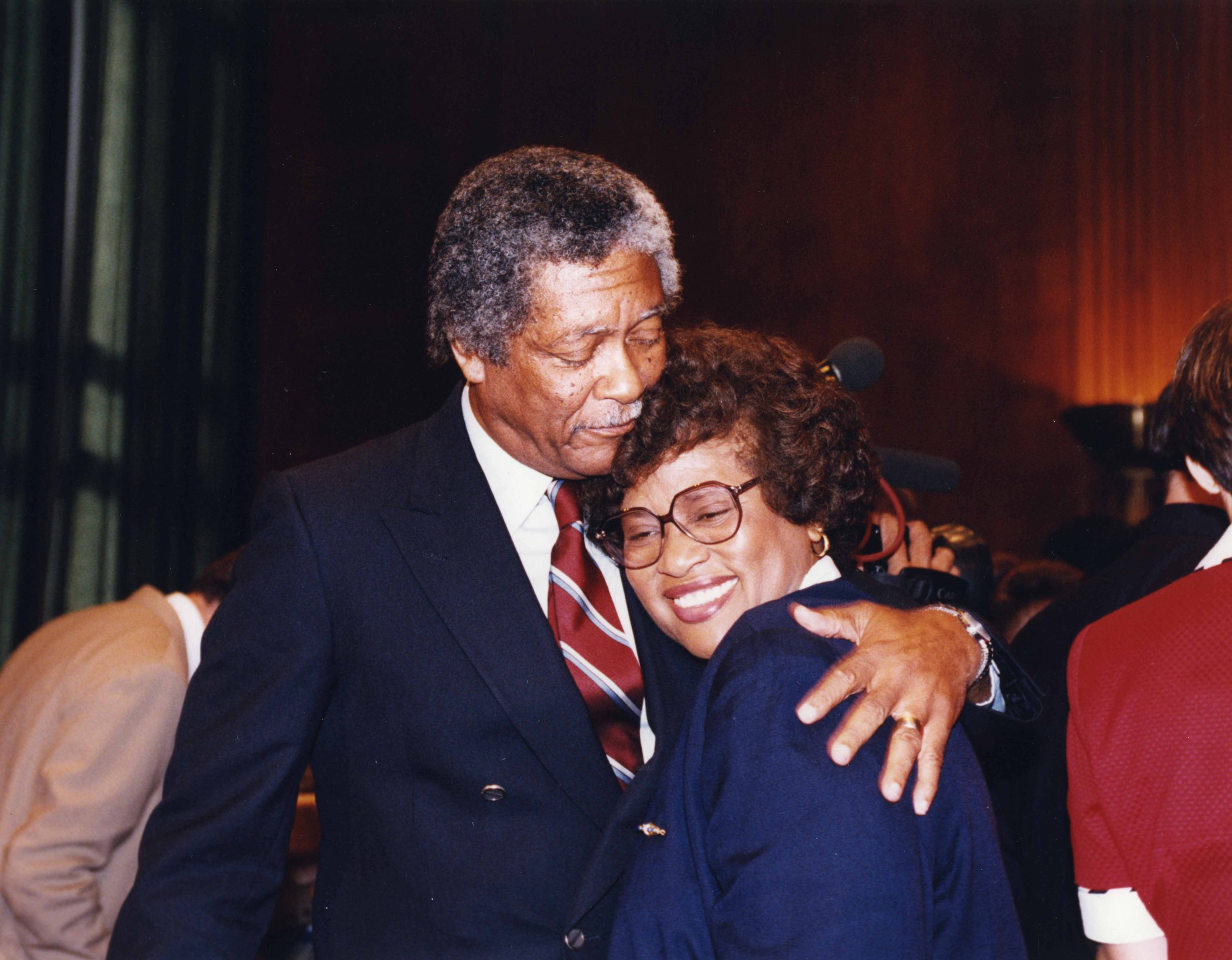
That leads to the final lesson about public service that Elders had to teach: the importance of the “village” supporting Elders across her time in public service so she never lost her sense of self. At the head of that village is Coach Oliver Elders, a legend in his own right, who retired as the winningest coach in Arkansas high school basketball. Now 95, Coach Elders was at the event, offering up one of his famous poems to the crowd. In return, the woman who had been the most visible medical professional in the world offered her own words to him: the importance of their love in making her who she is and shaping how she served.
Source link