
How one Colorado gardener feeds dozens in the “vortex” of Crestone
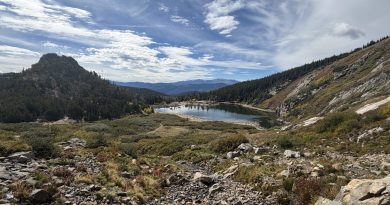
The massive, high-altitude alpine desert of the San Luis Valley covers roughly 8,000 square miles starting at Poncha Pass, where the San Juan and Sangre de Cristo mountain ranges converge and spread south across the Colorado-New Mexico border. It’s a sweeping hydrologic basin that feels a little like a lyric in Gregory Alan Isakov’s song ”San Luis“: “weightless, no gravity.”
But as far as food deserts in Colorado go, it’s one of the worst, along with Alamosa, Costilla, Saguache, Mineral and Rio Grande counties.
Blame vast distances to food. The USDA Economic Research Service defines food deserts as low-income areas located more than 10 miles from a large supermarket, and in sprawling rural counties, stores can be 20 or more miles away. Small population bases have a hard time attracting grocery stores, which are drawn to higher density or affluent areas, where they can generate more profit.
But in Crestone, a tiny town in Saguache County, the story flips a little. Crestone has a population of around 130, and the greater Crestone area, including the unincorporated Baca Grande development, has another 1,000 to 1,500.
About 44% of folks in Crestone live in poverty according to U.S. Census numbers, though median income is difficult to quantify due to the town’s small population.
But boutique shops and two food markets line the streets. Local artists, alternative homebuilders, massage therapists and spiritual leaders make Crestone home. Many are drawn to the town for religious reasons. At least 25 spiritual centers are based in Crestone including churches and ashrams focused on everything from Buddhism to Hinduism to Catholicism. They draw people interested in meditation, consciousness and interfaith practice to the creosote-scented town in the shadows of Kit Carson Peak, Crestone Peak and Crestone Needle — all towering 14,000-foot mountains.
Within this “vortex” in the San Luis Valley, as Crestone residents like to call it, Ginny Ducale has found a way to help solve food insecurity in her little corner of Saguache County.
Ducale is a sinewy, sun-kissed, 81-year-old who wears a knife with a 4.5-inch steel blade on her belt. Her energy is Peter Pan if Pan was an astrology-loving master gardener.
She spent years before coming to Crestone working at Arcosanti, an experimental town in Arizona dedicated to practicing “arcology,” a blend of architecture and ecology. And over the past 15 years in Crestone she has turned a 50-foot-by-75-foot plot of land next to the Episcopal church into a garden that can feed dozens of people a variety of medicinal herbs, hearty root vegetables, leafy greens and cruciferous crunchies once a week from June through October.
“This is catnip,” she said, waving a pale green plant around on a steamy July day with velvety black-and-blue butterflies floating above the garden. “It’s a calming plant our mother used on us when we were teething as babies.”
“This is chamomile,” she said, sweeping a tanned arm above a small sea of gently swaying yellow-and-white flowers.
“The only thing I don’t grow is okra.”
Ducale became a master gardener working in Connecticut and Oregon before she moved to Crestone in 2012. She was burnt out on gardening and thought she might take a break, “but then I just started getting a craving for it again, so I started growing vegetables in my yard.”
In April 2020, right after the pandemic hit, the communities of Crestone and Baca Grande held a three-day conference trying to figure out how they’d survive if society collapsed. They broke into groups to tackle things like food and energy security, transportation, community and rebuilding the government.
“The food need was a challenge because we didn’t know how much we would need,” Ducale said. “We didn’t know what would happen if all of a sudden there was no food here. I’m talking about problems with agriculture, with the government, with water and just supplying people, businesses and organizations going bankrupt.”
Her group got to work transforming the land next to the Episcopal church into a food-growing machine with dozens of different plants crammed in the small space together.
They started teaching their neighbors in the community how to plant gardens. And now, the community garden produces enough food to feed dozens of people some of whatever she has an abundance of every week.
Eight to 10 townsfolk come on Saturdays to help harvest kale and lettuce, summer squash and chard, collard greens and dozens of other veggies in exchange for taking home some of the bounty and partaking in a big, organically grown lunch.
On Thursdays, Ducale loads several bins with whatever’s ripe and drives it to the local food pantry, where the hungry can eat Earth’s bounty. The pantry also carries canned goods, dried foods, boxed foods and produce from other places.
“But the people love our produce because we pick it like an hour before we go there, and so it’s fresh and crispy,” Ducale said.
They also view Ducale as “this big hero,” she said. “I promise something for the community, and it’s their community garden. They’re proud of it and they love the idea that somebody did this.”
It’s a lesson in making something out of nothing for the benefit of everyone.
If you want to learn more about the garden, or Ducale, or her tips on surviving the apocalypse, head over to The Sun next week for more from Tracy.
Sun economy stories you may have missed
➔ AI dominated Colorado Startup Week, but the in-person experience mattered more. Artificial intelligence is impacting software development, jobs and tech startups, but a shift to the “experience economy” could be what’s next >> Read story
➔ Colorado Springs delays data center vote after raucous hearing. Public overwhelmingly against massive computing warehouse, as 3 protesters are arrested and 1 hit with stun gun >> Read story
➔ Eastern Colorado roadside attraction celebrates 100 years of being over the top. The World’s Wonder View Tower in Genoa, known for its view of six states from the top of the tower, is celebrating its 100th birthday with a fresh coat of paint and four new artist installations >> Read story
➔ Denver restaurant snags coveted Michelin recognition. The premier restaurant guide started surveying four major Colorado culinary scenes in 2023. This year, the anonymous agents scoured the whole state. >> Read story
➔ Tax-funding squabble ends in defeat for Pueblo’s da Vinci Museum. Council appears to find work generated by the new museum isn’t “primary job creation” under new tax spending strategy >> Read story
➔ Colorado Broadband Office leader abruptly resigns. Brandy Reitter led the state’s effort to distribute nearly hundreds of millions in federal funds to improve broadband access >> Read story
Take the poll: Colorado’s business climate: good, bad, worse?
Many local business organizations feel excessive regulations and high costs are hampering growth in Colorado. Would incentives help? What do you think? If you missed this last week, take the latest What’s Working poll to help us better understand what’s going on in Colorado.
➔ Here’s the poll >> cosun.co/WWbiz-climate
Other working bits
➔ Colorado sees labor participation rate fall to lowest since 1976. The state’s labor force shrunk again in August with 6,500 working-age adults dropping out for one reason or another. That can be due to retirement, a move out of state or giving up on finding a job.
But the declines put the labor-force participation rate at 65.3%, the lowest since 1976, according to the Colorado Department of Labor and Employment. There are still 3.18 million in the state’s labor force.
That also affected the state’s unemployment rate a bit, pushing August’s unemployment rate up one-tenth of a percentage point to 4%, the highest since June 2025. The U.S. rate didn’t change, staying at 4.1%. In August, the number of unemployed workers increased by 3,200 to 128,200 people.
In the same period, Colorado employers reported a preliminary loss of 1,400 nonfarm payroll jobs overall, with the construction sector seeing the largest decline of 2,200 jobs. The state’s leisure and hospitality industry, however, added 1,700 in August. The labor department also revised job growth for July downward to an increase of 3,800 jobs instead of 5,800.
Since August 2025, the state has added 6,600 jobs for a growth rate of 0.2%, which is below the national growth rate of 0.4%. >> See the data
➔ Crusoe adds $3.9B from investors. The data-center developer is now valued at $30.9 billion, according to the Denver-based company known for building Open AI’s biggest data center in Texas. Crusoe AI, which started as an energy company in 2018, is now focusing on smaller and modular factories, called Crusoe Spark.
The prefabricated pieces are built in Crusoe factories and trucked to a new location, which speeds up construction and installation. Customers include Cognition, Figure and Perplexity, according to the company. >> News release
➔ Colorado impact fund invests $1.1M for job training, education. Two more organizations were added to the Colorado Pay It Forward Fund, which helps underemployed residents get trained for better jobs.
That’ll allow the Community College of Aurora’s BuildStrong Academy to offer $4,000 loans to participants who need help covering living costs. CCA’s program — which provides training and job placement in construction, electrical and carpentry jobs — is free to students.
Approximately $600,000 was invested in FreeWorld, a second-chances nonprofit that focuses on helping people with criminal histories obtain a Commercial Driver’s License for a career in trucking. The funding will support zero-interest loans of up to $6,000 to cover tuition costs. More than 400 Coloradans are on FreeWorld’s waitlist, according to a news release.
The Colorado fund, which is supported by philanthropic organizations including The Colorado Health Foundation and Gary Community Ventures, also works with local job-training programs ActivateWork, CrossPurpose, The Master’s Apprentice and others. >> Details
Got some economic news or business bits Coloradans should know? Tell us: cosun.co/heyww
Thanks for sticking with us! ~ tamara & tracy
Miss a column? Catch up:
What’s Working is a Colorado Sun column about surviving in today’s economy. Email tamara@coloradosun.com with stories, tips or questions. Read the archive, ask a question at cosun.co/heyww and don’t miss the next one by signing up at coloradosun.com/getww.
Support this free newsletter and become a Colorado Sun member: coloradosun.com/join
Corrections & Clarifications
Notice something wrong? The Colorado Sun has an ethical responsibility to fix all factual errors. Request a correction by emailing corrections@coloradosun.com.