
Crested Butte’s Pearl Pass Klunker Tour turns 50
CRESTED BUTTE — Zach Gomulka hoists his 86-year-old steel Schwinn and says it’s ready for the nearly 40-mile grind to Aspen.
“It’s not the miles that make this a challenge. It’s the equipment,” says the Santa Fe cyclist who customized his 1940 Schwinn bike to fit 27.5-inch knobby-tired wheels that spin around vintage hubs, including an antique Morrow coaster brake in the rear, which he calls “a massive limiting factor.”
“That was the best brake you could buy back in the day. That thing gets hot and starts spitting out all its grease,” he says. “Then you are in trouble.”
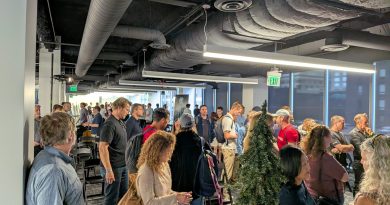
A few minutes later Gomulka joined more than a 100 pedalers — many of them on vintage rides, or “klunkers” — for a 38-mile climb from downtown Crested Butte up Pearl Pass and down into Aspen.
“Rugged romance,” says his buddy Matt French, making sure he didn’t shred too much rubber off his klunker tires with all his foot-stomping, coaster-brake skidding in the parade that preceded the Pearl Pass tour. “It’s a pathetic aesthetic.”
In 1976, a beer-loving band of bike tinkerers pedaled up Pearl Pass on modified newspaper boy bikes they had built to explore the mountains around their hometown. A half-century later, their Pearl Pass Klunker Tour heralds Crested Butte’s legacy as a birthplace of mountain biking.
(The Repack race in Marin County debuted in October 1976, making it a contender for the oldest mountain bike race in the world and reflecting the nearly identical timeline in the development of mountain biking in Fairfax, California, and Crested Butte. The two communities share the crown as the birthplaces of the off-road sport.)
“It was just a party,” says 74-year-old Al Maunz, standing outside the Crested Butte Museum as more than 100 festooned bikers prepared to pedal the 50th annual Pearl Pass Klunker Tour over the second weekend in September. “Those California guys, they capitalized on all this. We were just pedaling and partying.”
Maunz, who many old-timers around Crested Butte consider the world’s first mountain bike mechanic, used to join his buddy Steve Baker on trips down to Denver in the early 1970s to gather bikes. If someone needed a knee surgery, Maunz would drive them down to the city and go to the dump and fill his truck with old bike frames. After some wrenching and adding balloon tires, he sold the rides to pals for $15. They called them klunkers.
Those scrappy daredevils — pedaling in denim and boasting magnificent mustaches — seeded a sport that exploded and remains a foundational pursuit in most mountain towns. To kick off the 50th annual Pearl Pass Klunker Tour weekend, organizers showed video clips in Crested Butte’s historic Majestic Theater of those pioneering pedalers from the ’70s and ’80s.
They pushed their custom bikes up the gnarly one-time wagon trail to the summit of Pearl Pass and bounced down through bowling-ball boulders. No one had dreamed up disc — or even caliper — brakes. Suspension shocks were at least 20 years out. Carbon fiber and high-tech clothing — even padded shorts — had not yet landed in the world of cycling. No one wore pads or protection.
“I don’t even think they made helmets back then,” says Bob Starr, another pioneer who helped position Crested Butte as a birthplace of mountain biking. “That was before Gore-Tex. It was even before there were mountain bikes.”
Back in the 1970s, Starr and Maunz and their ilk revived trails that had been built by the Civilian Conservation Corps decades earlier but had been forgotten and dropped from maps. They started putting up signs and drawing maps. In 1978, a crew of California riders in an old school bus — including Gary Fisher and Charlie Kelly — landed in Crested Butte for the Klunker tour. Those out-of-towners made Crested Butte the first-ever mountain bike destination.
In 1981, the Fat Tire Bike Week hosted bike companies and cyclists for a festival leading up to the Klunker Tour. That festival — which became Crested Butte Bike Week — ranks as the oldest mountain bike festival in the world.
Those were “pioneering days,” says Dave “Moe” Meyer, who pedaled his vintage Univega klunker out of town before jumping on his modern mountain bike for the pedal up to Cumberland Basin below Pearl Pass, where the klunker riders camp near treeline before the 2,000-vertical-foot push up the pass and the rowdy descent through scree and sharp rocks into Aspen.
“Everyone was just trying to figure out what mountain biking was supposed to be and we were just cobbling together these paperboy bikes,” Moe says. “I mean, you couldn’t just walk into a shop and buy a mountain bike back then.”
By the early 1990s, there were all kinds of companies making bikes and mountain bikers shifted into a higher gear, eclipsing the Crested Butte outlaws who forged the sport.
Nearly 1,000 riders a year flocked to the seminal Rage in the Sage race in Gunnison in the early 1990s, sowing a singletrack sport that made its Olympic debut in Atlanta in 1996, a mere two decades after the Crested Butte pioneers were building bikes from junk.
Kenji Takamatsu came to Crested Butte from Osaka, Japan, to ride his customized Crazy Sheep klunker up Pearl Pass. Takamatsu, a Japanese biking legend and innovative frame designer who founded the Crazy Sheep and Snake Bite bike brands, wanted to celebrate his passion in the birthplace of mountain biking.
“I love all things biking. BMX, mountain. Colorado is the best for biking,” he says, showing off his custom-designed Snake Bite handlebars, saddle and pedals on a frame he designed to blend BMX and mountain bike aesthetics.
Plenty of the old timers kept their clunkers in the garage for the half-century celebration of their audacious push into Aspen, where they planned to take over a local bar for an afternoon of drinking before heading back to Crested Butte. The saying among the OGs like Moe when asked why they are pedaling their new carbon-fiber suspension whips: “I am the klunker.”
Moe remembers those first tours and the “five kegs of Watney” they drained in Cumberland Basin.
“I feel fortunate to live through that era and still be here and still pedaling,” says Moe, who opened Gunnison’s first and only bike, ski and climbing shop — Rock and Roll Sports — in 1992. “We didn’t know better back then. We truly thought we were state of the art. Thinking ‘This is the shit. It will never get better than this.’ Now these new bikes are so good they are allowing me to keep riding at 68 years old.”