
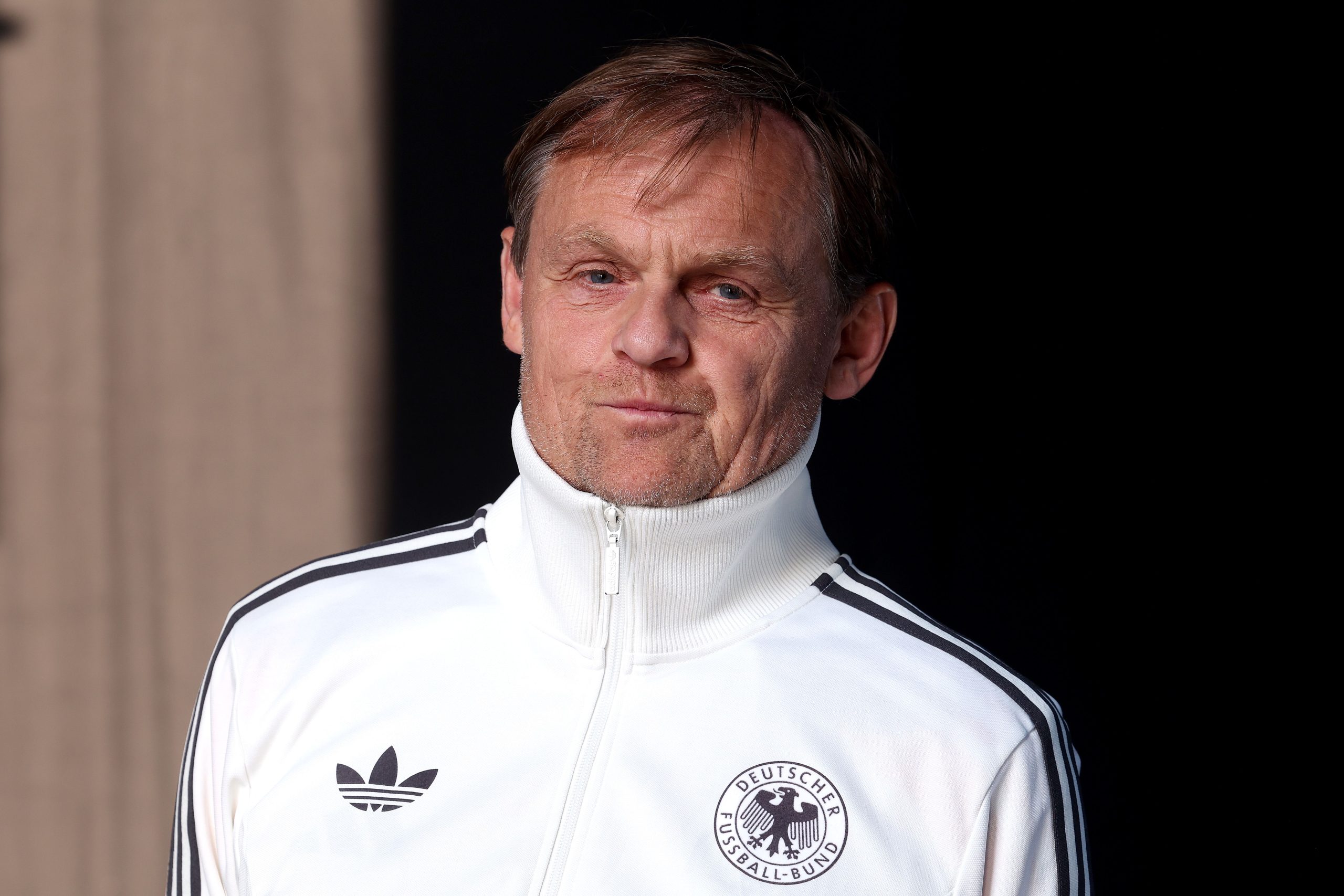
Adidas CEO Bjørn Gulden Navigates Tough Turnaround After Yeezy Split
Adidas has bounced back from its split with Kanye West almost four years ago. Now, it faces a new challenge: sustaining that momentum in an increasingly tough sportswear market. During an onstage interview at the Fast Company Innovation Festival in New York on Sept. 17, Adidas CEO Bjørn Gulden and Marc Makowski, who oversees product innovation, laid out the blueprint of their turnaround, from moving authority out of headquarters to bringing more athletes directly into the company’s labs.
Adidas severed its lucrative Yeezy partnership with West in October 2022 following his antisemitic remarks, leaving the brand stuck with over $1 billion in unsold inventory. The fallout led to Adidas’ first annual net loss in more than three decades in 2023. It returned to profitability the following year, and in 2025, its revenue climbed back to a record $28 billion.
Gulden said part of the recovery required shifting decision-making power away from corporate headquarters.
“We had too many layers of people that said, ‘No,’” Gulden said. “We had too much power in headquarters.”
Germany is Adidas’ home market, but it accounts for only a small share of its business, Gulden said.
“Markets like Japan, Korea, and I have to also say, China, [have] the same amount of innovation and energy” in terms of “storytelling and product as we have in Germany,” Gulden said. “It was really to let the good people [breathe] and let the second, third and fourth layer of the company get to the top.”
Adidas also prioritized putting athletes back at the center of its development process.
“I inherited a lab that came across a bit as a museum,” Makowski said. “Every day we don’t have an athlete in here is a problem.” Makowski has worked at Adidas for more than 21 years and moved into his current role in 2023.
The company promoted its innovation by showcasing its Adizero Adios Pro Evo 3, released this year. At 97 grams, it is the lightest running shoe Adidas has ever created, according to the company. Sabastian Sawe and Yomif Kejelcha both wore the shoe to run a marathon in under two hours, which, until recently, was considered an impossible feat.
Beyond product innovation, fan engagement spiked this year as crowds flocked to Adidas World Cup watch parties across North America this summer. In the second quarter leading up to the World Cup, the company spent $243 million on marketing (up 30 percent year-over-year), including on Backyard Legends, an advertisement campaign featuring actor Timothée Chalamet and soccer stars Lionel Messi and Jude Bellingham. That cost weighed down on Adidas’ profitability that quarter, sending its stock down sharply after it reported earnings in July.
Gulden described sportswear as “not very sexy” to Wall Street right now, though he insists he pays little mind to short-term share prices. He also acknowledged rival Nike as a “fantastic company” that is getting “chewed right now” in the media. (Nike shares have fallen more than 43 percent this year, while Adidas shares are down about 17 percent.)
“People are not really looking at us as an industry right now, but they will. You can buy the share, and it will pay out,” Gulden said.
The conversation eventually turned from Adidas’ finances to one of its athletes.
In July, Adidas-sponsored Indiana Fever guard Sophie Cunningham said transgender women should not compete in women’s sports, telling ESPN that she wanted to protect girls who “shouldn’t have to go against biological men.” The remarks sparked widespread debate, drawing praise from supporters who said she was defending women’s sports and backlash from critics who labeled the statements transphobic.
When pressed on Cunningham’s comments, Gulden wittily dodged the question by saying the matter sits with the company’s U.S. management but acknowledged the contentious nature of the incident. “Sometimes you have to accept that you have made mistakes and then apologize for them,” he said.
Cunningham has not apologized and has publicly stood by the remarks.