New report details what went wrong in Colorado wildfire that killed 4 firefighters
Strained communications, extreme fire behavior, understaffing and gaps in aerial supervision were among the issues that contributed to the deaths of four federal firefighters who became trapped by a rapidly growing wildfire in western Colorado in June, federal investigators found.
The final report on the Knowles fire, released Thursday by the Department of Interior, comes as parents of one of the killed firefighters demanded more accountability in “preventable failures of leadership and oversight” that they say led to his death.
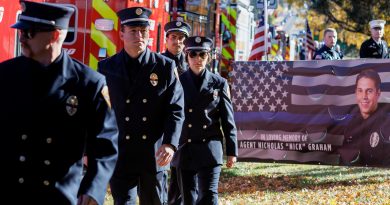
Emily Barker, 38, of Clinton Township, Michigan, Nick Hutcherson, 27, of Glendale, Arizona, and Sydney Watson, 27, of Warrior, Alabama, were killed June 27, after being overtaken by rapidly spreading flames while battling lightning-caused fires near the Colorado-Utah border west of Grand Junction.
Nathan Matthews, 43, of Lincoln, Nebraska, later died from injuries suffered in the burnover. A fifth firefighter was also injured. Barker, Watson and Matthews were part of the Rifle Helitack team.
“After hearing the investigators’ admissions and walking the site myself, I am convinced that failures by the duty officer and others responsible for overseeing this operation caused my son’s death,” Hutcherson’s mother, Lisa Hutcherson said in a statement after the report was released.
“I stood where Nick stood. I saw the terrain. I saw no viable way out on the ground. My son depended on the people responsible for tracking the fire threatening him and making the decisions needed to keep him safe. We want answers, and we want accountability.”
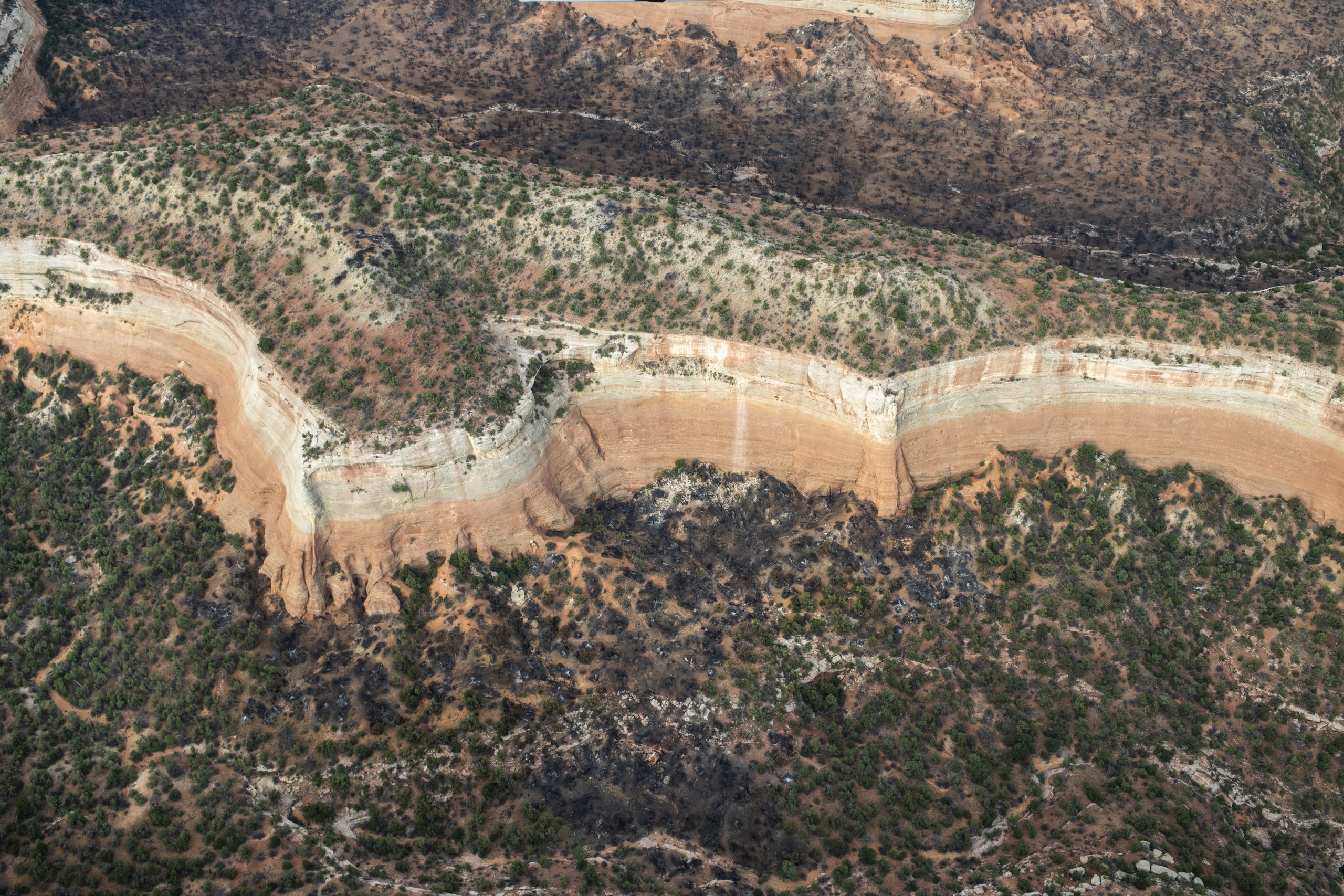
The 102-page federal report details a combination of issues, from extraordinary fire behavior to communication failures, as the firefighters engaged in the initial attack of the Knowles fire. The firefighters were overtaken by the larger Snyder fire, which jumped across canyon and mesa terrain at a speed described as “shocking” and “unfathomable.”
“No single decision or system failure fully explains the outcome. Instead, the events reveal the cumulative effects of known limitations operating under extraordinary tempo and conditions,” investigators wrote.
A helicopter was dispatched to rescue the trapped firefighters but was unable to land because of heavy smoke.
The report’s findings show areas where the newly created U.S. Wildland Fire Service can improve communications, real-time fire observations, airspace awareness, dispatch coordination and situation awareness, the U.S. Department of Interior said in releasing the report.
U.S. Wildland Fire Service Chief Brian Fennessy previously denied any connection between the rollout of the new agency and the firefighters’ fatalities and said he was confident in the agency’s ability to provide a “unified response” to the threat of wildfires.
“This report is the culmination of a thorough methodical, and rigorous examination of this tragic event, and it provides insights into the contributing factors that can help improve the safety of firefighters across the wildland fire community,” Fennessy said Thursday in a statement.
Chronic understaffing, a vacant manager position and a high proportion of trainee dispatchers left Grand Junction Interagency Dispatch Center reliant on less-trained employees during an extraordinary surge in workload, investigators wrote.
Dispatchers simultaneously tracked up to 16 active aircraft, three emerging incidents, multiple new starts, county river evacuations, and non-stop media inquiries, “leading to severe cognitive task saturation,” the report stated.
Because of congested radio communications and “workload strain,” dispatchers felt they were unable to transmit the mandatory scheduled fire weather broadcast.
The vacancies contributed to the communication issues, the report said.
Dispatchers in Utah were forced to repeatedly log in and out of separate radio configuration files and databases to track resources and process orders, “effectively doubling the workload for a reduced staff.”
Field personnel frequently stepped on one another’s radio traffic without knowing their transmissions failed, according to the report. To bypass the technical barriers, firefighters, helitack managers and dispatchers used personal cellphones, which allowed tasks to continue but created “unrecorded information silos.”
There was also a lack of situational awareness among the staff assigned to the several fires that ignited in close proximity.
“A lack of real-time centralized resource tracking prevented leadership and initial attack crews from maintaining a shared common operating picture across adjacent incidents,” investigators wrote.
Because of severe turbulence and 40 to 50 mph crosswinds, there was a two-hour gap in air attack over the Snyder and Jones fires from about 2:30 p.m. to 4:30 p.m., the report said. After an aircraft landed early to refuel, another aircraft ready to replace it was unable to take off from the Grand Junction airport because of the strong winds.
Firefighters on the ground, helitack leadership and a pilot “unknowingly operated under the false mental model” that there was an aerial crew actively monitoring the main fire and would warn them if it posed an imminent threat, the report said.
Investigators also documented confusion about what aircraft was where. While some staff assumed a helicopter was actively attacking over the fire, the aircraft was actually working on another fire 30 miles away.
The firefighters were dropped into small remote fires and were relying on being removed by a helicopter, the report stated. But the terrain and dense smoke prevented ground crews and aerial supervision from seeing the rapid progression of the Snyder fire.
A helicopter was dispatched at 3:08 p.m. with an estimated arrival time of five minutes, but heavy smoke prevented it from landing at 3:19 p.m. Firefighters then deployed their emergency fire shelters in the helispot, a designated landing area for helicopters.
“Having flown into the helispot earlier in the day, the firefighters on the Knowles and Gore knew that a rapid escape on foot to a safety zone was impossible,” investigators wrote. The only potential safety zone was a rocky, sandy slope, but it was too far as the fire was only seconds away.
In one radio transmission, a firefighter told dispatchers: “Oh, I don’t think you can land here anymore.” Nine seconds later, a female voice announced they were deploying shelters.
The two firefighters who were rescued spent 2 ½ hours inside their shelters, occasionally coming out to communicate via radio. Temperatures near their shelters exceeded 1,200 degrees and ground level heat reached 600 degrees.
Standard handheld radios had insufficient range from inside the fire shelters, but handheld strobes and cellphones allowed helicopters to locate and rescue two of the firefighters in heavy smoke conditions, the report said.
The report included accounts from the surviving firefighter and others from their crew, resources on adjacent fires, fire managers, dispatchers and other witnesses with knowledge of the event, as well as dispatch logs, videos and radio transmissions.
Experienced pilots told investigators the conditions were “by the roughest conditions of my career” and “the scariest thing I have ever experienced.”
After meeting with investigators in late October, Ron and Lisa Hutcherson, Nick’s parents, called for leaders to be held accountable for the decision that put their son in danger and left him there as conditions deteriorated.
Dangerous winds were forecast before the firefighters were dropped into the remote terrain. Ron and Lisa Hutcherson said investigators told them there was no legitimate safety zone and questioned why the decision to extract the Knowles and Gore firefighters did not happen earlier.
“Telling us how the fire reached our son does not answer why he was still there,” Ron Hutcherson said in a statement. “Who was watching the bigger picture? Who was responsible for bringing those firefighters home while there was still time?”
Ron and Lisa Hutcherson are asking for more records to account for the failures that they say led to their son’s death, including dispatch and aviation records, aircraft tracks, and records of command decisions.
His parents also say important evidence was lost after the deadly fire. Investigators told them that three of the five deployed fire shelters were disposed of and only two were recovered. Ron and Lisa Hutcherson said they hope an additional review of the incident can examine whether pressure for aggressive suppression, staffing shortages and fragmented oversight contributed to the tragedy.
“Nothing will bring Nick back,” Lisa and Ron wrote. “So the people who can prevent another family from living through this pain have a responsibility to act. We want Nick’s memory to help bring other firefighters home.”
This is a developing story that will be updated.