Mercedes-Benz halts all new investment at German facilities
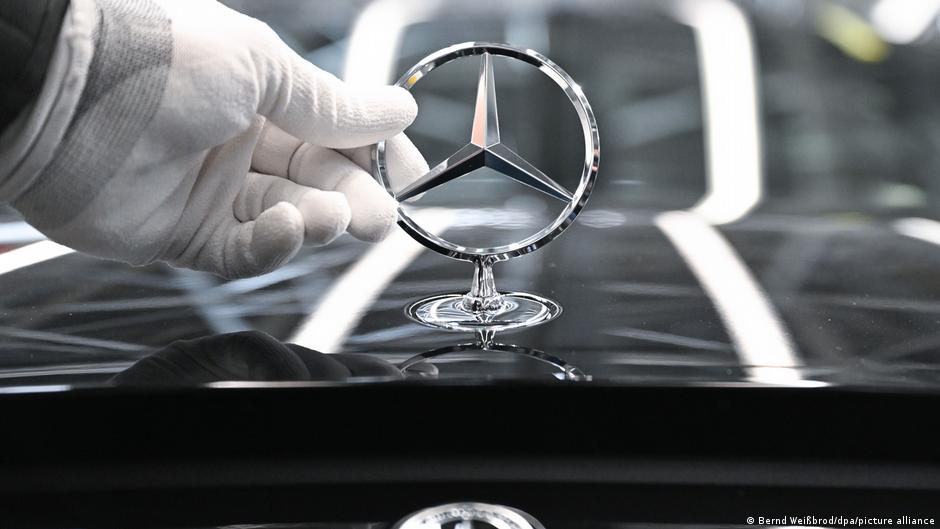
Mercedes-Benz announced on Thursday that it was halting all further investment at its German sites for the time being.
“The executive board has jointly decided to halt all further investments in German sites,” Mercedes board member Michael Schiebe said in a memo on the company’s intranet that was seen by the AFP news agency.
The company is also weighing plant closures, the memo added.
The announcement comes as the luxury German automaker faces increasing pressure from the works council and the IG Metall trade union.
What else did Mercedes-Benz say?
Mercedes-Benz is “forced to examine, in concrete and detailed terms, which sites in Germany we can still afford to maintain,” board of management member Britta Seeger said in an interview published on the company’s intranet.
“We all want to avoid plant closures at all costs,” she added. “Unfortunately, however, we must now pursue this option in more concrete terms.”
Shiebe, the company’s chief production officer, said the current cost structures meant it is not possible to invest in Germany.
German labor costs are sometimes five times higher than at plants in Eastern Europe, where administrative costs are also similarly much cheaper.
Schiebe had recently announced that two plants in Germany would have to close unless costs were reduced.
Why has Mercedes-Benz been struggling?
The carmaker, one of Germany’s biggest and best-known brands, has been struggling with declining sales and profits in recent years.
Demand from China, the company’s largest single market, which has historically accounted for around a third of Mercedes’ passenger-car sales, has weakened considerably, particularly for luxury foreign brands. Mercedes’ Chinese sales fell by around 19% in 2025.
The German carmaker has invested heavily in electric vehicles, but demand for EVs in Europe and in North America has been slower than many manufacturers anticipated. At the same time, Mercedes has also struggled with rising competition from cheaper EVs imported from China.
Increased US tariffs under President Donald Trump have also dented profits. Mercedes has said that tariffs alone cost it approximately €1 billion ($1.1 bln) in profit last year.
Several other leading German carmakers, including Volkswagen, BMW, Audi and Porsche, as well as other European manufacturers, have been facing similar problems.