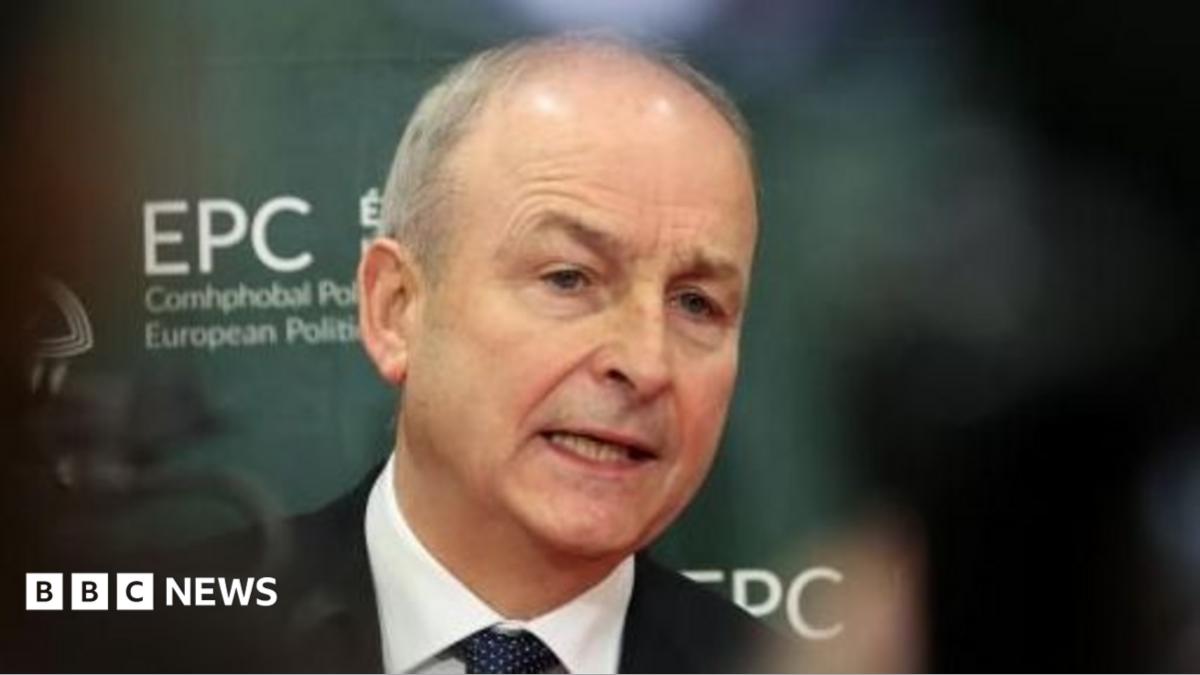
EU: 50 world leaders in Dublin for major European summit
Ukraine, AI and hybrid threats across Europe will dominate key EU meetings in Dublin on Thursday and Friday.
The talks on AI will be the first such discussion among EU leaders.
The Republic of Ireland is chairing the EU presidency until the end of the year and its main showpiece events, the European Political Community (EPC) and informal meeting of the European Council, are taking place this week.
The country has been preparing for the events for months, with gardaí (Irish police) carrying out the largest security and policing operation in the history of the state.
The Police Service of Northern Ireland (PSNI) will support their Irish counterparts in policing the summit.
Even though officers from abroad will not be involved in frontline policing, gardaí (Irish police) said they are being supported by the PSNI, police from Latvia and Portugal and other international law enforcement agencies.
Parts of Dublin city centre are closed off and there has been widespread traffic disruption in city in recent days.
The state has also been dealing with a number of bomb threats, which have been hoaxes, on schools and media organisations in recent days.
On Thursday, about 50 international leaders will gather at the Convention Centre Dublin for a meeting of the EPC.
Prime Minister Andy Burnham is expected to attend as part of his efforts to form closer ties with Europe.
Other attendees will include Ukrainian President Volodymyr Zelensky, heads of state across the EU as well as Canada’s Prime Minister Mark Carney.
The EPC is an informal forum for European leaders to hold political and strategic discussions on issues of shared concern.
It was set up in 2022 after Russian’s full-scale invasion of Ukraine and meets twice a year.
The theme of the summit in Dublin is “Europe – strong, secure, and connected”.
Leaders will discuss economic security, Ukraine, hybrid activity in Europe and democratic resilience.
Hybrid warfare or hybrid attacks are loose terms to describe non-military methods, for example cyberattacks, sabotage or misinformation, designed to exert pressure and destabilise an adversary.