Japan Considers Emergency Exception to Nuclear Weapons Ban
TOKYO –
The Japanese government is considering formally allowing exceptions to its longstanding ban on bringing nuclear weapons into the country during national emergencies, as part of revisions to its three key national security documents scheduled for completion by the end of 2026.
The proposed change would affect one of Japan’s Three Non-Nuclear Principles, which prohibit possessing, producing, or allowing nuclear weapons to be brought into Japanese territory.
The issue of bringing nuclear weapons into Japan was previously addressed in 2010 under the Democratic Party administration, when then-Foreign Minister Katsuya Okada told parliament that an exceptional decision might be necessary in a national security crisis.
Okada said that if a situation arose in which Japan’s security could not be protected without allowing a temporary port call by a U.S. warship carrying nuclear weapons, the government of the day would have to make a decision with its political future at stake and explain that decision to the public.
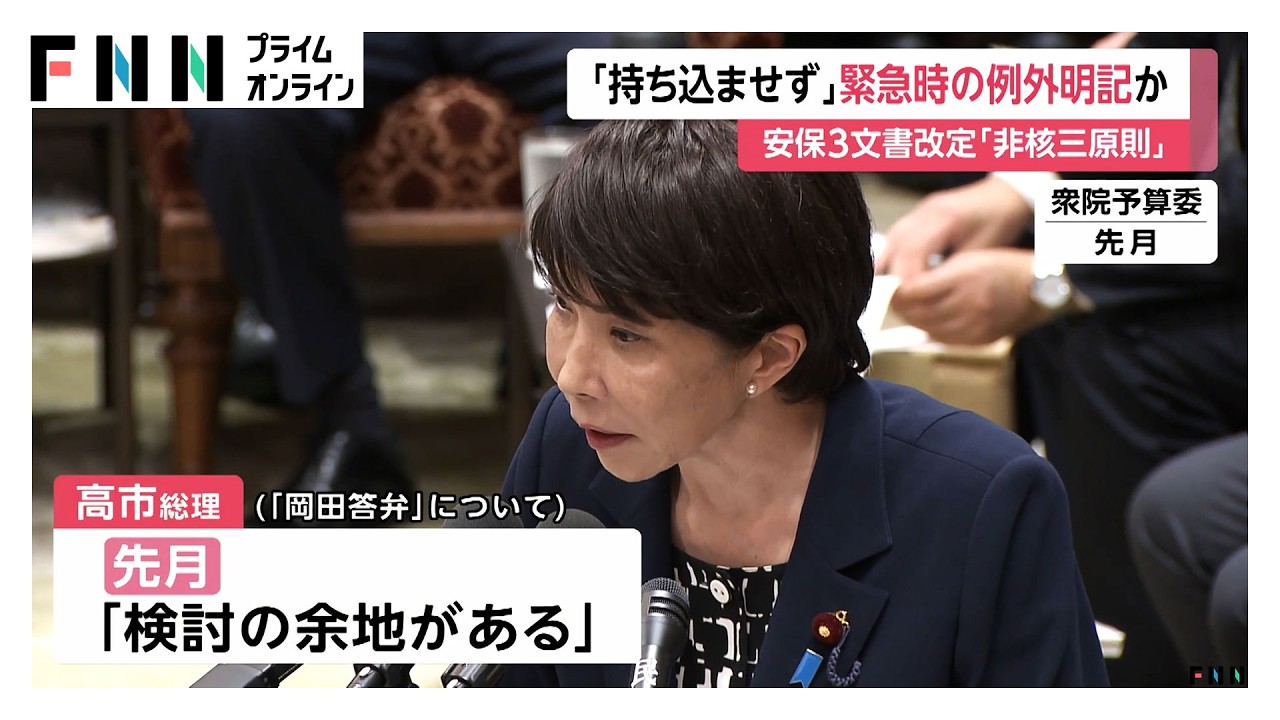
Prime Minister Sanae Takaichi referred to the statement, known as the “Okada response,” during parliamentary deliberations in October, saying there was “room for consideration” regarding the position taken at the time.
The government is now examining whether to explicitly incorporate such an emergency exception into the revised national security documents while formally maintaining the Three Non-Nuclear Principles.
A final decision will be made after considering discussions within the ruling parties and recommendations from security experts.
The proposed clarification would establish a framework for exceptional decisions during emergencies without formally abandoning Japan’s longstanding non-nuclear policy.
Source: FNN