Why Luxury’s Most Exclusive Experiences Can’t Be Bought
Not long ago, one of our members was applying to a well-known private club. The fee was never the issue. She had already secured her first referral from one of the club’s founding members, but the club asked for a second, and that is exactly where money loses its leverage. I knew a business contact I was sure she would get along with, since they shared a background in media. I introduced them, they hit it off, and he agreed to become her second referrer. Nothing about it was transactional. It worked because the connection was real.
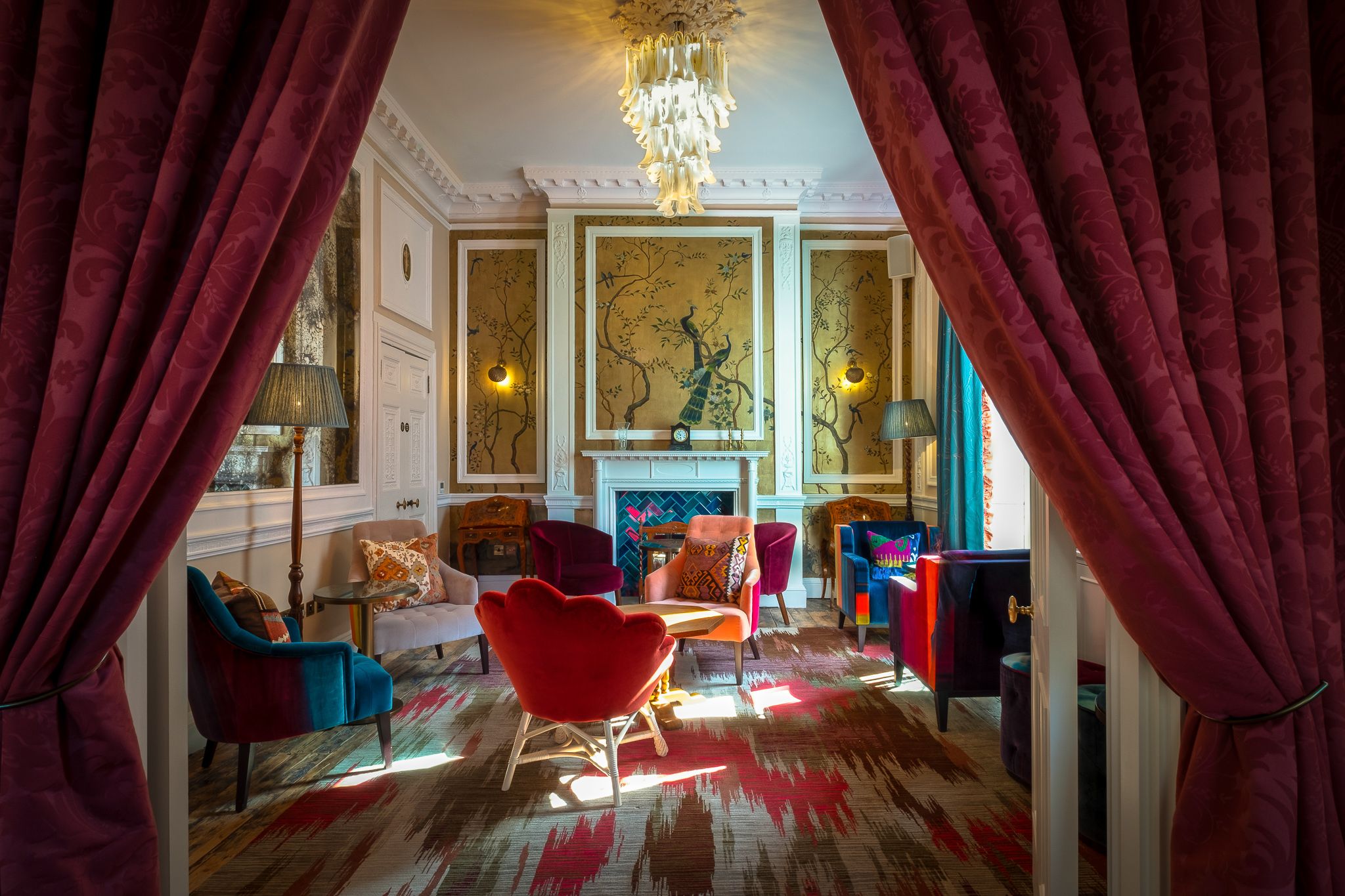
Early in my hospitality career, at the Cipriani Group and The Box, I saw what status used to look like in New York: bottle service at the club everyone was trying to get into. Today, the settings people value most are far quieter. They are private members’ clubs where people can have real conversations behind closed doors, knowing who else is in the room and trusting that what is said there stays there. Privacy and security are the point, and neither of them can be bought.
That preference for intimacy is measurable. In Boston Consulting Group’s (BCG) 2025 research on luxury consumers, 80 percent of top-tier clients said they preferred exclusive, dedicated spaces offering privacy, calm and high-touch service over crowded, impersonal environments.
After 13 years at global luxury lifestyle management company Quintessentially, I’ve watched that shift become the defining feature of luxury. The people we serve can afford almost anything. What they want most are the things that money alone can’t guarantee: a table at a restaurant booked months in advance, a place in the right private club, a seat in the room where an important conversation is happening. These opportunities come through relationships, and crucially, someone credible who is willing to vouch for you.
The shift is showing up in the broader luxury market, too. McKinsey’s 2026 research, based on a survey of more than 2,000 luxury consumers in the U.S. and China, found that experiences are competing with products for discretionary spending, while exclusivity is moving away from simple scarcity and toward insider recognition.
That’s why I don’t think access is really what our industry offers. Access cannot honestly be sold. What people come to us for is judgment: knowing who someone is, where they genuinely fit and who would value meeting them. That requires transparency with everyone involved, because trust is what makes an introduction meaningful.
The referral is the real currency
For a wealthy applicant, the fees at most of these private clubs are rarely a serious obstacle. The referral is. Clubs want members who will add something to their community, and they rely on existing members to vouch for the people they put forward. So the process should start with fit rather than with whichever club is most talked about this year. It means understanding who the applicant is, what they hope to find in a club and what we know each club values, then making the introductions that lead to referrals. It is a delicate dance.
There is a commercial reason for this focus. BCG found that the wealthiest top-tier clients represent less than one percent of the luxury market but generate 23 percent of its value. For businesses servicing this audience, the quality of a relationship can matter considerably more than the number of clients in the pipeline.
I have referred about a dozen people to one of my own clubs here in Los Angeles over the years, and every one of them has been accepted. That isn’t luck. I know the club values people who are involved in the arts and committed to philanthropy, and who bring a range of backgrounds and perspectives. I only put forward people who genuinely fit. The introductions we don’t make matter just as much. If someone isn’t right for a club, it’s better to say so and help them find a more suitable community. Clubs need to be able to trust the recommendations they receive. Otherwise, those recommendations stop meaning anything.
The same logic in bigger rooms
The same dynamics apply in the rooms where business, culture, policy and philanthropy meet. This October, Quintessentially served as the lifestyle and concierge partner of the Milken Institute Asia Summit in Singapore, and members were invited to join the Institute’s Asia-Pacific Council, a community that continues long after the event. The value lies in becoming part of a community that continues to exchange ideas and build connections long after the formal program ends. Since the Summit, Quintessentially and the Milken Institute have been exploring a broader partnership across Milken’s global calendar of events, one that will bring added value to their attendees while further enriching what we offer our members.
The same distinction applies to cultural experiences. Quintessentially holds similar relationships with global communities like Art Basel, where business, culture and wealth come together in a non-transactional setting. The same is true of the cultural houses that privately open their doors to members to offer a deeper understanding of their work, history and the people involved, from a guided tour of the Whitney Museum to a visit to the Dom Pérignon cellars to see how Champagne is made. A pass or a ticket can be bought. A place in the community around it depends on who you are, what you bring to the table and who introduced you.
How this shows up across every lifestyle category
The same principle holds in parts of luxury where getting in isn’t the hard part. In travel and wellness, almost anything can be booked. The challenge is choosing well, and that takes expertise. Booking a beautiful hotel has never been easier, and technology will only make it easier still. That shift is already underway. A March 2026 Cornell study of 1,029 U.S. travelers found that premium and luxury travelers are using A.I. to evaluate travel options more quickly. But concerns about accuracy, transparency and generic recommendations continue to limit trust in those tools.
What clients need now is what a booking engine can’t give them: judgment about where to go and why, and someone who can make a call anywhere in the world and know it will be answered. That might mean finding help when a child falls ill halfway through a family trip or arranging for a couple’s wedding photos to be waiting in their suite when they arrive for an anniversary. The value lies in knowing whom to call and having a relationship that makes the call count.
Wellness follows the same pattern. A great spa is now the baseline expectation, and there are so many longevity and wellness retreats that being able to pay tells you nothing about which one is right for you. Anyone can book a retreat. Knowing which one to book and why takes expertise and a degree of trust that no booking platform can replicate.
Where this is heading
As more of luxury becomes available to anyone with money, value will keep moving toward what cannot be mass-produced: expertise, judgment and trust. Companies in our industry that continue to sell access as a product will risk losing their clients’ confidence. Transparency builds trust. Those that offer honest guidance, including when an introduction or experience is not the right fit, have a better chance of earning it.
There is a commercial tension in that. Every business wants to grow, but in this industry, every poor introduction makes the next one worth a little less. The companies that thrive will be the ones that treat protecting trust as the foundation of the business itself rather than an obstacle to growth. That means being transparent with the member asking for an introduction and with the club, restaurant or person receiving it. We can open a door, but we can’t promise what happens on the other side, and we shouldn’t pretend otherwise.
Wealth can buy an extraordinary life. A place in a community is granted on different terms. We aren’t selling access. We’re selling the expertise to know which doors are worth opening, and the honesty to say when one isn’t.
Lauren Wilt is the U.S. CEO of Quintessentially, the global luxury lifestyle group, where she leads strategy and operations for a team of 50 across 6 cities. She joined the company in 2013 as Head of Membership and became U.S. CEO in 2021, after a decade in hospitality at the Cipriani Group and The Box.