Nuclear, minimum wage and citizenship: Jean-Luc Mélenchon’s 2027 manifesto

France’s hard-left presidential candidate Jean-Luc Mélenchon has unveiled his full manifesto for the 2027 election. From minimum wage to French citizenship rules, here’s a look at the main points.
At an event for supporters over the weekend, La France Insoumise candidate Mélenchon unveiled the full manifesto, L’avenir en commun (the future in common) – containing a whopping 1,069 measures, 238 of which are new while the rest are carried over from his manifestos for previous elections in 2022 and 2017.
For really keen followers of politics, the 212-page manifesto is now available to buy in bookshops, priced at €4.90.
For everyone else, here is a look at the main policy areas;
This article is part of a series where we outline the manifestos of each candidate for the 2027 presidential election as and when they publish their full programme. Find more 2027 coverage here
Don’t miss our editor’s weekly breakdown of the 2027 French presidential election race
Economy
The minimum wage rises to €1,700 a month after tax (from €1,477 currently), public sector salaries also rise while housing benefit rises by 10 percent. The minimum wage (Smic) is used as a base rate to calculate the amount of money needed for certain types of visa, so this could also affect foreigners planning a move to France.
READ ALSO: How much money will you need for a French visa in 2027?
The price of certain essentials is frozen.
Businesses are held to a 1:20 pay ratio, so that the highest earners cannot receive more than 20 times the salary of the lowest earners.
Change the 35-hour week to a 32-hour week, with a gradual introduction.
Creation of a ‘single parent family’ status that would give single parents access to things like discounted transport or entry to museums (similar to the current discount scheme for families with three or more children).
Establish a national task force on AI governance and a national AI authority responsible for issuing marketing authorisations.
Pensions
Emmanuel Macron’s pension reforms are scrapped, and the pension age is lowered to 60 (from 62 before the Macron reforms or 64 after).
A full pension is paid after 40 years of contributions, so people who start work at 16 could retire on a full pension at 56, if they have the required years of contributions.
Tax and inheritance
The Zucman tax, proposed in 2024 by US-based French economist Gabriel Zucman, is introduced – this tax applies to people worth €100 million or more if their total annual tax bill (including income tax, social charges, wealth tax, etc.) is less than 2 percent of their assets. Full details here.
France’s wealth tax is also changed so that instead of only applying to real estate assets worth €1.3 million or more – as is the case currently – it applies to all types of assets or income.
Income tax is split into 14 tax brackets – instead of five currently.
Inheritance is capped at €12 million, anything in excess of that would be taken as tax. Existing inheritance tax rates on estates worth less than €12 million remain in place. The number of properties that can be inherited is limited to five.
Immigration
In comparison to other topics, the manifesto has very little about immigration, and most of what it does propose is about the systems for refugees and asylum seekers, and regularising the status of undocumented workers.
It does, however, propose to cancel the ‘Retailleau memo’ from 2025 – which imposed tough new financial rules for citizenship that have made it effectively impossible for many retirees to become French, as well as making it very difficult for other groups, including those on a low income and children who had grown up in France with foreign parents but who were not born here.
It also proposes to “repeal the most recent laws on asylum and immigration, and all legislation that criminalises foreign nationals and those who assist them”.
It is not clear whether that would include the 2024 Immigration law, which imposed tougher language test standards for citizenship and certain types of residency cards – The Local has requested clarification on this point.
The party intends to dedicate €1 billion to the fight against islamophobia, antisemitism and all forms of racism.
Environment
Much of the new parts of the manifesto are environmental measures, including;
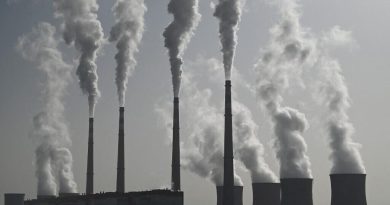
Total exit from nuclear power (a huge undertaking since France currently gets around two-thirds of its electricity from its nuclear power plants) and a switch to 100 renewable electricity by 2060. Renewables currently make up 15 percent of French electricity generation.
A ban on night flights (between 11pm and 6am).
An ‘environmental national service’ – a compulsory programme modelled on national military service, but at the rate of minimum wage, where young people under the age of 25 will have to spend nine months working on environmental projects.
An end to the low-emission zones in city centres and the Crit’Air sticker system that bans the most polluting vehicles from town centres.
Creation of ‘eco regions’ according to the landscape (eg mountains, forests, arable land) with their own local authority.
Health
100 percent reimbursement of health costs via the carte vitale (replacing the current system where different types of treatment and medication are reimbursed at different levels).
Up to three days of self-certified sick leave, without needing to see a doctor.
Up to seven days of compassionate leave for the death of a friend (currently compassionate leave is limited to the death of a spouse, partner or blood relative).
International
Renegotiate EU treaties and refuse to apply any EU treaties which would ban or limit any part of the LFI programme for government.
Gradually withdraw France from NATO’s integrated command.
Recognition of a Palestinian state, alongside the state of Israel (France formally recognised the state of Palestine last year, so this would be a continuation rather than a new policy).
Sixth Republic
A long-standing aim of LFI is the creation of a Sixth Republic, through writing a new French constitution.
They propose a different constitutional structure that gives more power to parliament and less to the president, and scraps measures like Article 49.3, which allows a president to force legislation through parliament without a vote, under certain circumstances.
Tougher laws against discrimination by police and the introduction of a récépissé to anyone stopped for a random ID check (a long-standing complaint of which is that they disproportionately target people of colour).
Recognition of the October 17th 1961 massacre as a state crime (the killing by police in Paris of hundreds of Algerian protesters who were beaten and thrown in the Seine).
How to pay for all this – the small detail of how all this will be funded “will be revealed at the start of 2027”, the party says.
The LFI campaign website has an online simulator that allows you to enter your personal and financial details (eg salary, how much you pay for electricity, transport etc.) and will tell you how LFI policies will affect you.