CDU names Ilse Aigner as candidate for president
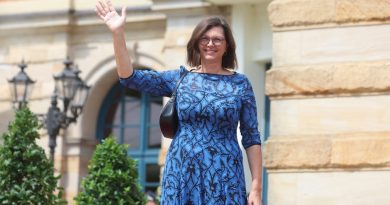
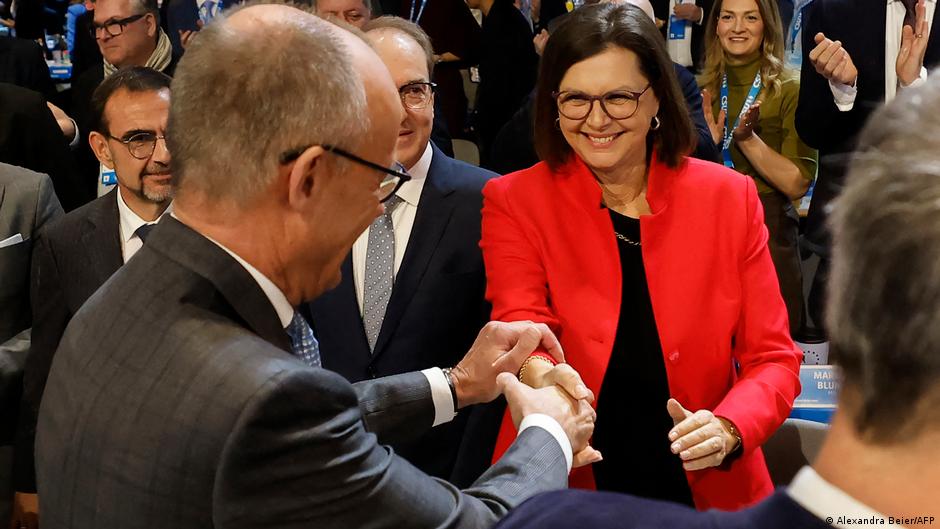
Chancellor Friedrich Merz‘s Christian Democrats (CDU) on Monday confirmed that they would be putting forward Ilse Aigner as a candidate to be Germany‘s next head of state.
Aigner’s own CSU, the CDU’s Bavarian sister party, already supports her candidacy — and the federal coalition partners the Social Democrats have also made clear they would endorse her nomination if the conservatives agree on it.
This means the 61-year-old has a good chance of taking up the largely ceremonial role when the special committee that elects a German president convenes in late January.
While Angela Merkel famously served as the country’s most powerful politician for more than a decade, Germany has never had a female head of state.
What did Merz say about the nomination in Berlin?
Chancellor Merz announced the decision alongside Aigner at a Berlin press conference around 1 p.m. local time in the CDU’s Konrad Adenauer House.
Merz said the “multifaceted, ambivalent” date of November 9 — anniversary of the fall of the Berlin Wall and the Nazi-led November pogroms — symbolized both “democratic hope and regained freedom, as much as the failure of democracy and the most serious crimes in our history that followed from it.”
Merz said he and Aigner had known each other for decades, praising her human qualities like empahty and openness as well as her “pronounced engagement for parliamentary democracy.”
“In Isle Aigner, the Federal Republic of Germany would gain a president with dignity and with heart, a president who would unite, provide orientation and initiate debates,” Merz said in summation, referring to some of the roles traditionally seen as most crucial for a less partisan head of state not bound by the day-to-day battles of parliamentary politics.
How did Aigner respond?
Aigner, meanwhile, said she was “very moved” by the nomination, thanking various voices in the conservatives and beyond for their words of support in recent weeks. Given the strength of populist parties on both the right and left at present, Aigner said she wanted to prove worthy of support from Germany’s more centrist groups.
“This broad, nationwide support, across party lines, is really extraordinary. I admit it humbles me, but it also emboldens me,” Aigner said. “Ultimately, I want to be the candidate of this strong center.”
She said the country was being attacked both from within and without, saying divisions were being stoked and consensus devalued.
“I am in politics to bridge gaps, to bring people together, and to try to reach those who might have the feeling that they are not involved. My choice of words will be clear and easy to understand. A hallmark of my entire political career has been a closeness to ordinary people and that is not going to change,” she said.
How did Aigner come to be nominated?
Aigner’s chances at the nomination had been gathering momentum for some time now, with various government politicians including Chancellor Merz saying they’d favor a female candidate.
The CSU had in particular lobbied for the 13th post-war German president to be the first one from the Bavarian party and the first woman.
Reports that Merz would suggest Aigner as a candidate to the steering committee first emerged on Friday, and were then confirmed by participants when the party leadership convened for two days of talks on Sunday.
Current President Frank-Walter Steinmeier‘s second five-year term comes to an end next March. The special “Bundesversammlung” committee that elects a German president therefore convenes in late January to choose his successor.
The committee — comprising 1,260 people in all — is made up of federal and state lawmakers, and sometimes municipal officials and others from public life.
SPD leader and Finance Minister Lars Klingbeil has voiced support for her nomination.
The CDU/CSU and SPD command a majority in the committee, and it’s also possible that Green party politicians might support Aigner. This means her chances of selection seem strong, at least barring unexpected developments.
Who is Ilse Aigner?
Aigner, 61, is currently the speaker of the state parliament in Bavaria.
The youngest of four sisters and the daughter of an electrician, she worked in the family business in her early adult life before going into politics. She’s a Roman Catholic, single and has no children.
Aigner began her parliamentary career in the Bavarian legislature in 1994, then moved to the Bundestag federal parliament in 1998, before returning to the Bavarian chamber in 2013.
She spent five years as federal agriculture minister under then-Chancellor Angela Merkel.
She’s currently the speaker or president of the state legislature in Bavaria, a role she has held since 2018.