Why Denver’s 4% inflation may feel much higher
The price of one of Robert Elliott’s favorite snacks is now $10.49, up 40% from $7.49 a year ago.
It hasn’t yet stopped the Loveland resident from buying a bag of wasabi and soy almonds. But it’s caused him to think about how much he’s been spending.
“It’s something I buy once every month or so. But overall, I do feel like my grocery bill is up by 40%,” Elliott said. “It’s impacted me in terms of stress, but I’m not in the position that many people are in, where it’s, you know, food or the electricity bill. I can absorb this.”
The rise in wasabi and soy almonds is far from 4%, which was the Denver-area’s annual overall inflation rate in September. But Elliott didn’t benefit from lower used-car prices, an item tracked by the consumer price index, or CPI. He didn’t buy a new TV or a sofa. He didn’t visit a museum. And he’s not paying college tuition or childcare. All of those things are tracked by the U.S. Bureau of Statistics to figure out the inflation rate.
The official inflation rate probably isn’t true for anyone in particular. That’s because the change in the CPI is based on the same items every month whether one purchases them or not. Gas prices were 29% higher than a year ago. Household furnishings were up 3.6%. Alcoholic beverages prices rose 5.8%, while nonalcoholic beverages barely budged, up 0.5%. Used car prices fell 1.4%.
Elliott started thinking about what he does spend his money on — or what he spends more of his money on. He realized he doesn’t get out as much as he used to. So he saves money by skipping movies, cutting back on entertainment and driving less, especially as gas prices zoomed higher.
“Maybe this is just a psychological thing,” he said. “You notice the things that go up more than you notice the ones that don’t. But a lot of times when I see something go up, it’s not by 4%. It’ll be $1, $2 or $3, which translates to 40 or 50%.”
The impact of a 29% increase in gas
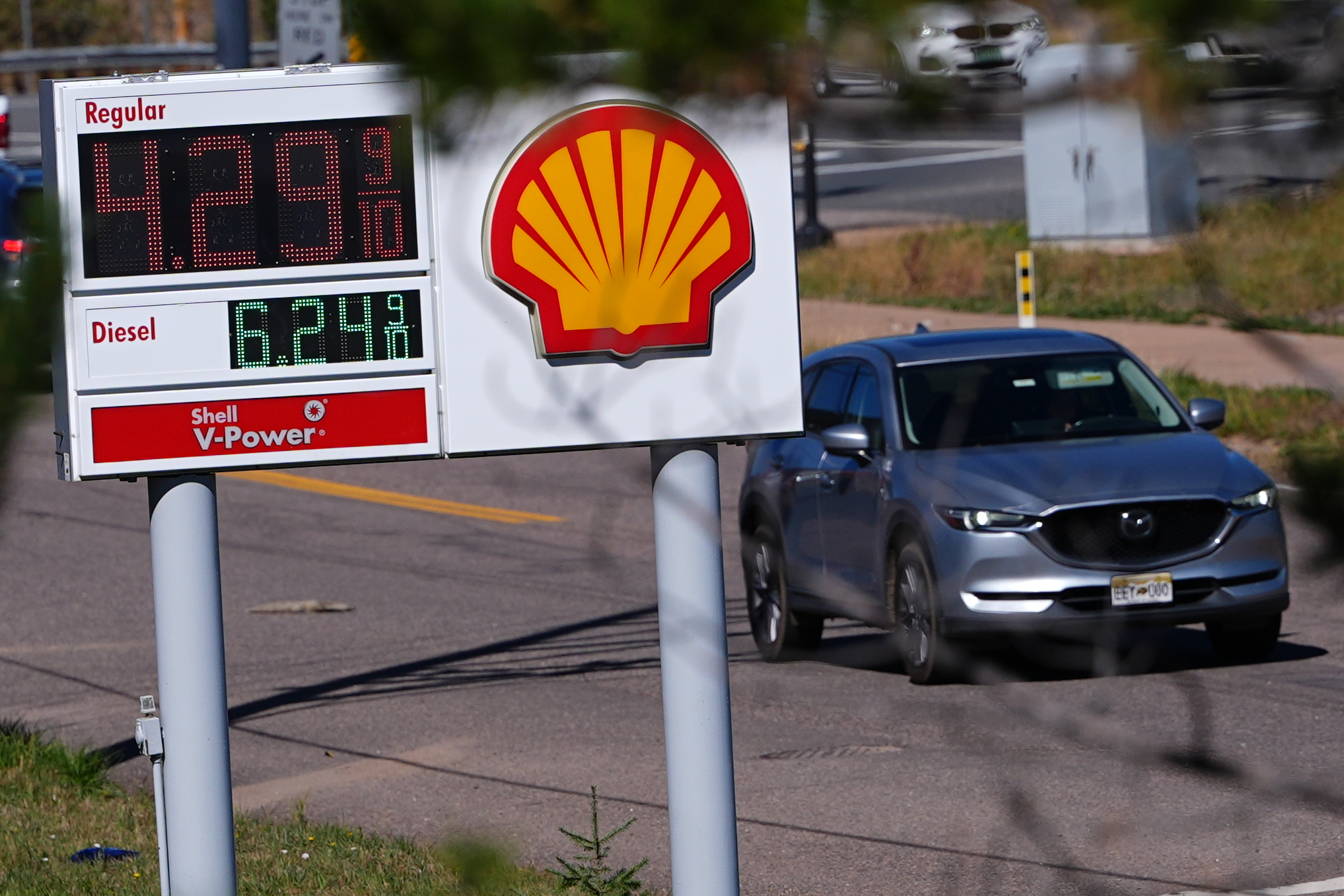
The biggest jump in CPI prices last month was the cost of gas, up 29% over the year. Electric vehicle owners may not have noticed.
But the White brothers certainly noticed. Jim and Dave White operate the family trucking company, JFW Corp. in Commerce City. Since the war in Iran started Feb. 28, a gallon of unleaded gas in Colorado has increased 56% to $4.46. But a gallon of diesel, which the company’s 110 trucks need? Up 90.3% to $6.61, or almost double, according to data from travel company AAA.
While consumers can drive a little slower or less to conserve gas, businesses like JFW can’t. The unanticipated price hikes are taking a larger share of the company’s expenses. Gasoline is now 34% of the company’s costs this year, compared with 23% last year. While they add fuel surcharges to help cover the increase, the surcharge can only be set every 30 days. In between, they have to eat the costs that they can’t recoup.
“That’s $800,000 to a million dollars that we’re cash depleted,” said Dave White, JFW’s general manager.
But even with the large spike in gas prices, fuel had limited effect on Denver’s overall September inflation. That’s because gas is a very small piece of the consumer-goods basket, making up 1.6% in the Denver area, or less than apparel. Housing costs are a bigger part of consumer budgets and for CPI in Denver, it’s 43.5% of the basket.
Still, when an item increases so much, the outsized and unexpected increase can wreak havoc on consumers and businesses that use more of that item. At JFW, the doubling of diesel gas prices not only impacts the company’s bottom line today, but it’s also likely going to impact its future, and that of its 165 employees.
“We try to have a certain amount of cash for emergencies and whatever we need to run our business. But with our fuel surcharges (not keeping up), we’ve depleted all of that,” said Jim White, CEO of the third-generation family business.
“As the year ends, we look to next year for our employees and … we won’t be able to increase (wages) so they can afford the cost of fuel and groceries,” he added. “Healthcare is a big concern of ours. We supply for the employee, not the family, but 100% of their health costs. That’s something that we may have to pass on to our employees.”
CPI has limits
The Bureau of Labor Statistics uses indexes to track everything from airline fares to new car prices. But they don’t track all items for every state or community. They don’t track Colorado inflation. But they do offer Denver data every other month. But even for Denver not every item is available, like electricity prices.
“Sometimes, it’s just response rates. We don’t get enough responses from these companies,” said Justin Copple, an economist at the BLS. “Or in certain areas, there’s usually just one utility company and we have confidentiality agreements or we’re not comfortable about releasing those numbers.”
Economists look to all sorts of data for better clues about inflation. Bill Craighead, program director of the UCCS Economic Forum in Colorado Springs, said he prefers the methodology of the Bureau of Economic Analysis and its personal consumption expenditures to better understand regional price swings and where Colorado stands. Colorado ranked 13th in 2024. “Much of the underlying source data is the same, but they differ in how it is all put together,” he said.
Both CPI and PCE track similar consumer expenses. But PCE weighs healthcare and financial services costs more heavily, while CPI gives used car and housing prices more weight, according to investment research firm Morningstar. PCE is also preferred by the Federal Reserve, which sets interest rates. But state PCE data is slow to come out. The latest report is from 2024, and ranks Colorado the 13th most expensive state.
But data is slow coming. The 2025 data for states will come out in December.
“None of these data are going to exactly match everyone’s individual experiences, and there are tons of methodological decisions that go into constructing them that could be second-guessed,” Craighead said.
Real price increases don’t always match CPI
There are other ways to explain the increase in costs other than government data. Almonds, for example, aren’t specifically noted in CPI, but the nuts would likely be part of the “other food at home” category, which was up 3.1% in a year. In September, almond prices “continue(d) to push higher from already the highest levels seen in a decade,” according to an Agrifluence report in September. Lower production in California contributed to a tight supply and higher prices.
Tuition and childcare costs are up 0.6% from a year ago, according to CPI. But costs grew higher at many colleges this semester, including the University of Colorado in Boulder, where tuition is up 3% this year. An analysis from Chalkbeat Colorado found that the cost of tuition and fees at public Colorado schools is up 125% since 2009.
Meat prices are falling, with the CPI change in Denver last month showing a 0.3% drop from a year ago. But that’s after a turbulent 2025, when beef prices rose by double digits from the prior year.
Beef prices still went up this year. The beef industry blamed smaller herds, tariffs and increased demand for protein for pushing prices to nearly $7 a pound in August, from just over $5.50 two years ago. When prices get too high, some consumers change their habits and choose lower-priced meats like chicken and pork, or they eat more vegetables.
Consumers tend not to think of inflation as the change in a month or a year. Rather, it may be the difference from when they start buying an item. Maggie Bolden, of Denver, said she uses sparkling water as a gauge of how prices are changing.
“I would buy the generic version of the King Soopers’ sparkling water and while I don’t know how long ago it was, it was like $1.99, and I was like, OK, that’s great,” Bolden said. “Then I started seeing this uptick. Slowly, slowly, $2.99, $3.99, $4.99. I’m like what is happening?”
Prices for nonalcoholic beverages have increased 15.7% since January 2020, while alcoholic beverages are up 23.9%, according to Denver’s CPI data. Aluminum tariffs have been blamed, at least more so for alcoholic beverages. Both face higher transportation costs because of rising gas prices.
Of course, other life challenges that impact Coloradans can make a rise in prices more noticeable. For Bolden, she picked up a retail weekend job to earn extra money to help her son’s family. Wages for her son, a father of five who works in construction, just haven’t kept up with inflation. “If I didn’t help him, they would not have the money to feed their children,” she said.
There’s no perfect way to measure the changes to the cost of living because it is so different for everyone, Craighead said.
“Overall, there’s definitely some disconnect between how we measure inflation and what consumers report about how they’re feeling,” he said. “Gas prices get a lot of attention because we drive by gas stations all the time and we have to buy gas fairly often — at least those of us who haven’t been smart enough to get EVs yet. I suppose it is human nature to notice the negative things more. … Nobody talks about how amazingly inexpensive televisions are now.”