American fighter jets accused of violating Iraqi airspace by Iran-backed groups
Iran-backed militias in Iraq accused the United States of violating Iraqi airspace. The statement comes amid tensions between the Iraqi government and Iran-backed militias over efforts to bring weapons under state control, according to a report by Rudaw.
“Standing with the forces of righteousness against the forces of evil is a duty dictated by sound human nature,” the IRI said, according to Rudaw. The group sees the conflict involving Iran as a struggle against the US and Israel. The IRI has attacked Israel in the past during the conflict in Gaza.
The Islamic Resistance in Iraq, an umbrella group of Iran-backed militias, continues to support Iran. The group issued a statement amid speculation about a possible new war with Iran.
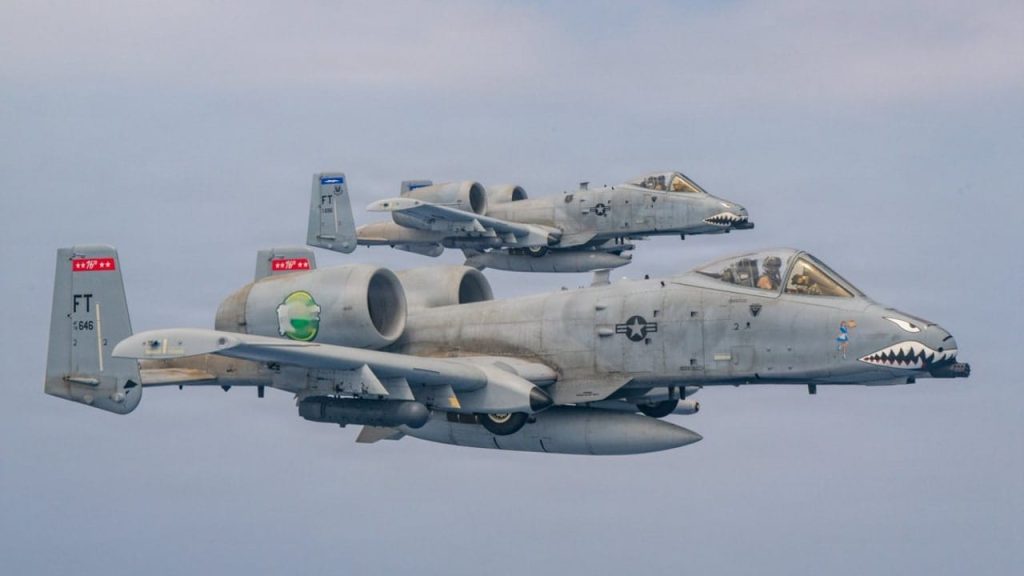
The militias also accused Baghdad of appeasing the US due to Washington’s pressure on Iraq. The IRI is unhappy that Baghdad has been reducing commercial flights and closing border crossings with Iran. The IRI claimed to have documented 171 violations of Iraqi airspace by US fighter jets and reconnaissance aircraft between September 30 and Friday. The allegations were not independently verified.
The accusations come after the US-led anti-ISIS coalition formally ended its military mission in Iraq on September 30. Iraqi Prime Minister Ali al-Zaidi has sought to use the transition to bring militia weapons under government control. However, several powerful factions have rejected the initiative. The plan is set to take effect by June 2027. Some militias have agreed, while others have rejected the policy.
Some militias opposed to disarmament, others willing to cooperate
According to Rudaw, Kataib Hezbollah and Harakat al-Nujaba remain opposed to disarmament, while Harakat Ansar Allah al-Awfiya and Kataib Sayyid al-Shuhada have expressed willingness to cooperate with government measures.
Zaidi has extended the disarmament deadline to June 30, 2027, by which time “no weapons will remain outside the framework of the state,” he said in an interview with Iraqi state media, quoted by Rudaw.
The dispute illustrates a central challenge facing Iraq. Even after the US-led coalition’s withdrawal, Iran-backed factions continue to portray their weapons as necessary for confronting Washington and Israel. This puts them increasingly at odds with Baghdad’s efforts to assert state authority over armed groups.
The tensions come as the US State Department has warned of increasing regional threats that could affect security in Iraq. On Saturday, the US Embassy in Iraq published an update to the State Department’s travel advisory, citing the threat of increased attacks by the Iranian-backed Houthis. The warnings also cite terrorist threats in Iraq, including those posed by Iran-backed militias.
The advisory maintained the existing warning against all travel to Iraq. It noted that Houthi attacks against Saudi Arabia, including strikes on civilian airports and critical infrastructure, could lead to wider regional escalation.
“The hostilities have the potential to escalate rapidly beyond that immediate area,” the State Department warned. It also noted that “the Iraqi government cannot guarantee the safety of US citizens against sudden outbreaks of violence and armed conflict.”
The advisory specifically highlighted threats from armed groups inside Iraq. “Terrorists, including ISIS and Iran-aligned militias, encourage and conduct attacks against US persons and interests in Iraq,” the State Department said.
State Department warns of threats to US citizens, companies
It also warned that militias threaten American citizens and international companies, citing attacks involving drones, indirect fire, and improvised explosive devices. Potential targets include airports, energy infrastructure, hotels, and diplomatic facilities.
The warning illustrates the broader security challenges facing Baghdad. While the Iraqi government seeks to consolidate control over armed factions, Washington continues to view Iran-aligned militias as a threat. The escalation involving the Houthis also highlights how regional conflicts could further complicate Iraq’s efforts to maintain stability and avoid being drawn into new confrontations.
The tensions in Iraq come amid other developments involving Iran and Iranian-backed groups across the region. On Saturday, Rudaw reported that US intelligence had warned of increased Iranian efforts to assassinate American diplomats and officials in the Middle East and elsewhere. Citing an Axios report, Rudaw said a memorandum dated Friday from US National Intelligence Director Jay Clayton to Secretary of State Marco Rubio warned that some alleged Iranian plots had reached advanced stages. The report comes as Washington reduces staffing at several embassies amid concerns about regional escalation.
Meanwhile, Iran’s Islamic Revolutionary Guard Corps (IRGC) said on Saturday that it had targeted a gathering center belonging to the Kurdistan Free Life Party (PJAK), an Iranian Kurdish opposition group. The attack took place in Iran but could have implications for Iraq, where Tehran has previously targeted Iranian Kurdish opposition groups. According to Rudaw, clashes between the IRGC and PJAK’s armed wing, the Eastern Kurdistan Units (YRK), have intensified over the last week. Iran has used drones and artillery against mountainous areas where the Kurdish fighters operate. Iran’s Mehr News Agency described the latest operation as a preemptive strike against PJAK members allegedly preparing attacks.
These developments also come as Iraqi Prime Minister Ali al-Zaidi continues to insist that his government will end the presence of armed factions operating outside state control. In an interview quoted by Rudaw on Friday, Zaidi said that “Iraq will soon, God willing, be a state free of factions, like other countries in the world, and weapons will be exclusively in the hands of the Iraqi security forces.”
The developments illustrate the competing pressures facing Iraq. Baghdad wants to consolidate state authority over armed groups, but Iran-backed militias continue to see themselves as part of a wider regional confrontation with the US and Israel. At the same time, Iran’s operations against Kurdish opposition groups and reports of threats to American officials suggest that tensions could spread across several fronts.
One example of Baghdad’s progress is a new agreement with a Yazidi armed group called YBS in Sinjar in northern Iraq. Baghdad also says it has reached a deal with Turkey for Ankara to leave a base near Bashiqa. However, these may be low-hanging fruit because Iran-backed militias are, in some ways, more powerful. Iran shares a long border with Iraq. It views Iraq as a “near abroad,” basically meaning it feels it should control Iraq. It has carried out 1,000 attacks on the Kurdistan Region of Iraq, but also 600 on the rest of Iraq, using militias in some attacks.
For Iraq, the challenge is not only disarming militias. It is also preventing the country from becoming a battleground in a wider regional conflict. The coming months will test whether Zaidi can turn his government’s commitments into reality, particularly as the June 2027 deadline approaches.